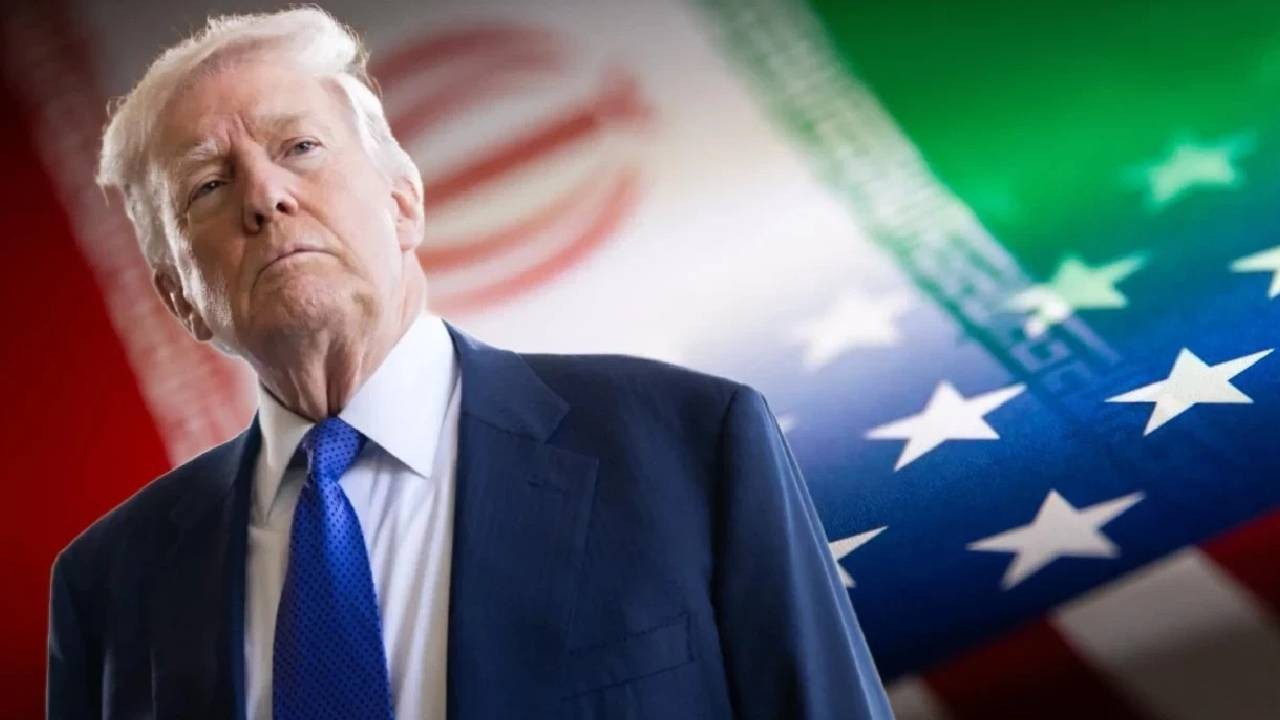
Donald Trump just upended global maritime trade with a single social media post, and the shockwaves are hitting Wall Street and global energy markets immediately. The plan is simple, aggressive, and completely unhinged from international law: the United States military will now act as the self-appointed toll collector for one fifth of the world’s oil supply. By declaring America the official guardian of the waterway, Trump wants a mandatory 20% Strait of Hormuz toll on all non-Iranian cargo transiting the channel. It's a protection fee dressed up as foreign policy.
Markets panicked instantly. Crude oil prices jumped past $80 a barrel, tech stocks tumbled, and shipping companies are left wondering how they are supposed to pay a massive premium just to cross an international waterway. If you think this is just standard political posturing, think again. The White House claims the president is entirely serious. But the math behind this tariff, the legal reality of global shipping, and the blatant hypocrisy coming out of Washington mean this plan is heading straight for a wall.
Here is what is actually going on behind the scenes, why your energy bills are about to spike, and why this policy contradicts everything the administration promised just weeks ago.
The Brutal Math of a Twenty Percent Toll
Let's talk about what a 20% levy actually means for a global economy already battered by the conflict between the US, Israel, and Iran. This isn't a small bridge toll. It's an unprecedented tax on energy.
Based on current market valuations, a 20% fee adds roughly $16 in pure cost to every single barrel of crude oil moving through the strait. For a standard supertanker carrying two million barrels of oil, that means the shipping company has to hand over $32 million to the US government for a single transit.
Who pays for that? Not the oil companies. They will pass every single cent down the line. You'll feel it at the petrol pump, in your grocery bills, and in your electricity costs.
Trump frames this as a matter of basic fairness. He noted on Fox News that the US has protected the region for half a century without getting paid a dime. He expects wealthy Asian and European nations to foot the bill because they rely heavily on Middle Eastern crude. But the logistics are non-existent. The administration hasn't explained how the fee is calculated, who physically collects the money, or what happens if a captain refuses to pay. Will the US Navy turn away a Japanese supertanker? Will they seize European commercial vessels? Nobody knows.
Washington Blatant Double Standards
The most striking part of this announcement is how quickly the White House threw its own officials under the bus. Just last month, Secretary of State Marco Rubio stood in Bahrain and forcefully rejected the idea that anyone could charge a fee in the strait. Iran had been floated its own plan to charge commercial vessels to cover security and environmental costs. Rubio was clear, stating that there isn't a nation on Earth that supports paying to go through international straits. Vice President JD Vance said the exact same thing, insisting international waterways must remain free of tolls.
Now, the administration is singing a completely different tune because it sees a chance to extract billions from global trade.
The policy shift completely erases America’s moral high ground. Trump’s move directly handed Tehran a massive rhetorical victory. Iranian Foreign Minister Abbas Araghchi didn't even sound angry; he openly mocked the US president on social media. Araghchi noted that while whoever secures the waterway should be compensated, a 20% toll is simply excessive, adding with deep sarcasm that Iran would be fair with its own fees. By trying to run the strait like a private business, Trump validated Iran's long-standing claim that the waterway belongs to regional powers, not global rules.
The Legal Reality of International Waters
The United Nations and global maritime bodies are already pushing back against the declaration. The International Maritime Organization made its position clear within hours of the announcement. They stated plainly that there is no legal basis whatsoever for introducing mandatory tolls for transiting an international strait.
Under international maritime law, the Strait of Hormuz is governed by the principle of transit passage. This guarantees that ships have the right to travel through the channel unimpeded as long as they proceed without delay and avoid threatening regional security.
Turning the channel into a paid checkpoint violates the bedrock agreements that keep global trade moving. Even close Western allies are furious. In the UK, politicians are already labeling the policy state-backed highway robbery and a flagrant violation of international law. British leaders are scrambling to coordinate an international rejection of the toll, realizing that allowing a US president to unilaterally tax global chokepoints sets a terrifying precedent. If America can charge a toll in Hormuz, what stops China from doing the same in the South China Sea? What stops Egypt from wildly inflating Suez Canal fees?
Why the Hidden Threat Isn't the Fee Itself
The actual text of Trump's plan focuses entirely on the 20% charge, but economists warn that the true danger lies elsewhere. Even if the US government never successfully collects a single dollar from a supertanker, the mere announcement creates financial chaos.
The shipping industry doesn't operate in a vacuum. Tanker operators require massive insurance policies to travel through conflict zones. When a US president announces a renewed naval blockade and threatens to seize or tax vessels, risk profiles explode. War-risk insurance premiums are already skyrocketing. Freight rates will follow.
Consider the liability nightmare. If a commercial merchant vessel pays the 20% US security fee and then gets hit by an Iranian drone or missile, who is responsible? Will the US Treasury compensate the shipping line for lost cargo? Will Washington pay out life insurance claims for the crew? Trump's policy treats military protection like a retail service, but it fails to provide the basic guarantees a retail service requires.
How Asian Economies Take the Direct Hit
The geography of oil consumption means this policy hits specific nations far harder than the United States. America is largely energy independent thanks to domestic shale production. Asia is not.
- India: The country relies on imports for roughly 88% of its crude oil. Close to half of that historically comes right through the Strait of Hormuz. A sudden $16 per barrel spike expands the national import bill, degrades the value of the rupee, and drives retail inflation past manageable targets.
- South Korea and Thailand: Nomura analysts highlighted both nations alongside India as the most vulnerable economies to a prolonged Hormuz energy crisis. Their industrial bases require cheap, steady streams of crude.
- Japan: Lacking domestic energy resources, Japanese buyers are completely exposed to the whims of Middle Eastern stability and US maritime policy.
These countries are supposed to be key partners in Washington's strategic plans. Squeezing them for billions in protection money during an active military standoff alienates the exact allies the US needs to contain Iran.
Reinstating the Blockade and Escallating War
You can't separate the toll announcement from the broader military reality on the ground. Trump also declared that the US is reinstating the full naval blockade against Iranian ports. This ends the fragile 60-day temporary truce signed back in June, which had briefly paused port blockades in exchange for toll-free shipping.
The truce is dead. Over the weekend, US forces pounded Iranian military sites after an attack on a container ship in the channel. Hours later, Iran’s Islamic Revolutionary Guard Corps retaliated, launching missile and drone strikes against US military facilities across Bahrain, Kuwait, and Jordan.
Tanker traffic through the strait has already collapsed. Commercial fleets are actively avoiding the area, choosing long, expensive detours around the continent of Africa rather than risking the crossfire. Trump wants to use the toll to dry up Tehran's remaining economic lifelines, but the immediate result is an escalating hot war that threatens the entire global supply chain.
Next Steps for Shipping Lines and Energy Investors
If you are trying to navigate this mess, waiting for Washington to clarify the rules is a losing strategy. The policy is driven by political instinct rather than bureaucratic planning.
First, diversify your supply routes immediately. If you operate or rely on maritime logistics, assume the Strait of Hormuz is highly unstable for the foreseeable future. Factor the longer African transit routes into your baseline cost projections now, rather than treating them as a temporary backup plan.
Second, hedge your energy exposure. Oil prices aren't going down anytime soon because traders are pricing in a permanent geopolitical risk premium. Even if Trump backs away from the 20% figure later—something he has done with previous policy musings—the insurance and freight hikes are already locked in.
Expect volatile markets ahead of the US midterm elections this November. Trump is facing domestic pressure over high fuel prices, yet his chosen solution is a chaotic trade barrier that makes energy explicitly more expensive. Protect your capital, plan for disrupted supply chains, and don't assume international maritime law will save you from a White House determined to rewrite the rules of global commerce on the fly.