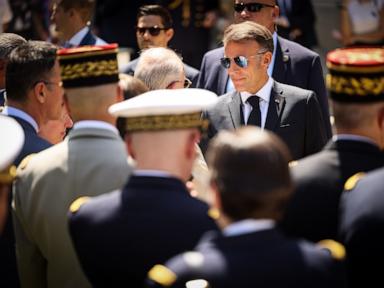
The traditional Bastille Day parade on the Champs-Elysees is usually a purely French affair. It's a day for French taxpayers to look at their tanks, watch their jets fly over the Arc de Triomphe, and celebrate a revolution that overthrew a monarchy.
But this year, the vibe in Paris is completely different.
European troops and warplanes are taking over the French capital. It is not just a polite nod to international diplomacy. It is a massive, highly coordinated display of European military muscle. As Ukrainian soldiers march down the cobblestones and fighter jets from ten different nations roar overhead, the message is clear. Europe is trying to prove to both Russian President Vladimir Putin and U.S. President Donald Trump that it can defend itself without waiting for permission—or help—from Washington.
If you're wondering why a French national holiday has suddenly turned into a continent-wide defense summit, the answer lies in a mix of panic, political transitions, and a desperate need for collective strength.
The Men and Machines on the Paris Cobblestones
This is the largest Bastille Day parade in recent history. France deployed 6,800 marching troops this year, up significantly from the 5,810 we saw last year.
But the real story is who is marching alongside them.
The parade opened with around 500 troops from the "coalition of the willing," a specific alliance of countries that have committed to securing Ukraine's long-term security. Ukrainian troops themselves marched down the avenue, receiving a massive ovation from the crowds and the watching dignitaries.
Up in the air, the display was even more international. We saw warplanes from:
- Germany
- The United Kingdom
- Poland
- Croatia
- Denmark
- Greece
- Sweden
- Norway
- Spain
- Italy
In a particularly symbolic move, two Mirage 2000B fighter jets tore through the Parisian sky. What made this flight different was the crew. These jets were co-piloted by Ukrainian pilots who had been trained in France, flying right alongside French air force pilots.
This isn't just symbolic theater. It shows how deeply integrated Ukraine has become with Western European air forces, even while the fighting on the ground continues.
Macron’s Last Stand and the Legacy of European Autonomy
French President Emmanuel Macron is entering his final stretch in office. For years, he has championed "strategic autonomy"—the idea that Europe needs to stop relying entirely on the United States for its security.
With this being his last Bastille Day as president, Macron is using his final moments on the international stage to cement this vision. He hosted around 30 other world leaders on the viewing stands, including Ukrainian President Volodymyr Zelenskyy and European Commission President Ursula von der Leyen.
By bringing these leaders together, Macron is trying to make his vision of a self-reliant European defense force irreversible. He wants to show that the continent has experienced a strategic awakening. The sheer scale of the parade is meant to show that European defense is no longer just a French talking point. It is a shared regional reality.
The Elephant in the Room with Trump and Putin
Let’s be honest about why this parade is happening now.
First, there's Vladimir Putin. Moscow has shown no signs of backing down, and the threat to Eastern Europe remains high. Marching troops from Poland and the Baltic states down the Champs-Elysees tells the Kremlin that an attack on one European nation is an attack on the collective.
Second, there is Donald Trump. The return of Trump to the White House has sent shockwaves through European capitals. His past comments questioning the validity of NATO and his threats to pull back American support have left European leaders deeply anxious.
Europe realizes it can no longer treat American protection as a given. This parade is a direct response to that anxiety. It is Europe's way of saying: "We hear you, Washington. We are stepping up, and we can handle our own backyard."
The Climate Crisis Crashing the Party
While French officials wanted the focus to remain entirely on military unity, nature had other plans.
France is currently gripping with its third severe heat wave of the year. Just south of Paris, a massive forest fire is raging through the historic Fontainebleau forest, forcing evacuations and throwing train schedules into chaos.
Because of the extreme heat and fire risks, authorities had to cancel traditional Bastille Day celebrations across the country, including the famous firefighters' balls and local fireworks displays. Paris managed to keep its Eiffel Tower drone show, but the surrounding atmosphere was a stark reminder of the dual crises Europe faces. While governments spend billions of euros on defense and weapons, they are also battling a rapidly changing climate that is actively burning down their forests and straining their infrastructure.
What Europe Must Do Next to Back Up the Show of Force
Parades and jet flyovers look great on television, but symbols don't win conflicts or deter adversaries. If European leaders want this show of unity to mean anything, they have to take real, concrete action.
Here are the immediate steps European nations must take to turn this symbolic parade into actual defense capability.
Spend Wisely on Production and Standardize Equipment
Europe doesn't just need to spend more money on defense; it needs to spend it together. Right now, European armies use too many different types of tanks, fighter jets, and artillery systems. This makes joint operations incredibly difficult. Governments need to focus on joint procurement programs to standardize their hardware.
Scale Up Ammunition Manufacturing
The war in Ukraine has shown that modern conflicts consume ammunition at a rate not seen since World War II. Europe’s defense industry is still struggling to match the production capacity needed to support Ukraine while keeping its own stockpiles full. Governments must sign long-term purchase contracts with defense firms so these factories can expand their production lines.
Secure Energy and Supply Chains
True defense autonomy means not relying on hostile nations for critical resources. Europe has made progress in cutting off Russian gas, but it still relies heavily on foreign supply chains for raw materials used in defense technology. Leaders need to secure domestic or allied sources for critical minerals, microchips, and battery technology.