The federal government just revived its signature green home program, but don't expect a repeat of the chaotic gold rush that tanked the previous version.
When Ottawa abruptly killed the Canada Greener Homes Grant in early 2024 after running out of cash years ahead of schedule, thousands of middle-class homeowners were left holding the bag. It was messy. It required thousands of dollars upfront, forced people to navigate endless administrative hoops, and completely ignored the Canadians hit hardest by soaring utility bills.
The newly rebranded Canada Greener Homes Affordability Program (CGHAP) aims to fix those structural flaws. Rolled out today across British Columbia, Quebec, Nova Scotia, and Prince Edward Island after a soft launch in Manitoba, the $500 million joint federal-provincial initiative promises something entirely different: zero upfront costs.
By shifting from a rebate model to a direct-install system, the government hopes to target the lowest-earning households. For the first time in two decades, federal climate policy actually includes low-income tenants and renters.
But as anyone who has ever dealt with a difficult landlord knows, theory and reality rarely align in the rental market.
The Zero Dollar Fix for Energy Poverty
Energy poverty isn't a vague environmental concept. It's a harsh economic reality for nearly two million Canadian households spending more than 6% of their pre-tax income just to keep the lights on and the thermostat running.
The original iteration of this program required you to pay for expensive energy assessments and home upgrades out of your own pocket before waiting months for a government check. That structure completely locked out the people who needed the savings most.
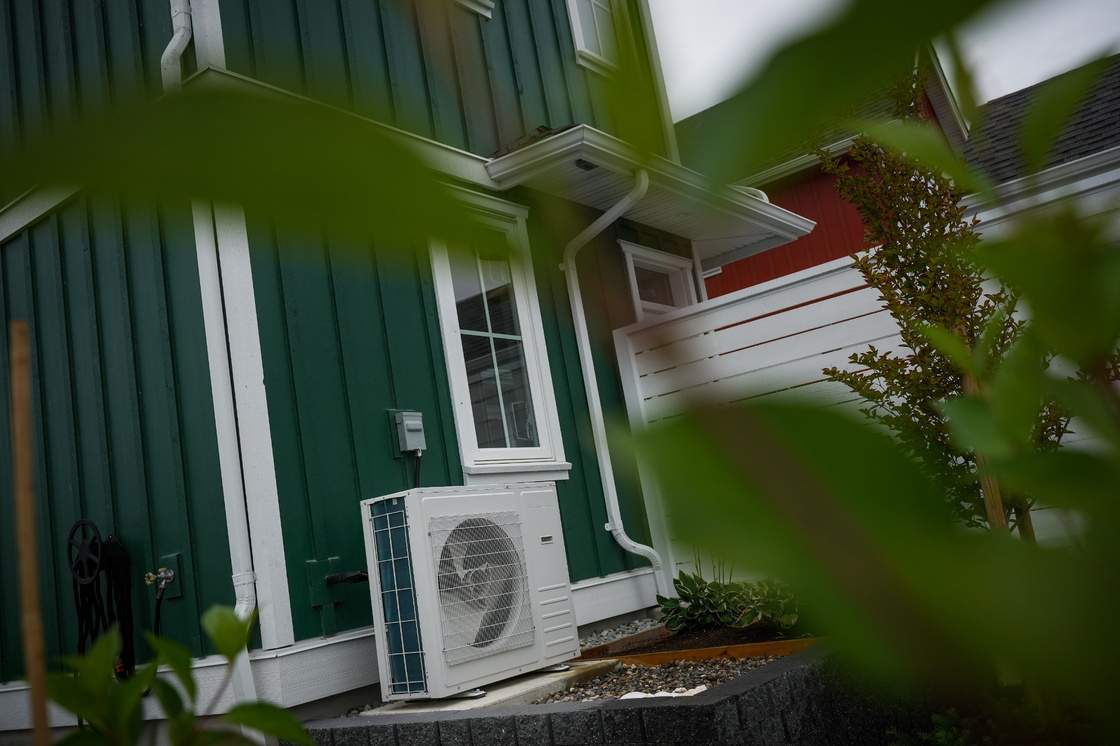
The revamped program flips that script. Selected regional organizations and local utility companies will handle everything directly. If you qualify, contractors come to your home, assess what needs fixing, and install upgrades like electric heat pumps, high-efficiency insulation, and draft-busting air sealing. You never see a bill.
According to Natural Resources Canada, these upgrades should cut individual household energy bills by anywhere from $300 to $1,700 every single year. These aren't one-time savings; they are permanent reductions in living costs at a time when everything else is getting more expensive.
Why the Rental Loophole is Causing Friction
While the inclusion of tenants is being praised by policy advocates as a major step forward, the actual mechanics of the program reveal a massive loophole for renters.
To get a free heat pump or insulation upgrade in an apartment, a tenant cannot simply apply and open the door for a contractor. They must secure explicit, written authorization from their landlord.
This requirement introduces a weird conflict of interest. On one hand, landlords get structural, capital property improvements completely free of charge. Their building becomes more valuable, and their asset is upgraded on the public dime. On the other hand, tenants get lower monthly hydro bills and better cooling during increasingly brutal summer heatwaves.
Critics are already pointing out the obvious risk: what stops a landlord from approving the free upgrades, watching the property value rise, and then using those premium new amenities to justify raising the rent or evicting the tenant?
Current provincial tenancy laws offer thin protection against this kind of renoviction-by-stealth. While the program successfully removes the financial barrier to green energy, it replaces it with a legal and relational barrier that many vulnerable renters will be terrified to cross.
How the Money Breaks Down Across the Provinces
Instead of a centralized, one-size-fits-all program managed out of an office in Ottawa, the money is being funneled directly to provincial utilities and regional efficiency groups. The feds are covering roughly 60% of the cost, putting up $300 million of the total $500 million pool, with provinces making up the rest.
Because the delivery is decentralized, how much help you get depends entirely on where you live.
- Quebec ($243.5 million): The single largest chunk of funding is heading here. Administered alongside Hydro-Québec, the money will target 25,000 households, focusing heavily on wall-mounted heat pumps for apartment units to combat urban heat island effects.
- British Columbia ($222.5 million): Split between BC Hydro ($177.3 million for 6,000 homes) and FortisBC ($45.2 million for 1,000 homes), the funding will expand existing provincial low-income energy programs.
- Nova Scotia ($26 million): Channeled through EfficiencyOne to scale up the existing HomeWarming and African Nova Scotian Communities Retrofit programs, aiming to upgrade roughly 1,600 homes.
- Prince Edward Island ($15 million): Adding to PEI’s existing Free Insulation Program to capture income-qualified households still burning expensive heating oil.
The Hidden Logistics You Need to Know
If you want to take advantage of this, do not look for an application portal on the federal government website. Ottawa isn't managing the intake.
You have to apply directly through your local provincial administrator or utility provider. For example, if you live in Vancouver, you go through BC Hydro or FortisBC. If you're in Halifax, you apply through the HomeWarming program.
The income thresholds are strict and scale based on household size. While exact provincial cut-offs vary slightly to adjust for local cost of living, general eligibility targets households making below the median income line for their specific region.
Be highly suspicious of anyone knocking on your door or calling your phone claiming to represent this program. The previous green grant was plagued by predatory HVAC companies using aggressive sales tactics to lock people into bad contracts. Natural Resources Canada has explicitly stated that no third-party companies have been authorized to do unsolicited door-to-door marketing for this program.
Your Next Steps to Get Upgraded
If you want to get your home or apartment retrofitted under the new rules, here is exactly what you need to do right now.
First, grab your most recent Notice of Assessment from the CRA to verify your total household income, as you will need this to prove eligibility. Next, look at your last utility bill to find your exact service provider. Go directly to their official website and search for the Canada Greener Homes Affordability Program portal.
If you are a renter, do not apply yet. Talk to your landlord first. Frame the conversation around the fact that the building receives permanent structural upgrades at zero cost to them, and secure their written consent before submitting your paperwork to the provincial utility provider.