At least 999 people have died in the Democratic Republic of the Congo since mid-May 2026. That's not a typo. In just over two months, a single viral outbreak has infected 2,473 people and claimed nearly a thousand lives across eastern Congo.
To put that speed in context, the devastating 2013-2016 West Africa outbreak took eight months to hit 1,000 fatalities. The current situation in Congo is moving four times faster. It's officially the fastest-spreading Ebola outbreak on record.
Yet, global headlines are mostly silent.
If you're wondering why this specific surge is so aggressive and why traditional containment methods are failing, the answer comes down to a lethal combination of a forgotten strain, local conflict, and systemic neglect.
The Viral Strain Without a Cure
Most past Ebola outbreaks in Congo were driven by the Zaire strain of the virus. That's the strain public health agencies know how to fight. We have Ervebo and Zabdeno, highly effective vaccines developed specifically for Zaire Ebola. When an outbreak of that strain pops up, response teams deploy ring vaccination immediately, creating a human shield around contacts.
This outbreak is completely different.
The current crisis in eastern Congo is caused by the Bundibugyo virus. There are no approved vaccines for Bundibugyo. There are no approved monoclonal antibody treatments tailored to it either.
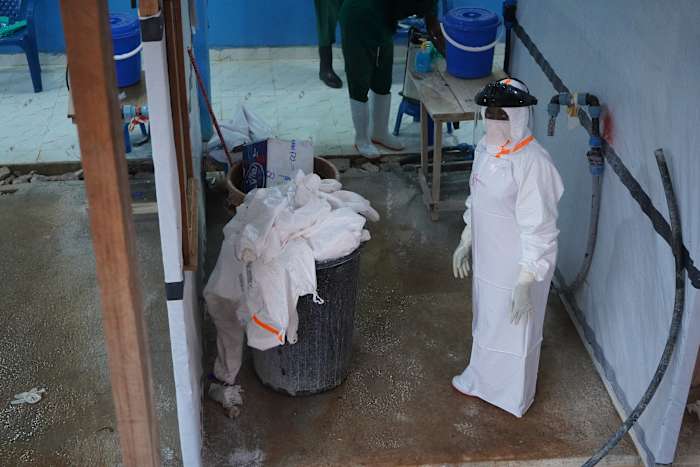
Health workers on the ground are working with basic supportive care—intravenous fluids, electrolyte management, and treating secondary infections. That's essentially it. Without direct medical countermeasures, the virus spreads unhindered through close physical contact, bodily fluids, and contaminated bedding.
Why Response Teams Are Losing Control
The absence of a vaccine is only half the problem. The environment where this virus is spreading makes contact tracing nearly impossible.
According to health officials, roughly 80% of new cases are appearing out of unknown chains of transmission. In public health terms, that's a nightmare. It means doctors aren't catching cases because they traced a known patient's contacts. They're finding cases when severely ill patients show up at clinic doors or die in their homes.
Several factors have broken the public health response:
- Active Armed Conflict: The epicenter of the outbreak sits in Ituri province, with cases spilling into North Kivu, South Kivu, Haut-Uele, and Tshopo. These regions have been torn apart by militia violence for years. Moving medical teams safely through these zones requires armed escorts, which slows down response times.
- Attacks on Facilities: Misinformation and deep-seated distrust have fueled at least 12 direct attacks on health clinics and containment units since May. Aid agencies have had to suspend operations in several high-risk areas because staff safety couldn't be guaranteed.
- Unpaid Doctors on Strike: Frontline health workers in Congo haven't been paid since the outbreak was declared. Many have gone on strike in protest. To make matters worse, at least 36 health workers have lost their lives after contracting the virus on duty.
When doctors are dying, uncompensated, and targeted by violence, containment systems fall apart fast.
The Threat of Global Spillover
This isn't an isolated regional emergency anymore. The virus has already crossed borders.
Uganda reported 20 confirmed cases linked to cross-border movement. Beyond Africa, infected individuals have been medically evacuated to Europe. A US citizen working for a humanitarian organization in Congo tested positive for the Bundibugyo strain and had to be airlifted to Germany for isolation and specialized care. France has also recorded an imported case linked directly to the DRC outbreak.
Dr. Jean Kaseya, Director-General of the Africa Centres for Disease Control and Prevention, didn't mince words when addressing health leaders in Ghana: "If we do not stop this outbreak today, it could become one of the worst Ebola outbreaks the world has ever documented."
Actionable Steps to Contain the Emergency
Containing a vaccine-resistant Ebola strain in an active conflict zone requires immediate, pragmatic changes from international authorities:
- Fast-Track Experimental Bundibugyo Vaccines: Emergency clinical trial protocols must be authorized immediately for candidate Bundibugyo vaccines currently sitting in early testing stages.
- Pay Frontline Medical Staff Directly: International relief funds must be routed directly into payroll for local Congolese medical workers to end strikes and ensure facilities remain staffed.
- Engage Local Community Leaders: Containment strategies fail when imposed from the outside. Health ministries need to partner with trusted village elders and local faith leaders to combat misinformation and rebuild trust around treatment centers.
- Scale Up Border Screening Across East Africa: Transit hubs along the borders of Congo, Uganda, Rwanda, and South Sudan require mandatory symptom screening and rapid laboratory testing to catch mobile cases early.