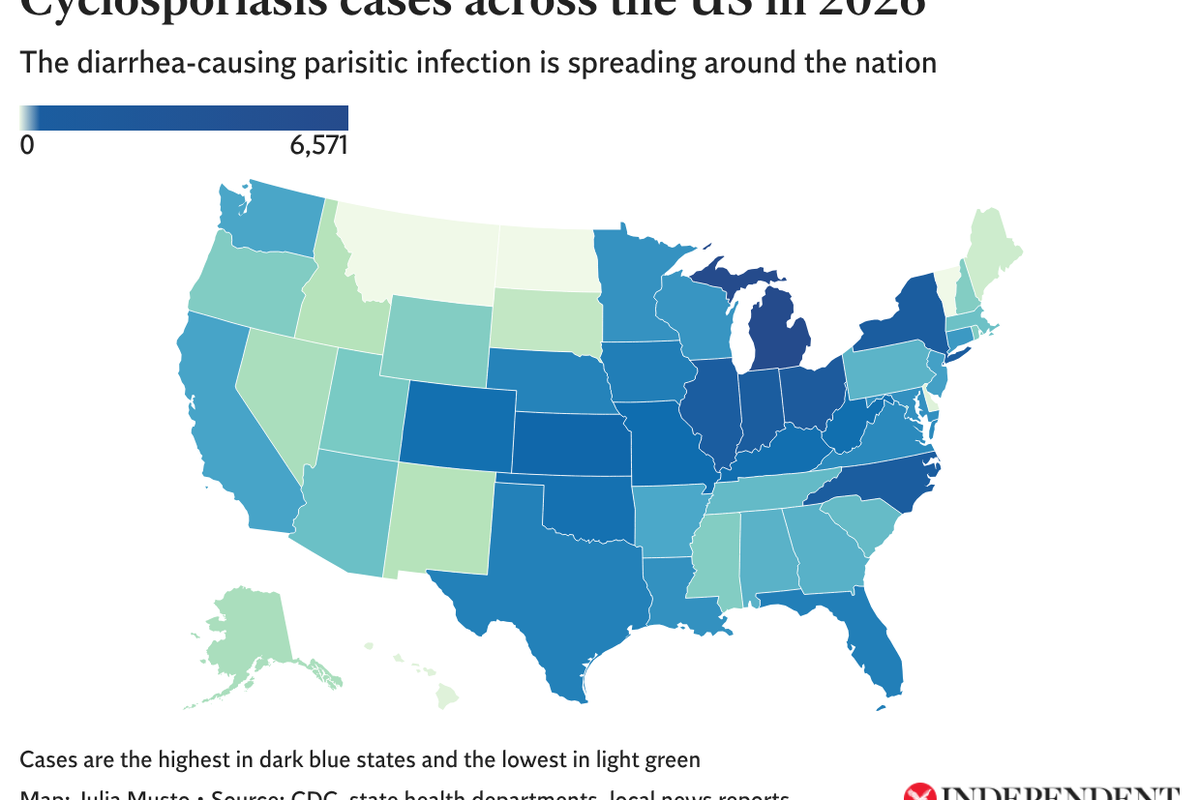
If you've been eating fresh salads or picking up wraps lately, you might want to pay close attention to what's happening across the United States. A parasitic outbreak triggered by Cyclospora cayetanensis is ripping through over 40 states, racking up more than 12,000 reported cases. Michigan and Ohio are getting slammed the hardest, but health departments from the East Coast to the Midwest are logging surging infection rates.
People are getting hit with relentless, watery diarrhea, severe stomach cramping, and exhaustion that drags on for weeks. Yet most folks still assume standard tap-water rinses protect their raw produce. They don't.
Here is the truth about how this parasite spreads, why public health trackers are struggling to keep up, and what you actually need to do to protect your kitchen right now.
What Public Health Data Is Missing
The official government numbers tell only a fraction of the story.
The Centers for Disease Control and Prevention currently counts over 4,100 laboratory-confirmed domestic cases, while flagging roughly 7,400 additional cases requiring further analysis. That brings the combined estimate past 12,000. Michigan alone has reported thousands of infections.
Total Reported Cases: >12,000
CDC Confirmed Cases:  4,173
Under Investigation: ~7,400
Hospitalizations:    >300
CDC officials publicly acknowledge a massive six-week reporting delay between when someone actually gets sick and when their test results reach federal databases.
Why the delay? Unlike common foodborne bacteria such as Salmonella or E. coli, Cyclospora cannot be cultured easily in standard medical labs or matched instantly through routine DNA fingerprinting databases. Doctors have to specifically order a specialized stool test for parasites. If your physician just runs a standard bacterial panel, your Cyclospora infection won't even show up.
That means thousands of sick people are walking around with misdiagnosed stomach bugs, inflating the uncounted toll.
How Cyclospora Contaminates Fresh Produce
You can't catch cyclosporiasis from someone coughing on you or shaking your hand. It isn't transmitted directly from person to person because the parasite needs days or even weeks outside the human body to mature into an infectious stage.
Instead, microscopic Cyclospora oocysts travel through human fecal contamination in agricultural water or soil.
Past outbreaks involved imported raspberries, fresh basil, cilantro, snow peas, and packaged salad mixes. Right now, federal investigators at the FDA and CDC are scrutinizing regional supply chains after recalling shredded iceberg lettuce sourced from central Mexico that was served across multiple Midwestern restaurant chains and grocery stores.
The real problem lies in the biology of the parasite itself.
Cyclospora sports a tough outer shell that makes it stubbornly resistant to standard chlorine washes and chemical sanitizers used in commercial processing plants. Rinsing a handful of leafy greens under cold tap water might strip away visible dirt, but it won't reliably knock off microscopic parasite oocysts clinging to the rough surface of greens or herbs.
The Symptoms Nobody Warns You About
Catching this parasite isn't like dealing with a typical 24-hour stomach bug that resolves after a good night's sleep. Symptoms usually hit about a week after exposure, though they can surface anywhere between two days and two weeks.
- Frequent, explosive watery diarrhea
- Extreme fatigue and muscle aches
- Loss of appetite accompanied by noticeable weight loss
- Stomach cramps, bloating, and excessive gas
- Nausea and low-grade fever
If you leave it untreated, cyclosporiasis tends to follow a frustrating remitting-relapsing pattern. You feel better for two days, think you're finally over it, and then get hit with another wave of severe intestinal distress. That cycle can drag on for a month or longer, leaving patients severely dehydrated and drained.
Certain vulnerable groups face much higher risks. Elderly adults, young kids, and anyone with a compromised immune system can suffer severe dehydration and nutrient malabsorption that requires urgent hospital care. So far, over 300 Americans have been hospitalized in this current outbreak.
How to Protect Your Household Right Now
You don't need to panic, but you do need to alter your routine while case counts continue to rise through late summer.
- Cook your produce when possible. Heat kills Cyclospora. Raising food temperatures to at least 158°F (70°C) completely destroys the parasite. If you're concerned about raw vegetables, stick to cooked meals like stir-fries or roasted greens.
- Strip outer leaves. When preparing head lettuce or cabbage, peel away and discard the outer two to three layers entirely before prepping the rest.
- Scrub firm fruits and vegetables. Use a clean vegetable brush under flowing, potable water to scrub firm-skinned produce like cucumbers or melons. Don't waste money or time on fancy produce sprays or bleach—they don't neutralize this parasite.
- Check regional food recalls daily. Keep tabs on active FDA and CDC advisories regarding leafy green suppliers and specific restaurant alerts in your state.
- Demand the right medical test. If you experience persistent watery diarrhea lasting more than a few days, call your healthcare provider. Explicitly ask for a Cyclospora stool test.
If you test positive, standard over-the-counter anti-diarrheal meds won't cure the underlying cause. Healthcare providers treat confirmed infections with a specific prescription antibiotic regimen, typically trimethoprim-sulfamethoxazole (TMP-SMX), which clears the parasite and stops the cycle.