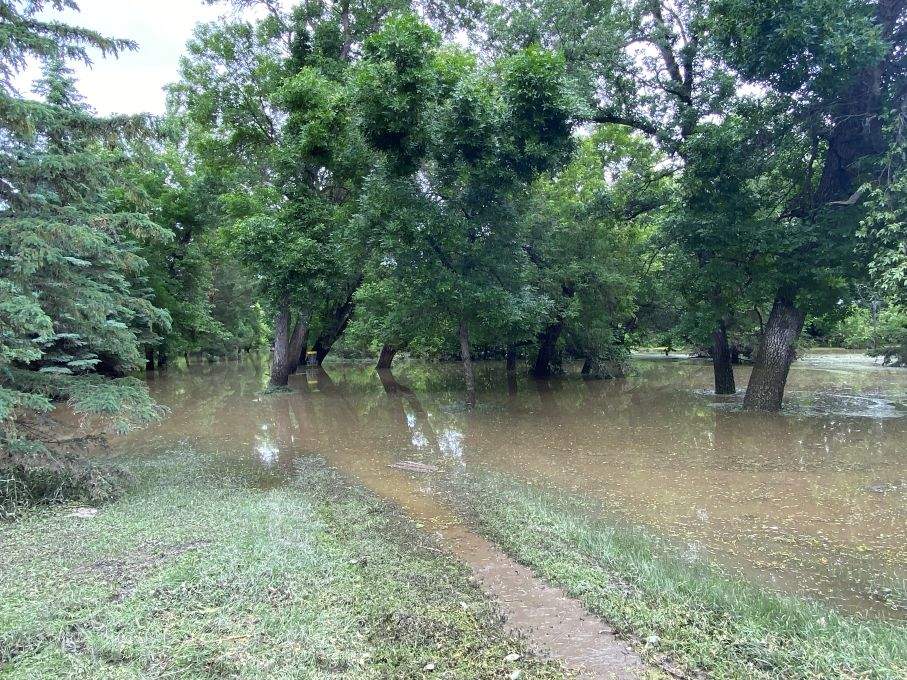
You think you know what a summer storm looks like until your entire town ends up underwater twice in less than a month. That's exactly the nightmare playing out right now across parts of western Manitoba's Parkland region. A brutal onslaught of severe weather has dumped up to 119 mm of rain over just five days. To put that into perspective, the entire region normally gets about 80 mm for the whole month of June.
When that much water drops out of the sky in a matter of days, systems fail. Rivers burst. Towns turn into lakes. Right now, communities like Swan River and the city of Dauphin are struggling under localized states of emergency. Emergency crews are working around the clock, sandbagging foundations, and executing rescues, but the damage is already severe. Premier Wab Kinew has explicitly called the upcoming recovery operation "gargantuan." He isn't exaggerating.
If you live in these areas, or have family there, you want to know how bad it actually is, what's failing, and what happens next. Here's the raw reality on the ground.
The Epicenter of the Deluge in Swan River and Dauphin
The sheer volume of water has broken municipal infrastructure. Local leadership is visibly shaken. Dauphin Mayor David Bosiak, who has lived in his community for over half a century, called the sudden wake-up to the deluge shocking. The water came fast and it came hard on Tuesday night, catching the city off guard as torrents rushed down from the local river system.
The situation is just as grim under 200 km away in Swan River. Mayor Lance Jacobson estimated that 150 people had to be evacuated as the waters surged. While some residents managed to protect their properties, many others weren't as lucky.
The worst part? Swan River was already reeling from devastating floods earlier in June. Bill Gade, the reeve of the surrounding municipality, pointed out that the community hadn't even begun to recover from the first disaster before this second storm hit. The exact same spots flooded all over again, only worse. Early estimates suggest that repairing the infrastructure damage alone in Swan River will start at $10 million.
Critical Infrastructure Failures
This isn't just a story about wet basements and ruined carpets. The floodwaters hit vital healthcare infrastructure.
The Dauphin Regional Health Centre was forced to shut down entirely. Water completely overwhelmed the hospital's basement, knocking out the main power source, the entire HVAC system, and the facility's computer network access. Imagine running a regional medical hub and suddenly losing your climate control, your patient data, and your electricity all at once. Staff had to rapidly transfer patients to neighboring hospitals to ensure their safety.
The Provincial and Federal Emergency Response
With local resources completely tapped out, the province is stepping in, but it's a race against the elements. Premier Kinew confirmed that the Manitoba government has formally requested military assistance from the federal government to support Swan River. The immediate priority is getting boots on the ground to manage heavy equipment, move sandbags, and secure vulnerable zones before any more water builds up.
Federal Emergency Preparedness officials have stated they are working closely with provincial teams to assess the evolving needs. But as any rural Manitoban knows, official help takes time to mobilize, and the immediate burden has fallen squarely on local volunteers, emergency responders, and neighbors helping neighbors.
What to Do If Your Property Is Flooding Right Now
If you're currently dealing with rising waters or localized overland flooding, standing around waiting for the municipal trucks isn't an option. You need to act to protect your life and your property immediately.
- Cut the Power Safely: If water is creeping toward your electrical outlets, baseboard heaters, or your main electrical panel, do not touch it. Contact your local hydro utility immediately to request a remote power disconnection. Standing in water with active electricity is a death sentence.
- Move Critical Belongings Up: Don't waste time trying to save everything. Focus on irreplaceable items, identification documents, medications, and high-value electronics. Move them to the highest floor possible.
- Document Everything Continuously: The moment it's safe to do so, take clear photos and videos of the water levels inside and outside your home. You will need this explicit visual proof for insurance claims and provincial disaster financial assistance programs.
- Stay Out of Localized Floodwaters: It looks like calm water, but overland flooding carries agricultural runoff, raw sewage, and hidden debris. Keep kids and pets completely out of it.
- Track Your Local 311 or Municipal Portal: Phone lines are currently jammed across affected regions. Use online citizen portals to report localized blockages, structural failures, or requests for non-emergency assistance.
The immediate weather forecast remains highly volatile. Environment and Climate Change Canada indicates that while some sun is expected—which will help dry up standing overland water—there is still an ongoing risk of showers and thunderstorms. Because the ground is completely saturated and the surrounding crops are holding massive amounts of moisture, any additional rainfall will instantly become runoff. The fight isn't over yet, and western Manitoba has a long, expensive road to recovery.