Two massive earthquakes hit northwestern and central Venezuela on Wednesday evening, and the reality on the ground looks nothing like the neat, organized rescue operations you see in movies.
A 7.2 magnitude foreshock followed just 39 seconds later by a crushing 7.5 magnitude mainshock fundamentally changed the landscape of the region. The official numbers are already grim, with health officials confirming at least 235 dead and over 4,300 injured. But those numbers don't tell the real story. An unconfirmed missing persons database reports over 49,500 people unaccounted for.
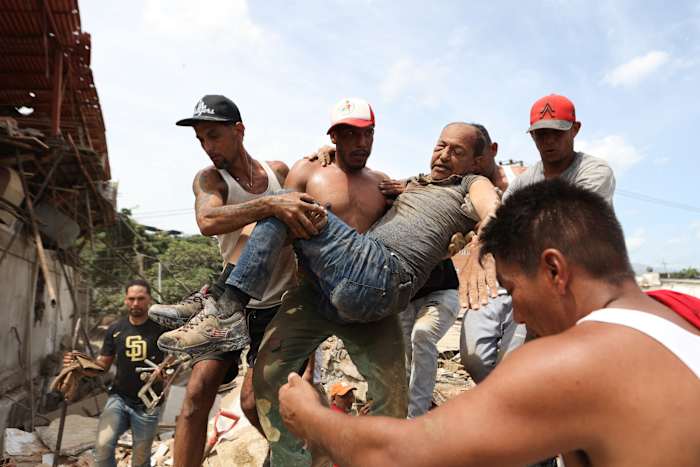
If you think heavy machinery and high-tech government rescue teams are leading the charge across the disaster zone, you're dead wrong. In cities like La Guaira and parts of Caracas, it's ordinary neighbors digging through concrete with their bare hands, plastic buckets, and whatever tools they can scramble to find.
Here's what is actually happening right now and why typical emergency assumptions completely miss the mark.
The Brutal Reality of Community Led Rescue
When a disaster of this scale hits a country already navigating severe infrastructure challenges, the central government doesn't just magically appear everywhere at once. Acting President Delcy Rodríguez declared a state of emergency and designated La Guaira a disaster zone, but formal rescue crews are concentrated heavily in the capital city of Caracas.
Outside the capital, families face a terrifying silence.
In coastal towns near the epicenter, the scene is chaotic. Dayana Delgado, a mother of three in a hard-hit northern district, publically questioned where the promised government machinery was while she watched her neighbors lift shattered slabs of cement. Her eight-year-old son remains missing. For people like Delgado, waiting for a bureaucratic response isn't an option. They dig because every passing minute shrinks the window of survival.
This isn't an isolated problem. It happens in almost every major seismic disaster. The immediate, life-saving rescues in the first 24 to 48 hours are almost always performed by local civilians who happen to be nearby, not by formal search teams.
The Logistics Crisis Grounding International Help
Getting specialized help into the worst-hit areas is a logistical nightmare. The twin quakes severely damaged Simón Bolívar International Airport in La Guaira, the main gateway for international flights into the capital region. With the runway and terminal structures compromised, all flights are grounded. You can't just fly in international search and rescue teams when the main airport is out of commission.
Furthermore, the physical destruction on the ground has crippled communication networks and cut off power across major sectors. Interior Minister Diosdado Cabello noted that affluent Caracas neighborhoods like Altamira and Los Palos Grandes saw major structural failures. At the Petunia Residences in Los Palos Grandes, a 14-floor section of a residential high-rise simply pancake-collapsed, leaving only six floors intact. In Altamira, a 22-story building collapsed entirely.
When high-rise buildings collapse like accordions, specialized acoustic sensors and heavy-duty concrete cutters are required to reach the voids where survivors might be trapped. Neighbors with shovels can only do so much against thousands of tons of reinforced concrete.
Infrastructure Failure Points
- Simón Bolívar International Airport: Heavily damaged, halting incoming air support.
- Telecommunications: Tower collapses and power outages have left thousands unable to call for help.
- Hospitals: Facilities are overwhelmed, with Health Minister Carlos Alvarado noting that the recorded death tolls only account for victims who actually reached medical centers.
What Needs to Happen Next
The Colombian Red Cross and other regional bodies have mobilized teams and put them on standby, but without formal international coordination and open transit routes, they remain stuck at the border.
If you want to understand how to actually support communities facing this level of sudden trauma, focus on grassroots funding mechanisms that supply immediate medical kits, water purification tools, and simple excavation gear to local networks already on the ground. Long-term structural rebuilding matters, but right now, survival depends entirely on the strength of a neighbor's grip on a shovel.
If you are looking to support relief efforts or track updates on missing relatives, monitor the verified crisis bulletins via the International Federation of Red Cross and Red Crescent Societies (IFRC) platforms, which are bypassing down telecommunication lines through satellite operational centers.