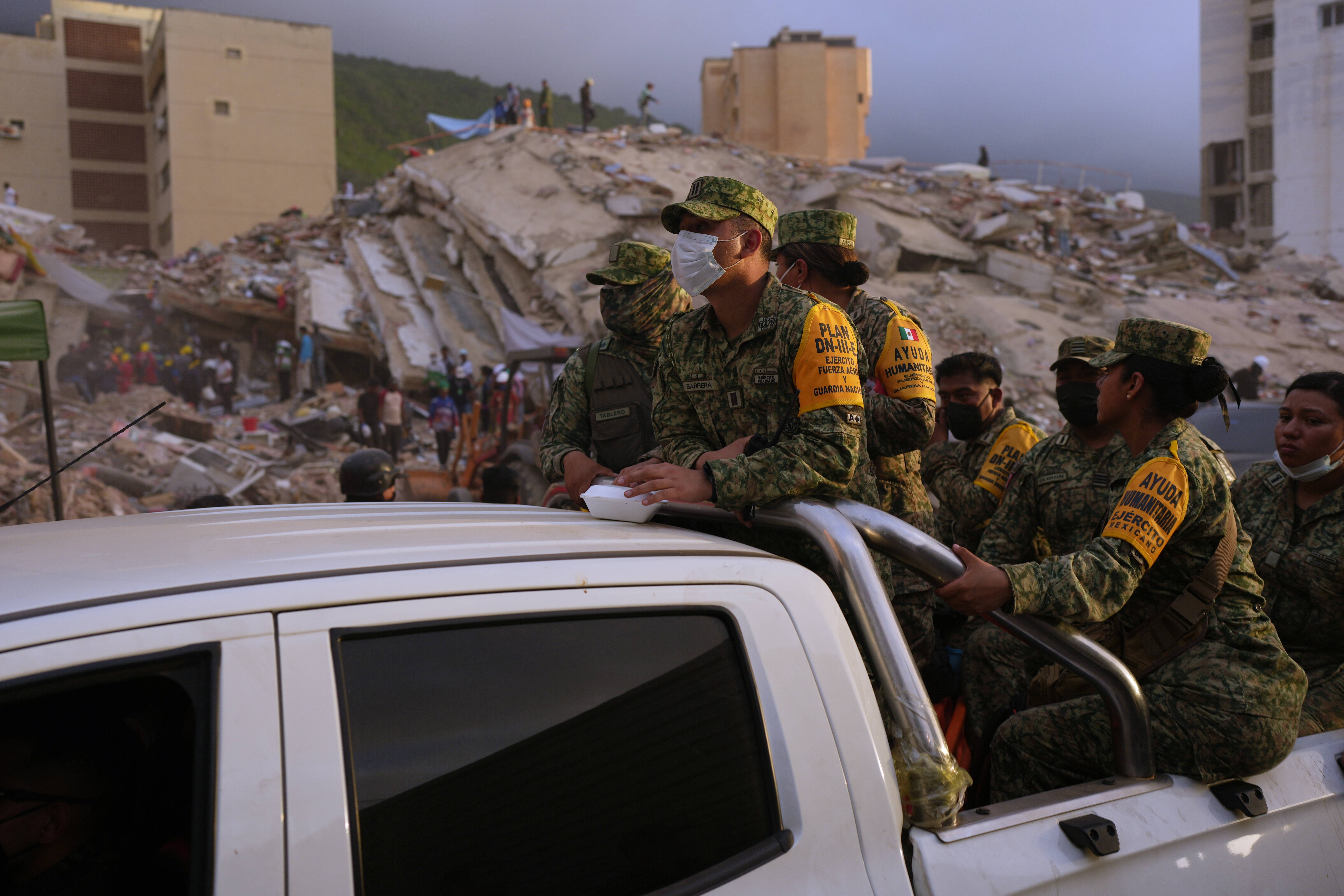
The metallic screech of a backhoe tearing into broken concrete stops instantly when a foreman raises his hand. Total silence drops over the ruins of Caraballeda. For a few seconds, the only sound is the heavy coastal humidity rolling off the Caribbean. Then, a rescue worker leans into a dark gap between pancaked concrete floors and shouts the same phrase they have been repeating for ninety-six hours straight: "We are the rescue team. If you are alive, please make any noise."
No one answers. Across the street, residents sit under the sparse shade of a damaged brick wall, faces covered in gray dust, waiting for a miracle that gets less likely by the hour.
On June 24, 2026, two massive earthquakes hit north-central Venezuela less than a minute apart. The back-to-back shocks measured 7.2 and 7.5 magnitude. They didn't just shake the ground; they completely flattened coastal towns and shattered parts of the capital city, Caracas. Four days into the disaster, the official numbers are staggering. The government reports 1,430 dead and 3,500 injured, but everyone on the ground knows those statistics represent a fraction of the real toll. Tens of thousands of people are still missing, buried inside structures that compressed like accordions.
The immediate seventy-two-hour survival window is officially closed. Now, the rescue mission is a brutal race against biological limits and failing infrastructure.
Understanding the Doublet Event that Shattered La Guaira
What happened along the Venezuelan coast wasn't a standard earthquake followed by aftershocks. Seismologists classify this as a doublet event—two independent, major earthquakes occurring almost simultaneously in the same fault system. The first 7.2 quake struck just off the coast near Morón, fracturing brittle geological structures. Roughly 39 seconds later, while the ground was still violently moving, a second 7.5 magnitude quake tore through the San Sebastián fault zone.
This second shock wave hit buildings that were already structurally compromised. High-rise apartment buildings in the state of La Guaira, which might have survived a single isolated tremor, suffered immediate catastrophic failure. The structural columns snapped, dropping upper floors directly onto lower ones.
The physical reality of these collapses makes rescue work incredibly dangerous. In typical earthquake zones, buildings sometimes lean or break into large, hollow triangles called survival voids. In La Guaira and parts of Caracas, older concrete construction methods combined with the sheer force of the doublet event caused absolute pancaking. Ten-story structures have been compressed into mounds of rubble barely two stories high.
Bare Hands Against Mountains of Concrete
The official narrative coming from acting President Delcy Rodríguez highlights a massive, organized state response. The government militarized La Guaira to maintain order and announced the arrival of international search-and-rescue teams from Spain, Turkey, Chile, and China.
But if you walk through the affected neighborhoods, you see a completely different reality. The state was already struggling with a decade-long economic collapse, leaving local fire departments and emergency teams without basic equipment. In many spots, the people doing the heavy lifting are local volunteers and desperate family members.
In Caraballeda, residents are using borrowed power tools, car jacks, and their bare hands to clear slabs of concrete that weigh several tons. Dayana Delgado, a mother looking for her eight-year-old son, openly questioned where the heavy machinery promised by state TV was actually deployed. The truth is logistical gridlock. The twin quakes cracked open major highways and triggered massive landslides along the mountainous routes connecting Caracas to the coast. Maiquetía International Airport was forced to close to commercial traffic, only recently opening a single runway for specialized military and cargo relief flights.
Without heavy earth-moving equipment on site, rescuers have to work with agonizing slowness. Moving the wrong piece of debris can cause the entire pile to shift, crushing anyone trapped alive underneath or killing the rescuers themselves.
The Clock is Running Out
Finding survivors on day four requires a combination of incredible luck and perfect timing. The human body can go weeks without food, but under the sweltering 90-degree humidity of the Venezuelan coast, a trapped person can only survive about three to five days without water. Dehydration, combined with crush injuries, makes every passing hour critical.
Local volunteer medical teams report that the biggest threat to survivors right now is crush syndrome. When a heavy object pinches a muscle mass for days, the tissue breaks down and releases massive amounts of toxins. If the pressure is removed too quickly without immediate medical intervention, those toxins flood the bloodstream, causing swift kidney failure.
Compounding the crisis is the smell of decay beginning to hang over whole blocks. It is a grim reminder of the thousands still missing and a warning of a looming public health crisis. Contaminated water lines and a lack of sanitation in the makeshift tent cities springing up on soccer fields could easily spark outbreaks of waterborne illness.
Immediate Steps Needed to Help the Relief Effort
The window for specialized Urban Search and Rescue teams to pull living people from the rubble is shrinking to zero, but the humanitarian crisis is just getting started. If you want to support the recovery efforts effectively, focus on organizations with existing infrastructure on the ground.
- Prioritize Medical and Water Relief: Organizations like World Vision and local Red Cross networks are pivoting from immediate extraction support to clean water distribution and field hospital operations.
- Support Direct Funding Networks: Avoid sending physical goods independently, as airport and highway damage means logistics chains are entirely clogged. Financial donations allow teams on the ground to source supplies from unaffected western regions of the country.
- Track Local Reports Over State Media: The political situation complicates official reporting. Monitor updates from independent humanitarian tracking networks on the ground to see which specific sectors require urgent medical supplies.