The drone footage looks like a controlled demolition gone completely wrong. Six massive concrete residential towers, chopped down to hills of pulverised rubble, while two lonely sister blocks stand beside them, warped and fractured like cracked teeth. This isn't a movie set. It's the Hugo Chávez public housing complex in La Guaira, known locally as Los Cocos, just one week after a brutal double earthquake ripped through north-central Venezuela.
If you're tracking the news, you've probably seen the haunting single-image aerial shots dominating major media outlets like the New York Times. They show the physical destruction. But they don't explain the real story. They don't explain why some concrete frames turned into dust while identical blocks a few yards away stayed upright.
The disaster has claimed over 2,200 lives, with tens of thousands of people still missing across the country. The real crisis isn't just the fault line that ruptured on June 24. It's the intersection of a rare geological event, a decades-long building boom, and the biting reality of economic isolation that left a nation completely unprepared for a worst-case scenario.
The 39 Second Doublet that Changed Everything
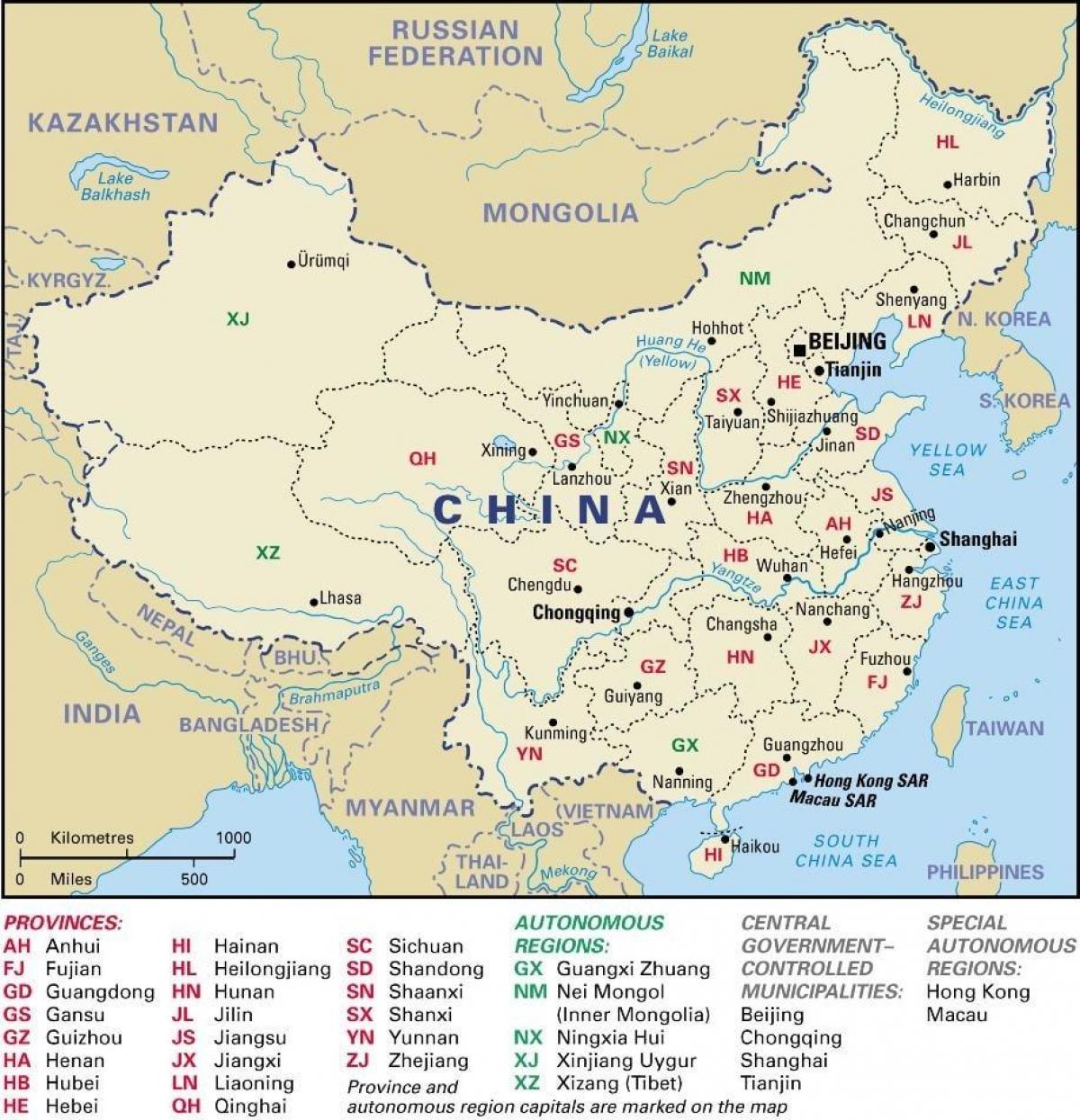
Most people don't think of Venezuela as a high-risk earthquake zone. We usually think of Chile, Japan, or California. But northern Venezuela sits right on the messy boundary where the Caribbean tectonic plate grinds horizontally past the South American plate at about two centimeters a year. It's a strike-slip fault system, meaning the ground moves side-to-side rather than up-and-down.
What happened at 6:04 p.m. was incredibly rare. Seismologists call it an earthquake doublet.
First, a magnitude 7.2 quake struck near San Felipe. The ground hadn't even stopped moving when, exactly 39 seconds later, a second, more powerful magnitude 7.5 mainshock ruptured an adjacent fault segment near Yumare. Both occurred at a shallow depth of just 10 kilometers.
When you hit concrete buildings with that kind of rapid-fire, horizontal shaking, you're not just testing their strength. You're trying to snap them. The first shock compromises the structural integrity, cracking the masonry and loosening the joints. The second shock, hitting less than a minute later, finishes the job before anyone has time to run outside.
What Went Wrong at Los Cocos
In the immediate aftermath, a fierce political blame game started. Corporate media outlets quickly pointed fingers at the Gran Misión Vivienda Venezuela (GMVV)—the government's massive social housing program started by Hugo Chávez back in 2011 to build millions of homes for low-income families. The narrative was simple: cheap, rushed state construction led to catastrophic failure.
But if you look closer, that narrative doesn't hold up.
Independent open-source tracking and structural evaluations reveal that private developments, older apartment buildings, and colonial-era structures in downtown Caracas and La Guaira suffered identical, if not worse, structural failures. In fact, out of more than 58,000 damaged or destroyed buildings across the region, only a tiny fraction belonged to the state housing program.
So why did the towers at Los Cocos collapse so dramatically?
Structural engineers inspecting the site have pointed out a classic architectural vulnerability: soft-story collapse. Many of these modern housing blocks were built with open ground floors to accommodate communal spaces, parking, or commercial storefronts. Without solid masonry walls on the bottom level to resist horizontal shifting, the ground floor acts like weak legs under a heavy torso. When the strike-slip faults vibrated laterally, the base shifted wildly, causing the top heavy residential floors to pancake straight down.
It wasn't just bad concrete. It was the wrong design for a fault line capable of delivering a double punch.
The Invisible Weight of Economic Sanctions
You can't talk about a disaster in 2026 Venezuela without talking about the broader economic reality. For years, heavy unilateral sanctions have frozen tens of billions of dollars in Venezuelan public assets abroad.
Think about what that actually means when the ground opens up:
- Degraded Infrastructure: Emergency response equipment, heavy cranes, and specialized urban search-and-rescue gear haven't been modernized or maintained due to import restrictions.
- Crippled Utilities: The country's power grid and water systems were already fragile. The quake completely severed water lines in La Guaira, leaving survivors to fight over basic survival supplies.
- Medical Deficits: Hospitals that survived the shaking are completely overwhelmed, facing severe shortages of surgical supplies, blood bags, and trauma medications.
Rescuers from seven different nations have arrived to help, running K-9 units and drone flights through the dust. But they're fighting an uphill battle. When international aid groups like the World Food Programme have to scramble to raise an emergency $50 million just to keep half a million displaced people from starving over the next ninety days, you realize the tragedy is only beginning.
The Realities on the Ground Right Now
If you step away from the bird's-eye drone photos, the scene on the ground is chaotic and heartbreaking. At the ruins of Los Cocos, rescuers periodically call for total silence. Hundreds of family members stand quietly on the highway, straining to hear a faint cry or a knock from beneath the concrete slabs.
In nearby Catia La Mar, an international rescue crew has spent days tunneling toward a 43-year-old security guard, Hernan Gil, who has been trapped in his collapsed booth for over a week. It's a race against dehydration, shifting rubble, and frequent aftershocks.
Meanwhile, tens of thousands of families are sleeping in cars, vacant parking lots, or makeshift public parks. They're terrified to go back inside anything with a roof. And they have good reason to be afraid.
Moving Forward: The Traffic Light System
To combat this widespread psychological panic, a joint commission of structural engineers from the Venezuelan College of Engineers, the Central University of Venezuela (UCV), and the national seismological research foundation (FUNVISIS) is hitting the streets.
They aren't just guessing. They're using a straightforward, color-coded "traffic light" safety assessment to clear buildings for re-entry:
- Green: Structurally sound. Minor cosmetic cracks, but perfectly safe to sleep in.
- Yellow: Compromised but repairable. The internal columns and beams are intact, but exterior walls or internal masonry have buckled. Residents cannot return until these elements are torn down and rebuilt.
- Red: Total structural failure. Severe damage to the load-bearing frame. The building must be demolished.
This is a smart, actionable framework. It cuts through the bureaucratic noise and gives displaced families immediate clarity. But checking tens of thousands of structures takes time—time that displaced families sleeping in the rain simply don't have.
Practical Next Steps for the Region
Rebuilding a flattened coastline while under international economic isolation requires a hard pivot in how engineering and emergency management are handled in Latin America.
First, future housing projects can't use the soft-story architectural model in active fault zones. Ground floors must be heavily reinforced with shear walls or cross-bracing to absorb lateral tectonic energy. Second, international humanitarian corridors must be fully exempt from political sanctions to ensure a steady flow of water purification systems, medical supplies, and structural steel.
If you want to support the immediate relief effort on the ground, avoid unverified crowdfunding campaigns. Direct your resources to organizations with established, long-term logistical footprints inside the country, such as the Pan American Health Organization (PAHO) or Project HOPE, which are currently delivering potable water, trauma kits, and psychological first aid directly to the hardest-hit zones in La Guaira.