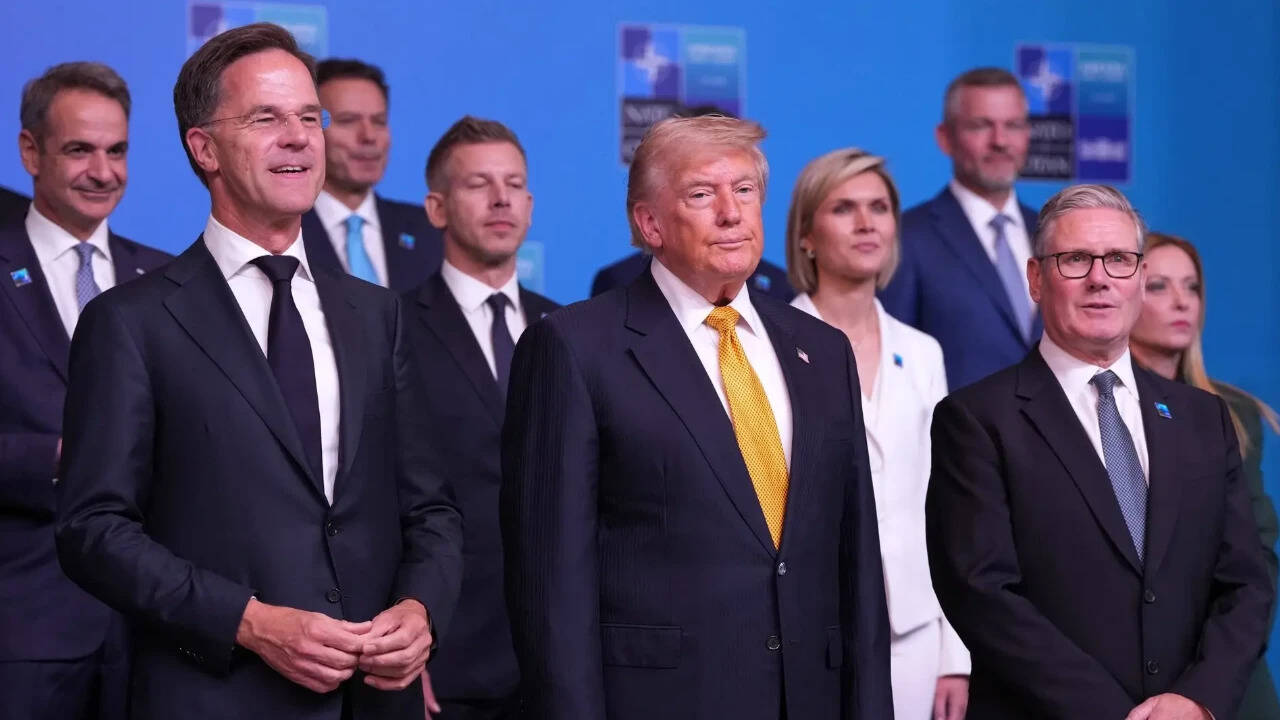
Donald Trump just told NATO leaders he wants to stay in the alliance. Yes, you read that right. The same man who spent months trashing the bloc, threatening a full United States withdrawal, and publicly venting his disgust has completely shifted his tone. Behind closed doors at the NATO summit in Ankara, he looked his European counterparts in the eye and said, "We want to remain with you."
If you follow geopolitics, your jaw should be on the floor. Just a few months ago in April, Trump was asked directly if he was planning to pull America out of the alliance. His response was unyielding: "Oh, absolutely without question." He even sent his Defense Secretary, Pete Hegseth, to actively avoid reaffirming America's commitment to Article 5.
Yet here we are in July 2026. The bluster has evaporated, replaced by Trump claiming there is "a lot of love" and "a lot of unity" in the room.
What changed? To understand this sudden pivot, you have to look past the surface-level drama and understand the intense transactional poker game happening between Washington, Brussels, and Tehran.
The Secret Behind the Ankara Turnaround
Trump did not wake up with a sudden appreciation for international institutional architecture. He operates on leverage and tangible returns. European allies finally figured out how to speak his language, and they brought a massive checkbook to Turkey to prove it.
The alliance members came to Ankara ready to spend. European nations and Canada announced over $50 billion in brand-new defense procurements. They also locked in an extra €70 billion ($80 billion) in military aid for Ukraine for the year, promising to keep that baseline moving forward. For a president who views international alliances through the lens of a balance sheet, this was a massive win. Trump can now fly back to Washington and claim he successfully bullied Europe into paying its fair share.
There is another layer to this deal that isn't getting enough attention. Reports indicate Trump told allies in private sessions that the US is perfectly happy to keep selling weapons to NATO members, explicitly adding that it doesn't matter how those weapons are put to use. It is a defense contractor's dream. Trump gets to protect domestic manufacturing jobs, secure massive export deals, and make Europe foot the bill for its own security.
Mark Rutte Masterclass in Flattery
While the money matters, the political cover matters just as much. New NATO Secretary-General Mark Rutte knows exactly how to handle the American president. Instead of lecturing Trump on democratic values or the historical legacy of the post-WWII order, Rutte gave him exactly what he wanted: absolute public validation for his military actions.
Right as the summit kicked off, the US military launched massive overnight air strikes against more than 80 targets inside Iran. It was a direct retaliation after Tehran allegedly targeted three commercial vessels in the strategic Strait of Hormuz, effectively tearing up a fragile, weeks-old ceasefire agreement.
Instead of hand-wringing or calling for restraint like European leaders usually do, Rutte stepped up to the microphone and fully backed the American strikes. He called the bombardment "absolutely necessary" because Iran had violated the truce. He looked at Trump and basically said, "I am with you on this."
This was a calculated move. Rutte explicitly told Trump to "grab the win" regarding the massive spikes in European defense spending. By validating Trump's aggressive stance on Iran and praising his leadership on defense budgets, Rutte managed to disarm a president who had spent the last quarter of the year trying to burn the alliance down.
The Brutal Reality of the Renewed Iran War
While NATO leaders are busy celebrating their newfound unity, the situation in West Asia is spiraling out of control. Trump announced that the temporary Memorandum of Understanding with Iran is officially dead. He didn't hold back his words either, calling Iran's leadership "vicious, violent people" and labeling them as "scum."
The military reality on the ground is terrifyingly volatile. The US Central Command targeted Iranian air defense networks, coastal radar setups, and dozens of Islamic Revolutionary Guard Corps small boats. The goal was to cripple Iran's ability to hold global energy shipments hostage in the Strait of Hormuz.
Iran didn't take the hit lying down. Within hours, the IRGC launched a massive swarm of drones and ballistic missiles targeting US military facilities across Bahrain and Kuwait. The Iranian state media claimed they targeted 85 distinct American-linked installations, including the Sheikh Isa Air Base in Bahrain.
Global markets reacted instantly. Oil prices shot up by 3% the moment Trump declared the ceasefire over. If this conflict escalates into a full-scale war, the Strait of Hormuz could be completely closed off. That waterway handles a massive chunk of the world's daily fuel transit. A prolonged blockade means skyrocketing inflation and a global energy crisis that no amount of NATO diplomacy can fix.
The Friction That Trump Left Unresolved
Don't let the smiling press conferences fool you into thinking everything is perfect now. Trump is still causing massive headaches for the alliance, even if he wants to stay in the club.
He didn't drop his bizarre, ongoing fixation with Greenland. Trump arrived at the summit reopening old wounds by insisting the United States should take control of the semiautonomous Danish territory. Danish Prime Minister Mette Frederiksen had to publicly fire back, stating her country is ready to defend every single inch of its territory and expects its allies to do the same.
Trump also used his time to attack specific members who haven't jumped onboard with his military campaign against Iran. He singled out Spain, calling them a "terrible partner" and threatening to implement harsh trade penalties.
This creates a weird, fractured dynamic. On one hand, you have an ironclad commitment to Article 5 signed in the official summit declaration. On the other hand, you have the commander-in-chief of the world's superpower threatening economic warfare against his own allies because they don't want to get dragged into a shooting war in the Middle East.
What Happens Next
The Ankara summit proved that NATO can survive Trump, but only if the allies are willing to pay a steep financial and political price. The illusion of a values-based alliance is gone. It has been replaced by a purely transactional relationship.
If you want to understand where this situation goes next, keep your eyes on two specific things over the coming weeks.
First, watch the shipping lanes in the Strait of Hormuz. US forces are already posturing for a second consecutive night of heavy strikes against Iranian positions. If Iran continues to target commercial oil tankers, or if their retaliatory missile strikes inflict heavy American casualties in Bahrain or Kuwait, Trump will likely expand the bombing campaign.
Second, monitor how European capitals actually allocate that promised $50 billion in defense spending. Trump will be watching those procurement numbers like a hawk. If European nations slow-walk their defense purchases or try to back out of the weapons deals discussed behind closed doors, expect the threats of a US withdrawal to return to your news feed instantly.
The alliance bought itself some time in Turkey. Rutte played his cards perfectly, and European nations paid the admission fee to keep America's nuclear umbrella overhead. But with a burning conflict in Iran and deep-seated erratic behavior coming from the White House, this newfound unity is built on incredibly shaky ground.