A peaceful religious pilgrimage shouldn't end in a mass casualty event. Yet, in northeastern Thailand, a routine spiritual journey turned into an absolute nightmare because an eleven-year-old child got behind the wheel of a heavy pickup truck. The devastating crash left eight Buddhist monks dead and many others fighting for their lives. It's a horrific story that has sent shockwaves through Southeast Asia, but it points to a much deeper, systemic crisis that goes far beyond a single tragic accident.
When you hear about a crash of this magnitude, you expect the culprit to be a drunk driver or a reckless drag racer. You don't expect a child who hasn't even reached middle school to be navigating a multi-ton piece of machinery down a busy public highway. The details coming out of Mukdahan province are both heartbreaking and infuriating. They force us to look directly at the deadly combination of lax vehicle security, virtually nonexistent rural traffic enforcement, and the devastating consequences of parental oversight failures.
A Horrific Morning in Mukdahan
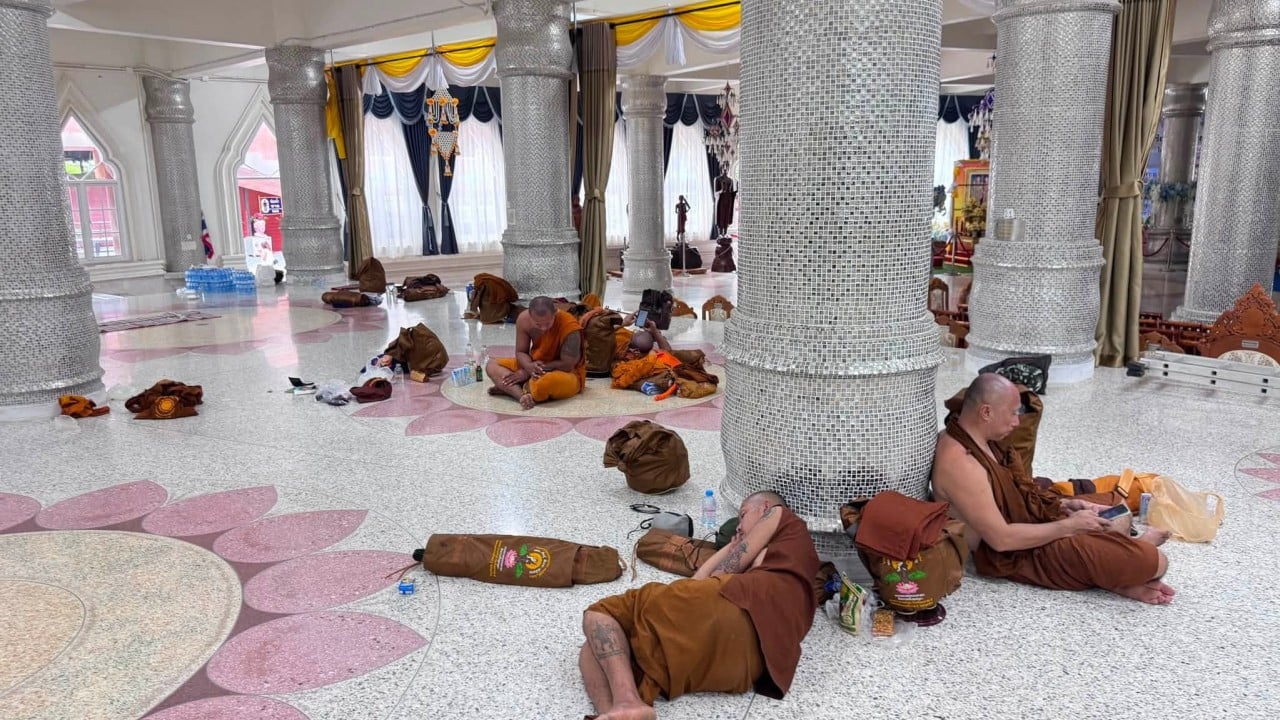
The morning started with quiet devotion. A group of 35 Buddhist monks and five lay followers set out from the Nam Khun district on a grueling 260-kilometer pilgrimage on foot toward Ubon Ratchathani province. They had stopped at the Wat Roi Phra Phutthabat Phu Manorom temple for a meal before continuing their trek along the roadside. They were walking in a neat, single-file line along the edge of the asphalt near the Na Si Nuan Market, completely vulnerable to the traffic rushing past them.
Then came the swerving vehicle.
Eyewitness accounts from surviving monks paint a terrifying picture of the moment everything changed. One monk, Phra Sompong, recalled that he was actively chanting a meditation mantra, "Buddho, Buddho," when he noticed a pickup truck approaching haphazardly. The Isuzu pickup truck was losing balance and veering violently off course.
Within seconds, the truck plowed into the procession at full speed.
The impact was catastrophic. The first nine monks in the line miraculously managed to jump out of the way or were bypassed by the vehicle's trajectory. Those further back had absolutely no time to react. The force of the collision threw grown men into the air like ragdolls. Five monks died right there on the hot asphalt, surrounded by their scattered belongings and ruined saffron robes. Three more succumbed to their injuries after being rushed to Mukdahan Hospital.
Emergency responders arrived to find a scene of utter devastation. Beyond the eight dead, at least 14 other monks were hospitalized, with four listed in critical condition. The numbers are still fluid as doctors fight to stabilize the most severely injured victims. It's the kind of sudden, violent tragedy that communities take decades to fully recover from.
The Shocking Reality of an Eleven Year Old Behind the Wheel
How does an 11-year-old boy wind up driving an Isuzu pickup truck on a major roadway for ten kilometers without anyone stopping him? That's the question driving the public outrage across Thailand right now.
According to Mukdahan provincial police chief Major General Pairoj Thaiphutra, the child involved is a minor with special needs. He apparently took his parents' truck without their permission from the family home in the Don Tan district. He managed to start the engine, navigate out of the property, and drive a massive distance down public roads toward the Muang district before completely losing control of the vehicle.
Think about that for a second. Ten kilometers is not a minor slip-up. It's a significant distance to drive a vehicle, requiring passing other motorists, navigating intersections, and maintaining a high speed. The fact that an 11-year-old child could manage this unnoticed until he plowed into a crowd of pedestrians highlights a terrifying reality about vehicle accessibility in rural homes.
Right now, the boy is in police custody at the Muang district police station. Investigators haven't been able to formally question him because he remains in an intense state of shock, unable to provide a coherent statement. Child protection officers and state welfare workers are being brought in to handle the sensitive process of interviewing a minor suspect.
The police have turned their attention toward the parents. Investigators called the family in to find out exactly how a child managed to grab the keys to a deadly weapon and drive off without anyone noticing. It's a harsh spotlight, but it's completely justified.
Thailand Road Safety Crisis Is Completely Out of Control
To truly understand how a tragedy like this happens, you have to look at the broader environment of driving culture in Thailand. This isn't an isolated incident of bad luck. It's the symptom of a deeply broken system.
Thailand consistently ranks among the worst nations globally for road traffic mortality. Data from the World Health Organization consistently places Thai roads as some of the deadliest in Asia, driven by a cocktail of speeding, weak law enforcement, and cultural normalization of risky behavior. Pickup trucks are the lifeblood of rural Thailand, used for everything from agricultural transport to daily commuting. They're everywhere, and they're heavy.
In many rural provinces, the sight of underage teenagers driving motorbikes or even trucks isn't just common; it's practically ignored. Parents frequently allow older children to drive short distances to help with farm chores or run errands to local markets. This creates a dangerous environment where heavy vehicles are treated like simple appliances rather than dangerous machinery. When keys are left on kitchen tables or hanging casually by the door, the barrier to entry for a younger child drops to zero.
Mukdahan provincial governor Worayan Bunnarat spoke out after the crash, calling the incident a severe lesson for the entire country. He admitted that despite strict rhetoric regarding road safety campaigns in recent years, the reality on the ground remains incredibly dangerous. When a culture treats driving as a right rather than a heavily regulated responsibility, you get tragedies like the one that occurred in Mukdahan.
What Legal Accountability Looks Like When the Driver Is a Child
The legal aftermath of this crash is bound to be incredibly messy. Under Thai juvenile law, an 11-year-old child cannot be subjected to standard criminal prosecution or adult prison sentences. The justice system focuses heavily on rehabilitation and family intervention for young children who commit severe offenses.
This shifts the entire burden of legal and financial accountability onto the parents.
Under the Thai Civil and Commercial Code, specifically Section 429, parents or guardians are held jointly liable for the damages caused by a minor under their care. The only way parents can escape this liability is if they can prove to a court that they exercised all reasonable care and supervision appropriate for guarding the child. Given that the child drove ten kilometers in a family vehicle, proving sufficient supervision is going to be an uphill battle for this family.
The victims were highly venerated members of the Buddhist community. Monks in Thailand hold a massive cultural weight, acting as spiritual pillars for entire villages. The loss of eight monks isn't just a legal matter; it's a profound cultural wound. The financial compensation claims for medical bills, funeral costs, and the loss of community leadership will be massive, likely ruining the family financially.
This case should scare every single vehicle owner who routinely leaves their keys lying around the house. If your child takes your car and kills someone, you can't just throw your hands up and say you didn't know. The law doesn't care if you didn't give permission. The law cares that you left the weapon accessible.
Actionable Next Steps to Prevent the Next Family Tragedy
We can't change what happened on that road in Mukdahan, but we can completely change how we manage vehicle security in our own homes. If you have children, teenagers, or vulnerable family members under your roof, you need to treat your car keys with the exact same level of security you would use for a firearm.
Secure Your Keys Instantly
Don't drop your car keys on the counter right next to the front door. Don't leave them in a bowl on the coffee table. If you have a child with behavioral issues, cognitive differences, or simply an adventurous streak, your keys need to be locked away. Buy a small, secure key box or keep them on your person at all times.
Erase the Culture of Casual Driving
Stop letting underage kids practice driving in empty fields or quiet backroads before they're legally permitted to hold a license. It normalizes the act of driving before the brain is mature enough to process the immense responsibility that comes with it. Driving is a complex task that requires split-second risk assessment. A child's brain simply isn't equipped for it.
Talk to Your Kids Directly
Sit down with your children and explain what vehicles actually are. They aren't toys. They aren't video games where you can just hit reset after a crash. Show them the reality of what happens when control is lost. Make it clear that touching the family vehicle without an adult present is an absolute, non-negotiable boundary.
Establish Community Accountability
If you see a child driving a vehicle in your neighborhood, don't mind your own business. Speak up. Alert their parents or inform local authorities. It takes a village to maintain public safety, and ignoring small warning signs is exactly how we end up reading about eight dead monks on a roadside in Thailand.
Keep your keys locked up. Check on your kids. Stop assuming that a tragedy like this can only happen to someone else.