Switzerland is famous for its towering Alps, high-end watches, and a fierce, centuries-old commitment to neutrality. But neutrality doesn't mean staying defenseless. In a world where low-cost, explosive-laden drones can cripple vital infrastructure in minutes, the Swiss military is waking up to a glaring vulnerability in its lower airspace.
The Swiss Federal Council recently greenlit a massive defense funding package. A core element of this plan is a CHF 800 million (roughly $880 million) allocation specifically earmarked to acquire eight Skynex 35mm short-range air defense systems from Rheinmetall Air Defence AG. For an alternative perspective, check out: this related article.
This isn't just a routine hardware upgrade. It's a fundamental shift in how a non-aligned nation views modern warfare. For years, western militaries prioritized multi-million-dollar fighter jets and high-altitude missile batteries. But recent conflicts in Ukraine and the Middle East proved that cheap, mass-produced unmanned aerial vehicles (UAVs) can bypass legacy radar systems and rain down devastation. Switzerland watched, learned, and decided to close the gap.
The Reality of Modern Air Vulnerability
If you look at Switzerland's current military posture, it's heavily weighted toward high-end threats. The country is already buying F-35A fighter jets and integration components for Patriot missile batteries. Those systems are fantastic for stopping supersonic jets or high-altitude ballistic missiles. They're completely useless against a swarm of plastic drones flying fifty feet above the tree line. Further coverage on this trend has been shared by TIME.
Firing a million-dollar Patriot missile at a $20,000 kamikaze drone is financial suicide. Worse, traditional air defense radars often filter out small, slow-moving objects to avoid tracking flocks of birds. That exact blind spot is what modern drone tactics exploit.
The Swiss military recognized that their lower airspace was effectively wide open. If a conflict erupted or hybrid saboteurs targeted the country's hydro-plants, financial hubs, or command bunkers, Switzerland lacked the high-volume, rapid-response tools to swat those micro-threats out of the sky.
What Is the Skynex System Anyway
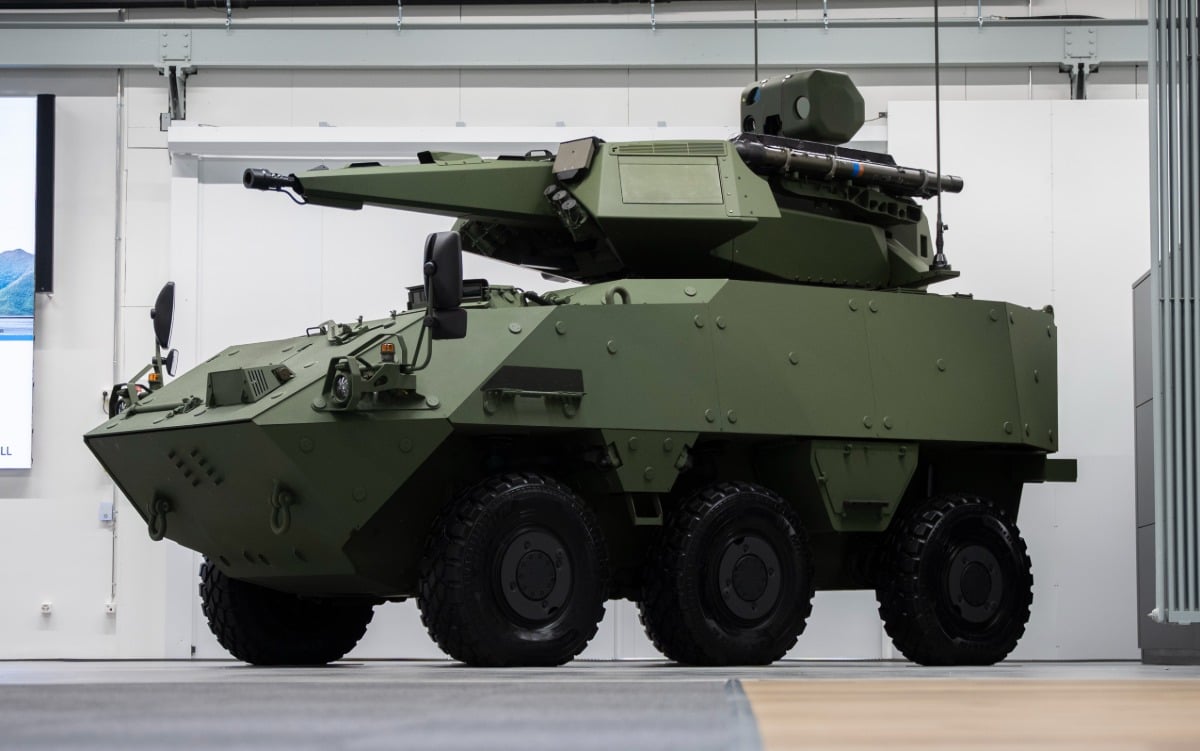
Instead of relying on expensive missiles, the Skynex platform relies on kinetic volume and smart ammunition. Developed by Rheinmetall's Swiss subsidiary based in Zurich-Oerlikon, the system is a highly networked evolution of classic anti-aircraft guns.
[Oerlikon X-TAR3D Radar] ---> [Skymaster Battle Management Node] ---> [35mm Revolver Guns Mk3]
The system splits up tracking and shooting into independent, modular pieces:
- The Brain: The Oerlikon Skymaster battle management system acts as the command center, pulling data from various sensors to build a local airspace map.
- The Eyes: An X-TAR3D tactical acquisition radar detects low-altitude, low-radar-cross-section targets that normal radars miss.
- The Muscle: Remote-controlled 35mm Revolver Guns Mk3 can fire up to 1,000 rounds per minute, engaging targets up to four kilometers away.
The real secret sauce is Rheinmetall’s Ahead air-burst ammunition. When the gun fires, a sensor at the muzzle calculates the exact speed of the round and programs a tiny timer inside the shell. Just before reaching the target drone, the shell explodes, releasing a dense cloud of heavy tungsten pellets. It acts like a high-tech shotgun in the sky. A drone flying through that cloud is instantly shredded.
Because it uses bullets instead of guided missiles, the cost per engagement drops dramatically. That's how you fight a swarm without going bankrupt.
Navigating Neutrality and Supplier Bottlenecks
You might wonder why Switzerland is rushing this purchase now. The answer lies in global defense supply chains.
Bern originally looked toward American-made systems to fortify its integrated air defense. However, US production lines are choked with backlogs, causing delivery timelines for critical air defense components to slip by five to seven years. Switzerland simply couldn't afford to wait until the 2030s to secure its airspace.
By pivoting to Rheinmetall, the Swiss government solved two problems at once. First, they locked in an earlier delivery timeline, with the first Skynex systems scheduled to arrive starting in 2028. Second, they pacified strict domestic laws regarding defense spending. Because Rheinmetall Air Defence builds these systems right in Zurich, a huge chunk of that CHF 800 million stays within the Swiss economy, creating local jobs and ensuring industrial participation.
It also lets Switzerland sidestep complex neutrality debates. Buying weapons manufactured on your own soil for domestic point-defense doesn't violate any non-alignment principles. It's just smart housekeeping.
The Broader European Shield
Switzerland isn't acting in a vacuum. Even though it isn't a NATO member, Bern joined the European Sky Shield Initiative (ESSI) in 2025. The continent is rapidly building a multi-layered defense umbrella to protect against everything from quadcopters to intercontinental missiles.
The Swiss strategy splits their new air defense into clear, distinct layers:
- Medium Range: Diehl Defence IRIS-T SLM systems (Switzerland expanded its order to seven units).
- Very Short Range / Counter-UAS: The eight newly requested Rheinmetall Skynex units.
Once these assets deploy, Switzerland will possess one of the tightest defensive envelopes in central Europe, capable of filtering out massive aerial assaults before they reach critical Alpine infrastructure.
What Happens Next
The Federal Council's approval is a massive step, but the procurement process moves in slow, bureaucratic phases. If you're tracking defense policy or industrial contracts, here is what needs to happen next:
- Parliamentary Vote: The commitment credits must pass through the Swiss Federal Assembly for final budget approval.
- Contract Finalization: Once approved, the formal purchase agreement will be signed with Rheinmetall Air Defence AG.
- Site Surveying: The Swiss military will begin mapping out high-value installations, military airfields, and key alpine passes to determine where these mobile, truck-mounted Skynex batteries will be permanently stationed.
- Integration Planning: Technical teams will need to plan how the Skynex's Oerlikon Skymaster software will interface with the broader Swiss radar network and the incoming IRIS-T missile batteries to avoid friendly fire and gaps in coverage.
Don't expect these guns to appear on Swiss hillsides tomorrow. With global defense manufacturing capacity stretched thin, the 2028 deployment timeline means the Swiss military has a tight window to train operators and rewrite its low-altitude air defense doctrine. But by putting real money on the table, Switzerland has made it clear that its neutrality is backed by serious teeth.