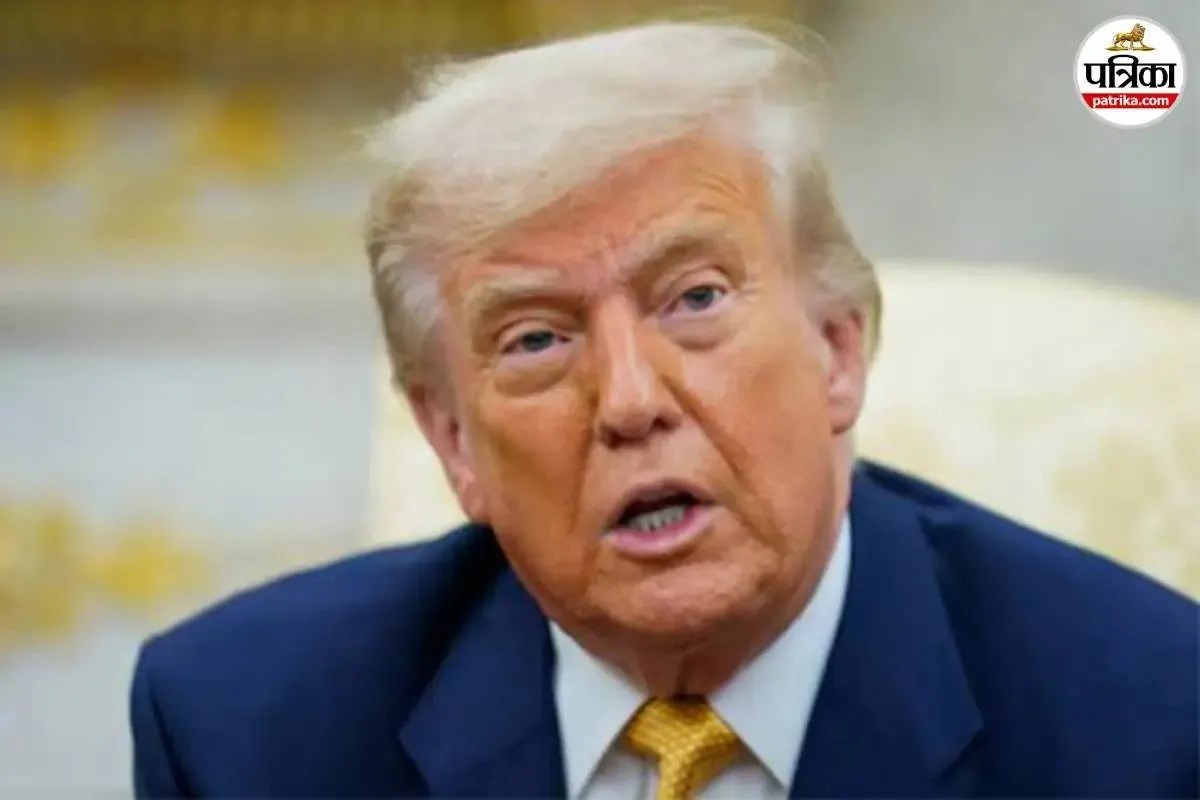
Donald Trump just hit a dead end at the highest court in the country. The US Supreme Court completely shut down his attempt to wipe away the $5 million civil judgment won by writer E. Jean Carroll. There are no more appeals left for this specific battle. The money has been sitting in a court-controlled account since 2023, and it's about to be handed over.
This isn't just another headline in the endless stream of legal drama surrounding the president. It's a definitive legal stamp on a narrative Trump has spent years fighting to erase. The high court issued a brief, unexplained order on June 29, 2026, rejecting his petition. No justices noted any public dissents. The silence from the bench speaks volumes. It leaves the 2023 jury verdict entirely intact. That jury found Trump liable for sexually abusing Carroll in a Manhattan luxury department store dressing room during the mid-1990s and then defaming her when he called her claims a hoax.
The Long Journey to the Supreme Court Rejection
This battle started publicly in 2019. Carroll published an excerpt from her memoir detailing a chance encounter with Trump at Bergdorf Goodman in 1996. What started as friendly banter about buying lingerie turned into a violent assault inside a dressing room. Trump immediately denied it. He claimed he had no idea who she was, said she wasn't his type, and accused her of making up stories to drive book sales.
Because the statute of limitations for criminal charges had long expired, criminal prosecution wasn't an option. New York passed the Adult Survivors Act. This window allowed survivors of sexual assault a one-year period to bring civil lawsuits for decades-old attacks. Carroll didn't hesitate. She filed a civil lawsuit for battery and defamation.
The case went to trial in federal court in May 2023. Trump chose not to testify. He didn't even show up to the courtroom. His legal team didn't call a single witness. Instead, they relied on trying to poke holes in Carroll's memory of the exact date and time. It backfired completely.
The jury listened to ten witnesses. Two of Carroll's close friends testified that she had confided in them immediately after the 1996 incident. The jurors also heard from two other women who described remarkably similar encounters with Trump. After a two-week trial, the anonymous jury deliberated for less than three hours. They found Trump liable for sexual abuse and defamation, ordering him to pay Carroll $5 million.
What Trump's Legal Team Tried to Argue
Trump's lawyers didn't give up easily. They fought the verdict up to the 2nd US Circuit Court of Appeals and lost. Then they took their shot with the Supreme Court. Their petition argued that the trial judge, Lewis Kaplan, made catastrophic errors that poisoned the jury against him.
The defense focused heavily on Federal Rules of Evidence. They argued that Judge Kaplan shouldn't have allowed the jury to hear testimony from the other two accusers. They claimed these old, unverified allegations were highly inflammatory and irrelevant to Carroll's specific case.
They also fiercely protested the admission of the infamous 2005 Access Hollywood tape. In that recording, Trump boasted about grabbing women by their genitals. Trump's lawyers argued this tape was used purely as character assassination to prejudice the jury. The appeals court had already rejected these points, ruling that the tape and the testimony showed a repeated, idiosyncratic pattern of conduct. The Supreme Court saw no reason to disagree.
Trump's lawyers even tried a political angle. They claimed Carroll waited more than twenty years to maximize political injury to him and profit for herself. They argued that the legal system was being weaponized against a sitting president, calling it liberal lawfare. The high court chose not to bite.
A Separate Eighty Three Million Dollar Problem
If you think this $5 million loss is the end of Trump's financial headaches with Carroll, think again. This Supreme Court decision only covers the first trial. There is a second, much bigger judgment hanging over his head.
In January 2024, a completely different jury awarded Carroll a massive $83.3 million in damages. This second trial focused on statements Trump made in 2019 while he was serving his first term in the White House. Because the first jury had already established that the abuse happened, this second trial was strictly about determining how much Trump owed for continuing to damage Carroll's reputation with his presidential megaphone.
Trump has been fighting that $83.3 million verdict through the lower appeals courts. His legal team had to secure a $91.6 million bond just to pause the execution of that judgment while they appeal. While the Supreme Court's action doesn't automatically dictate the outcome of that second appeal, it sets a terrible precedent for Trump's broader strategy. His core defense arguments are crumbling.
The Reality of Trump's Social Media Counteroffensive
Trump took to his Truth Social platform to express his fury. He labeled the decision surprising and blasted the proceedings as a fake case. He promised to keep fighting against what he views as the weaponization of the justice system. He argued the case was really an attack on the United States itself.
That rhetoric works well for political rallies. It means absolutely nothing inside a federal bank account. The $5 million has been secured for a long time. Carroll's legal team, led by Roberta Kaplan, made it clear that they view this as the definitive end of the line for his evasion.
The strategy of denying, delaying, and defaming has hit a solid brick wall. Every time Trump repeats his denials on social media, he actually risks opening himself up to brand new defamation lawsuits. Carroll's lawyers have openly hinted that they are watching his statements closely.
What This Means for Future Cases
The Supreme Court's refusal to step in reinforces a major legal standard. Trial judges have broad discretion when deciding what kind of prior conduct evidence can be presented to a jury in civil sexual abuse cases.
Trump has successfully fended off other massive financial penalties recently. A New York appeals court threw out a civil fraud penalty that exceeded $500 million. The Supreme Court also granted him sweeping criminal immunity for official acts in a completely separate 2024 ruling. When it comes to personal civil liability for actions taken before his presidency, the courts are treating him like any other private citizen.
The money will flow to E. Jean Carroll. The legal arguments have been exhausted. The next logical step is watching how the 2nd Circuit handles the pending $83.3 million appeal now that the foundation of the original case is legally unshakeable. Keep an eye on the upcoming court filings for that larger judgment. The legal walls are locking into place.