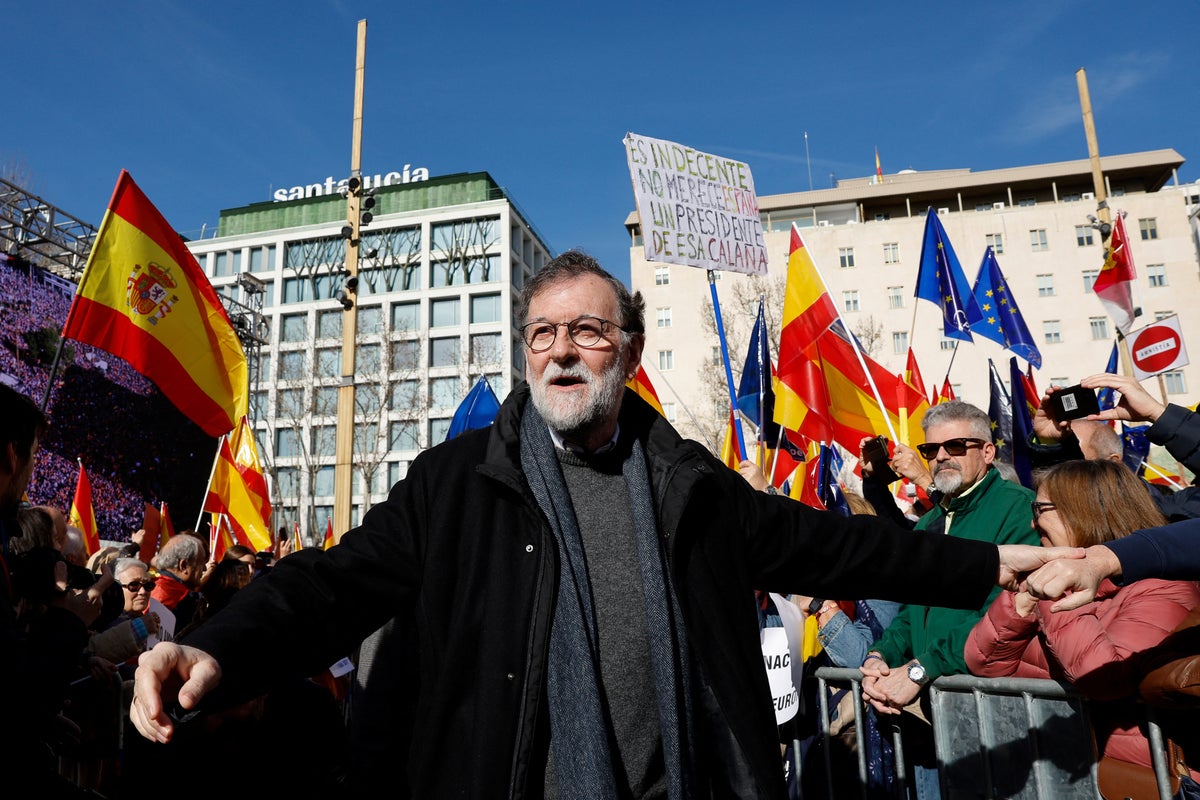
Football matches are rarely just about the ball. When Spain prepares to face France in a major tournament, the tension usually stays on the pitch, wrapped up in tactical debates and player matchups. But a single newspaper column from a retired politician managed to shift the entire conversation into a messy dispute over national identity, race, and citizenship. Former Spanish Prime Minister Mariano Rajoy recently reminded everyone that the old, ugly arguments about who gets to count as European are alive and well. The phrase Spain ex-PM draws criticism with ‘xenophobic’ remark on French team quickly started trending across Europe, and for good reason. Writing for the online outlet El Debate, Rajoy claimed that the French squad doesn't actually have any French players. It was a bizarre, blunt statement that instantly blew up into a diplomatic and social media storm right before a massive World Cup semi-final.
Reducing a human being's nationality to their skin color or their parents' birthplace isn't new. It's a lazy tactic that pops up every time a European national team with a diverse roster succeeds. France has dealt with this specific brand of hostility for decades, stretching back to their iconic 1998 World Cup victory. What makes this moment different is the status of the person speaking. Rajoy wasn't an anonymous internet troll hiding behind a cartoon avatar. He ran Spain from 2011 to 2018. When an ex-leader uses their platform to imply that black and brown athletes aren't truly citizens of the countries they represent, it normalizes a dangerous rhetoric. It shifts the boundaries of acceptable public speech. Don't miss our recent post on this related article.
The backlash was instant and came from both sides of the Pyrenees. Political leaders, sports figures, and citizens didn't hold back. They recognized the comment for what it was. It wasn't an innocent observation about football tactics or squads. It was a direct attack on the idea of modern, multicultural European societies.
The anatomy of the Spain ex-PM draws criticism with xenophobic remark on French team fallout
To understand why people are so furious, you have to look at exactly what Rajoy wrote. He started by praising the French team, noting their high FIFA ranking and their previous World Cup titles. Then came the punchline. He explicitly stated that despite their quality, they don't have any French players. He tried to frame it as a casual observation, a side note before calling them a formidable opponent. To read more about the history here, CBS Sports offers an informative summary.
That casual delivery makes it worse. It shows how deeply embedded these ideas are. The French Embassy in Spain fired back quickly. They stated clearly that every single player on the team is French. This includes the tiny handful of squad members who happened to be born outside the country but moved there as children. French Interior Minister Laurent Nuñez went on television to call the remarks completely unacceptable. He pointed out that France is a country built on diversity, where anyone can find their place regardless of their background.
The reaction inside Spain was equally fierce. Current Spanish Prime Minister Pedro Sánchez took to social media to blast his predecessor. Sánchez didn't mince words, calling the remarks explicitly xenophobic. He argued that some people still try to measure belonging by surnames, birthplaces, or skin color, while others measure it by a person's roots and their desire to contribute to society. Sánchez noted that Spain belongs to those who love it and work for it, not to those who bring shame upon it with bigoted statements. He ended his thought by looking forward to the match, wishing that the best team wins and that racism loses.
A pattern of targeted hostility
This isn't an isolated incident. The timing connects directly with another recent controversy involving French captain Kylian Mbappé. Just days earlier, a Paraguayan senator named Celeste Amarilla launched a racist tirade against Mbappé on social media. She called him a colonised Cameroonian who was desperately trying to pass himself off as French. The French Football Federation had to step in and file a formal complaint with prosecutors over those insults.
When you line up Rajoy's column next to Amarilla's comments, you see a clear pattern. It's a coordinated, repetitive attempt to delegitimize black excellence in European sports. Naïma Moutchou, the French minister for overseas territories, pointed out that these aren't accidental slips of the tongue. They are part of a methodical hatred directed at what modern France represents. Every time the team wins, the same obsessions come back to the surface.
The players themselves are forced to carry this extra weight. They aren't just watching film, studying opponents, and recovering from grueling training sessions. They have to read articles written by former heads of state questioning their right to exist under their own flag. It's an exhausting reality that white athletes simply don't have to navigate.
The hypocritical divide between ethnic and civic identity
The underlying issue here is a fundamental disagreement over what a nation actually is. People like Rajoy are stuck in an outdated, nineteenth-century view of ethnic nationalism. In that worldview, a nation is defined by bloodlines, ancestry, and a homogeneous culture. If your ancestors didn't live in a specific geographic space five hundred years ago, you are seen as a permanent outsider.
France operates on a different principle, at least in theory. The French Republic is built on civic nationalism. Citizenship is a political contract. It's defined by an adherence to the values of liberty, equality, and fraternity, along with holding legal French nationality. When Mbappé or any of his teammates step onto the pitch wearing the blue shirt, they are representing the French Republic as legal, equal citizens.
+-------------------------------------------------------------+
|               TWO CONFLICTING VIEWS OF NATIONHOOD           |
+-------------------------------------------------------------+
|  ETHNIC NATIONALISM                 |  CIVIC NATIONALISM    |
|  - Defined by bloodlines & ancestry |  - Defined by laws    |
|  - Rigid and exclusive boundaries   |  - Inclusive contract |
|  - Measures identity by skin color  |  - Focused on values  |
+-------------------------------------------------------------+
The irony is that European football itself is a product of global movement. Spain's own national team has benefited immensely from players with diverse backgrounds. Pretending that European nations are pure, isolated cultural bubbles is a fantasy. It ignores history, immigration, and the reality of the modern world.
Left and right unity in condemnation
An interesting element of this controversy is how it fractured traditional political alliances. Valérie Pécresse, a prominent center-right French politician, belongs to the same European political family as Rajoy's conservative Partido Popular. Yet, she didn't hesitate to condemn his words, calling them an example of despicable racism. She noted that Rajoy demonstrated a total lack of understanding when it comes to the actual soul of the French people.
When the traditional right and the socialist left agree on a condemnation, you know a line has been crossed. Olivier Faure, the leader of the French Socialist party, reiterated that France is not an ethnic nation. It has no specific skin color or religion. It's a political entity united around a shared republican motto. The outrage wasn't limited to a single political faction; it was a collective defense of the French national identity against an external insult.
This unity matters because it draws a line in the sand. It tells public figures that using international sports as a backdoor to smuggle xenophobic talking points into the mainstream will backfire. It forces a conversation about the boundaries of political discourse.
Why sports venues remain the ultimate battleground
Football stadiums have always mirrored society's wider anxieties. When economic times get tough, or when migration debates heat up in parliament, those tensions manifest in the stands and sports pages. The French national team has been the primary target for this stuff for nearly thirty years.
Back in 1998, when France won its first World Cup with the famous "Black, Blanc, Beur" (Black, White, Arab) squad led by Zinedine Zidane, politicians tried to claim that racism was over. That was a naive take. As soon as the team struggled in later tournaments, far-right politicians like Jean-Marie Le Pen instantly attacked them. They claimed the players didn't look French enough or didn't sing the national anthem with enough enthusiasm.
Rajoy's recent column is just the latest chapter in that long history. It proves that the progress people think has been made is fragile. Win a match, and you are a national hero. Lose a match, or face a conservative columnist before a semi-final, and your citizenship gets revoked in print. It's a double standard that minority athletes face constantly. They have to perform perfectly just to earn the basic respect that their peers receive by default.
The dangerous impact on regular citizens
The real danger of Rajoy's words doesn't stop with wealthy athletes like Mbappé. High-profile footballers have resources, fame, and legal teams to protect them. The actual victims of this rhetoric are the millions of ordinary citizens living in Europe who share similar immigrant backgrounds.
When a former prime minister says that black players aren't truly French, he's also telling the black schoolchild in Paris, the Arab shopkeeper in Lyon, and the son of immigrants in Madrid that they don't truly belong either. It validates the discrimination they face in housing, employment, and daily life. It sends a message that no matter how hard you work, no matter how much you contribute, you will always be viewed as an alien.
This is why the pushback needs to be aggressive. Letting these comments slide as mere pre-game banter or political incorrectness is a mistake. It gives permission to the rest of society to act on those same prejudices.
Moving past the bigoted rhetoric
The match between Spain and France will happen, a winner will be decided on the field, and the tournament will move forward. But the conversation surrounding Rajoy's comments needs to trigger actual change in how sports media and political figures talk about race and identity.
We need to stop treating these incidents as isolated blunders. They are systemic issues. Sports editors need to stop publishing columns that question the humanity or citizenship of athletes. Political parties need to hold their former leaders accountable when they veer into blatant xenophobia.
Don't let the noise distract from the sport itself. The best way to counter this regressive mindset is to continue celebrating the reality of modern sports. The French team is French because they hold the passport, they grew up in the neighborhoods, and they chose to play for the country. No outdated opinion piece from a long-gone politician can change that reality.
If you want to support a better environment in sports, call out these narratives when you see them online or in conversation. Don't look away just because it's politics mixed with football. Demand accountability from the media outlets that provide a platform for bigoted commentary. Support organizations that fight discrimination at the grassroots level in local sports clubs. The future of sports belongs to inclusion, diversity, and mutual respect, not to the narrow-minded divisions of the past. Let's make sure the actions match that goal.