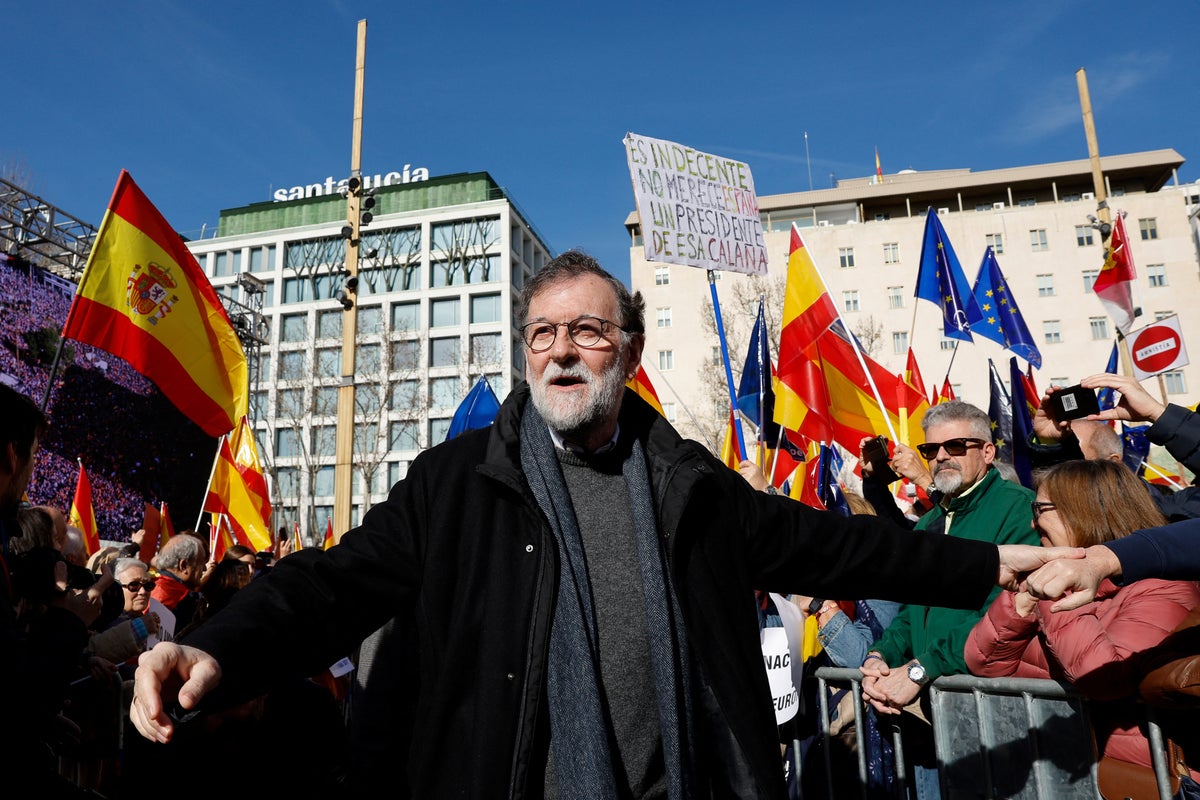
Football has a weird way of bringing out the absolute worst in politicians who should know better. The latest example comes straight from Spain, where former Prime Minister Mariano Rajoy managed to spark an international diplomatic incident just days before a massive World Cup semifinal clash. Writing a column for the Spanish outlet El Debate, Rajoy praised France's footballing dominance before dropping a line that instantly set off alarm bells across Europe. He claimed that the French national team, despite leading the FIFA rankings and tearing through the tournament, simply does not have any French players.
It was a blatant dog whistle, and it blew up in his face immediately.
The backlash was swift, fierce, and entirely justified. Leaders from both sides of the Pyrenees wasted no time tearing Rajoy's comments to shreds. Spain’s current Prime Minister, Pedro Sánchez, publicly rebuked his predecessor, while French officials weaponized the actual data to prove just how detached from reality the old guard really is. This isn't just a isolated sports controversy. It is a revealing look at an ongoing culture war over identity, immigration, and what it actually means to represent a country in modern Europe.
The Dissected Dog Whistle and the Hard Facts
Let's look at what Rajoy actually wrote because the attempt by his political party to spin it as mere sarcasm doesn't hold up under scrutiny. Rajoy acknowledged France's status as a two-time world champion and its flawless run in the tournament. Then came the kicker where he stated that one thing they don't have is any French players.
The French Embassy in Madrid did something rare for a diplomatic mission. They dropped the polite diplomacy and responded with hard, cold demographics. Out of the 26 players representing France at this World Cup, 23 were born right there in France. The remaining three players moved to the country at young ages, grew up in the French academy system, and hold full French citizenship.
When people like Rajoy make these claims, they aren't talking about passports or birth certificates. They are using coded language to target players of African and Caribbean descent. It is an old, tired tactic that ignores a basic truth. These athletes are the products of local French neighborhoods, trained in French facilities, and have spent their entire lives under the tricolor flag. Calling them non-French isn't an astute football observation. It's just textbook xenophobia.
A Unified Political Backlash
If Rajoy thought his comments would rally Spanish nationalism ahead of the semifinal in Dallas, he completely miscalculated. Instead, he managed to unite the political spectrum against him.
Pedro Sánchez took to social media to draw a sharp line between two vastly different worldviews. He pointed out that some people still choose to measure belonging by surnames, birthplaces, or skin color. Sánchez argued that true belonging comes from roots in a country and a willingness to contribute to it, whether that means playing football, starting businesses, or caring for the elderly. His message ended with a direct note to the neighbors. France, we will see you in the semifinals, may the best team win, and may racism lose.
Across the border, French politicians from the left, center, and right reacted with collective fury. Interior Minister Laurent Nunez called the remarks absolutely unacceptable and stressed that France is a nation defined by diversity. The French Socialist Party leader Olivier Faure reminded critics that France is a political nation, not an ethnic one, meaning citizenship is built around shared republican values rather than bloodlines. Even Valérie Pécresse, a prominent French center-right politician who belongs to the same European political family as Rajoy, labeled the comments as despicable racism. When your own ideological allies call you out, you know you've crossed a line.
The Predictable Pattern Targeting Les Bleus
This isn't an isolated incident, and that's exactly why the French public is so exhausted by it. There is a predictable, cyclical nature to how the French national team is treated by nationalist figures across the globe. When they win, they are celebrated as heroes of the republic. The moment a major game approaches or a loss occurs, the racist tropes resurface.
Earlier in this very tournament, French captain Kylian Mbappé had to deal with a similar toxic attack from a Paraguayan senator, Celeste Amarilla, who mocked his heritage after France eliminated Paraguay. French Overseas Territories Minister Naïma Moutchou hit the nail on the head when she observed that these are not accidental slips of the tongue. They are part of a normalized, methodical hostility toward the multicultural reality of modern France.
Football has become the main stage where these anxieties play out. The French team is highly visible, incredibly successful, and multi-ethnic. For a certain brand of conservative politician, that combination is deeply threatening because it disproves the myth that a nation must be ethnically homogeneous to succeed.
The Reality of Modern Sports Migration
The irony of Rajoy's commentary is that global football has evolved past his rigid, mid-20th-century view of nationality. If we look closely at the squads competing at the highest level today, migration patterns shape almost every single elite team.
Spain's own squad features players with diverse backgrounds who chose to represent the Spanish flag. The modern game relies on movement, global academies, and diverse communities. Trying to police the nationality of players based on their skin color or their parents' birthplace is a losing battle that makes the critic look completely out of touch with the sport they claim to follow.
The French Football Federation has made it clear that they will no longer tolerate these attacks quietly. By backing legal avenues and filing formal complaints against public figures who target their players, the federation is setting a new standard for how sports bodies must protect their athletes from political exploitation.
Next Steps for Combating Discrimination in Football
The row surrounding Rajoy's column shouldn't just be forgotten once the final whistle blows in Dallas. Governing bodies and fans need to take concrete action to stop the normalization of xenophobic rhetoric in sports media.
First, football federations must establish strict, immediate legal protocols to defend players against attacks from public figures and politicians. The French federation’s decision to pursue legal avenues sets a precedent that should be codified by UEFA and FIFA. When a political figure uses their platform to attack an athlete's nationality, it needs to be treated as a regulatory violation with serious legal consequences, not just a PR issue.
Second, media outlets need to stop providing an uncritical platform for these dog whistles under the guise of opinion columns or pre-match banter. Editors have a responsibility to vet content that explicitly questions the citizenship of athletes based on race. Turning a blind eye to blatant xenophobia for the sake of pre-game clicks damages the integrity of sports journalism.
Ultimately, the best response to critics like Rajoy happens on the pitch. When the players step out under the stadium lights, their citizenship isn't defined by the outdated views of a retired politician. It is defined by the jersey they wear, the rules they play by, and the communities they represent. The predictable attacks will likely continue, but the overwhelming unity shown by both Spanish and French leaders proves that the old guard is losing the argument.