The black banners draped across Tehran tell one story, but the eerie silence of its residential alleyways tells another. Iran's state apparatus has engineered a massive, week-long farewell ceremony for the slain Supreme Leader Ali Khamenei. Government buses transport workers from state-linked enterprises, state TV cameras tightly frame weeping crowds, and official organizers confidently predict a turnout of millions.
Yet, beneath this carefully curated imagery of national grief lies a completely different reality.
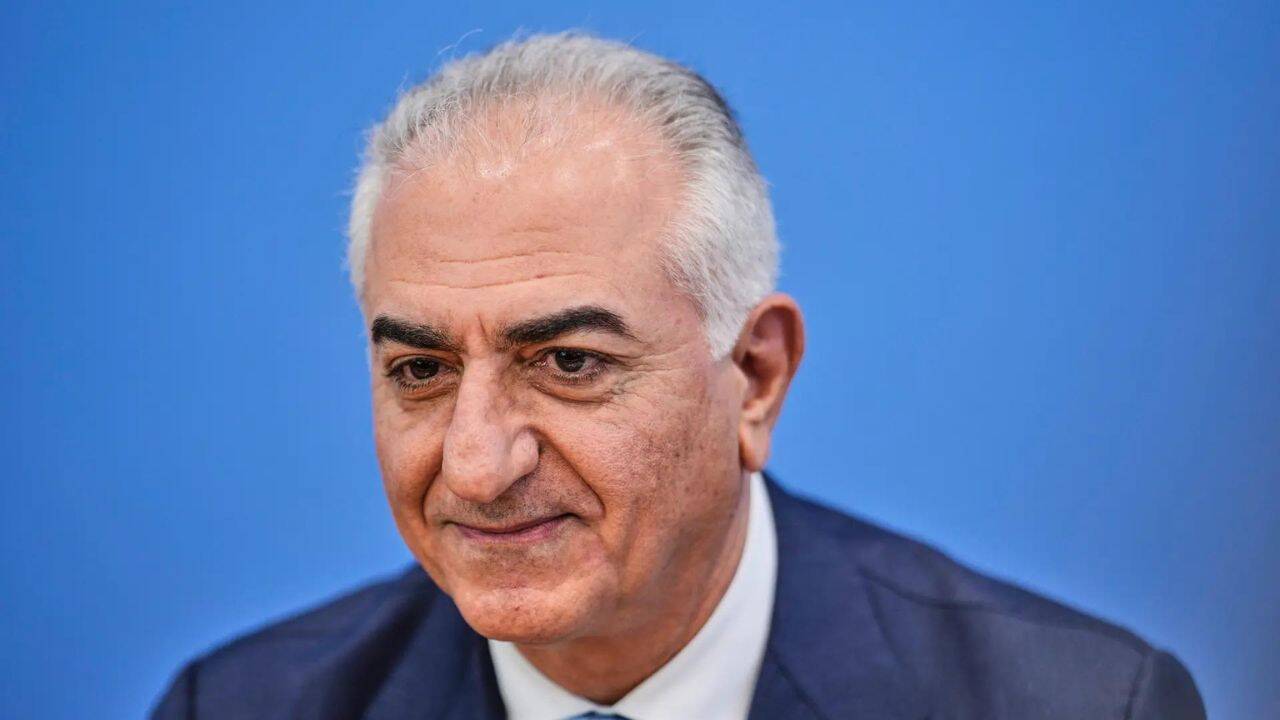
Exiled Crown Prince Reza Pahlavi cut straight through the regime's theatrical display in a blunt message directed at the foreign diplomats traveling to Tehran. Pahlavi made it clear that the Iranian public isn't mourning the deceased dictator. Instead, the nation is grieving the tens of thousands of citizens systematically slaughtered by the regime's security forces. Specifically, he pointed to the catastrophic crackdown on January 8 and 9, when a brutal state response crushed a popular uprising.
This isn't just a dispute over crowd sizes. It's a fundamental battle over who gets to write the history of modern Iran at its most critical juncture.
The Myth of National Grief
State media wants you to believe the entire country has ground to a halt out of pure sorrow. They show endless loops of mourners at the Enghelab Square and the shrine of Imam Reza in Mashhad. What they don't show are the leaked memos and internal pressures forcing the population to show up.
Dozens of reports smuggling their way out of the country reveal that state-linked institutions, public schools, and charities have systematically pressured employees to attend the funeral processions. If you want to keep your job or your business license, you line up for the cameras. It's an old totalitarian script.
The regime is spending an astronomical portion of the Iranian people's wealth to fund this propaganda spectacle. Millions of dollars go toward transportation, free meals, security logistics, and media production while the domestic economy remains in a state of freefall. Inflation is gutting the purchasing power of ordinary families. Unemployment among young graduates is soaring. Despite these compounding domestic crises, the remaining authorities prioritize a lavish send-off for a ruler who oversaw their economic misery.
The international community isn't entirely buying the show. Pahlavi noted with sharp satisfaction that not a single leader from a democratic nation deigned to attend the funeral ceremonies. The foreign dignitaries who did show up represent a dwindling bloc of regional proxies and autocratic allies. It's a lonely gathering of authoritarian figures trying to project a sense of stability that simply doesn't exist on the ground.
The Blood on the Streets of January
When Pahlavi referenced the 40,000 sons and daughters slaughtered on January 8 and 9, he hit the regime where it hurts most. The Iranian government has tried desperately to erase or downplay the scale of its domestic violence. In the wake of the devastating US-Israeli military strikes that killed Khamenei earlier this year, the regime claimed a unified front. But the domestic scars run too deep.
The January uprising, sparked by unbearable economic hardship and systemic political repression, met the deadliest crackdown in the history of the Islamic Republic. Human rights monitoring groups have scrambled to verify death tolls, pointing out that security forces utilized armored vehicles and live ammunition against unarmed crowds in towns like Abdanan and Karaj.
While the official government figures tried to cap the recorded fatalities at a few thousand by labeling demonstrators as foreign-backed terrorists, local accounts and underground networks suggest a far more horrific reality. The sheer volume of families secretly mourning their youth paints a grim picture. Entire neighborhoods became hunting grounds for the Revolutionary Guard and the Basij militia.
The regime's current effort to project an image of an entire nation united in grief is an insult to the families of those victims. You can't execute thousands of young people, terrorize their families during traditional forty-day memorial ceremonies, and then expect those same families to weep for the man who signed the execution orders. The public response isn't grief. It's a volatile mixture of profound trauma and intense, righteous anger.
Rooftop Slogans and Secret Celebrations
Look closely at the actual behavior of everyday Iranians when the state cameras turn off. For months, the night skies of affluent and working-class neighborhoods alike have echoed with a familiar ritual. Terrified but determined citizens step onto their balconies or lean out of windows under the cover of darkness to shout anti-government slogans.
"Death to the dictator!"
"Death to the murderer, Khamenei!"
These aren't isolated incidents. They form an informal, nationwide network of defiance. When a lone pro-government voice tries to counter the chants, whole blocks unite to drown them out. It's a verbal war waged every night across the rooftops of Tehran.
Even more telling are the quiet celebrations that broke out when news of the Supreme Leader's death first circulated. While state television broadcasted choreographed mourning, eyewitnesses in Tehran, Isfahan, and Karaj reported people discreetly distributing sweets in the streets or honking car horns in celebration. For a significant portion of the population, the elimination of Khamenei wasn't a tragedy. It was the long-overdue removal of a tyrant.
The atmosphere inside Iran right now resembles a powder keg. People aren't just sad about the state of their country; they are absolutely furious. The trauma of the recent massacres has shifted from a paralyzing fear into a collective desire for fundamental change. Every forced state funeral march just adds more fuel to that fire.
The Exiled Prince and the Path Forward
Reza Pahlavi's commentary on X isn't just an observation from afar. It's a calculated political play designed to delegitimize whatever remains of the current leadership apparatus. By framing the current moment as the beginning of the regime's inevitable collapse, Pahlavi is positioning himself as a rallying point for both the internal opposition and the global diaspora.
During his appearances at international forums like the CPAC conference earlier this year, the exiled crown prince has consistently argued that the Iranian people are the natural allies of Western democracies. He has urged foreign leaders to distinguish between the oppressive clerical elite and the ordinary citizens who want a secular, democratic future.
His strategy hinges on encouraging internal defections. In his recent statements, Pahlavi directly called on members of the regular security forces to abandon the regime and join the people. He argues that any successor chosen by the current assembly lacks any shred of domestic legitimacy.
The regime is trying to maintain its grip through President Masoud Pezeshkian and military organizers like Brigadier General Hasan Hassanzadeh, who are desperately preaching unity and promising revenge against external enemies. They claim the flag of the Islamic Republic won't fall. But when your own people are praying for your downfall, the threat isn't just coming from foreign drones or missiles. It's coming from within.
What Happens Next
The propaganda spectacle in Tehran will eventually end. The state-mandated mourning periods will wrap up, the black banners will come down, and the regime will have to face the cold reality of a fractured nation.
If you are tracking the situation in Iran, stop looking at the official state broadcasts. They offer nothing but empty theater. Instead, pay attention to the small-town protests, the underground labor strikes, and the defiance of families refusing to let the memory of their slain children be erased.
The coming weeks will show whether the remaining hardliners can successfully orchestrate a transition of power or if the righteous anger Pahlavi described will finally shatter the regime's foundations. Watch the local currency markets, keep tabs on the coordination between various domestic protest groups, and look out for signs of friction within the regular armed forces. The real story of Iran isn't happening at the state funeral. It's happening in the quiet spaces where a nation prepares for what comes next.
This video provides an on-the-ground look at the massive state-organized scale of the funeral processions in Tehran, showcasing the exact propaganda display that independent analysts and opposition figures are criticizing.