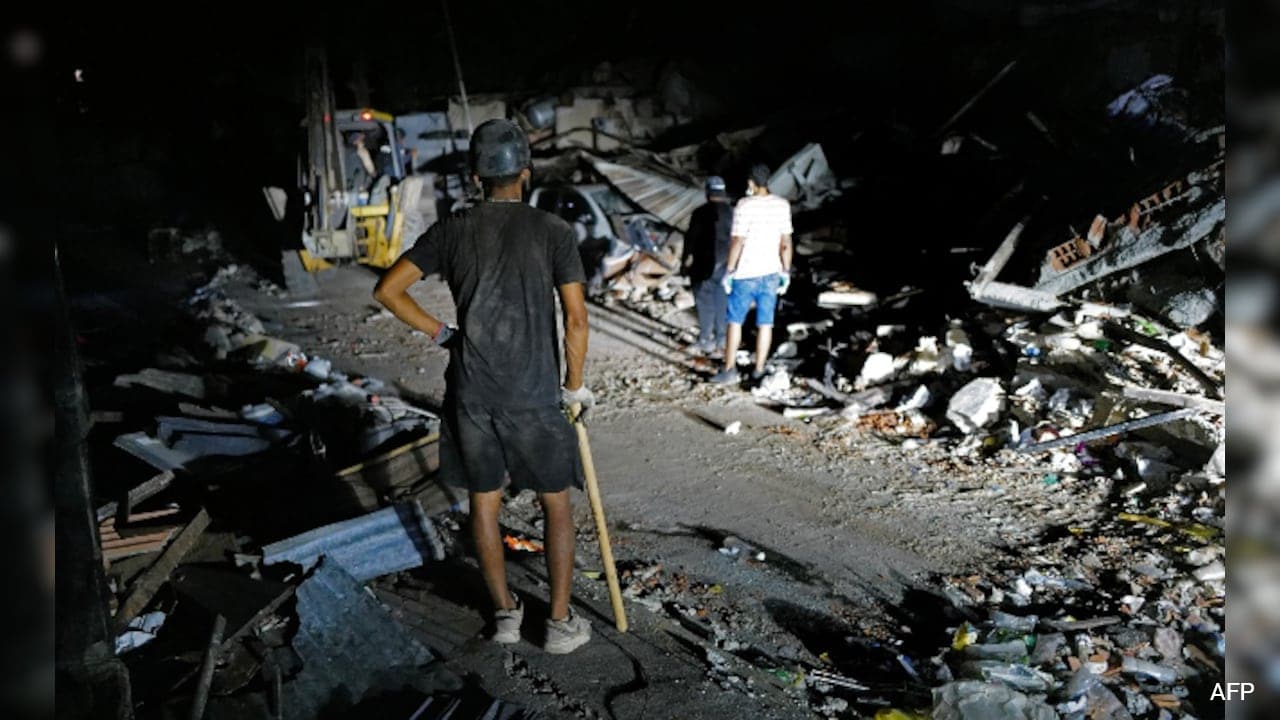
People are digging with their bare hands in La Guaira. They aren't waiting for heavy machinery because it isn't coming fast enough. When twin earthquakes measuring 7.2 and 7.5 on the Richter scale ripped through central Venezuela, they didn't just flatten buildings. They exposed the massive, hollowed-out infrastructure of a nation completely unprepared for a disaster of this scale. The death toll has already passed 1,430, and nearly 69,000 people are officially reported missing.
The mainstream coverage focuses heavily on the statistics. They talk about the magnitudes and the international aid arriving at the damaged Simón Bolívar International Airport. But if you talk to the people on the ground in Catia La Mar or Caraballeda, you get a completely different picture. It's a raw, angry, and desperate struggle for survival where neighbors are doing the heavy lifting while officials take photos.
Why the First 72 Hours Became a Localized Fight for Survival
In any major seismic disaster, search and rescue experts talk about the golden window. It's that critical 48 to 72 hour period where trapped individuals have the highest chance of being pulled out alive. Once that clock runs out, dehydration, crush injuries, and lack of oxygen turn rescue missions into recovery operations.
In Venezuela, that golden window didn't feature fleets of state-backed bulldozers. Instead, it looked like local residents wearing motorcycle helmets for protection, clambering over mountain-high piles of twisted steel and pulverized concrete. They used shovels, household ropes, and cracked fingernails to move columns that weighed tons.
The tragedy hit hardest along the coastal strip of La Guaira state, just north of Caracas. High-rise apartment complexes like the Ritasol Palace and seafront structures like the Eduard's Hotel simply pancake-collapsed. Hundreds of apartments crumbled into a single, dense layer of debris.
The hard truth is that the state response was dangerously sluggish. Residents in Caraballeda grew so furious with the lack of official action that they physically blocked a state-owned excavator from leaving a collapse site. Onlookers reported that government workers arrived, took selfies in front of the ruins to show presence on social media, and prepared to drive away without moving a single piece of concrete. The locals pulled the operator right out of the cabin. They took over.
A Broken Safety Net and Six Months of Political Transition
You can't understand the severity of this disaster without looking at the backdrop. Venezuela isn't just dealing with tectonic shifts. The country is navigating a deeply fragile political transition. It's been roughly six months since the United States-backed ouster of Nicolás Maduro, leaving public services and emergency response networks in a chaotic state of flux.
Decade-long economic stagnation had already gutted the nation’s hospitals. Medical centers in Maiquetía and Caracas lacked basic supplies long before the ground shook. When casualties began flooding the clinics, health workers ran out of bandages, sterile gloves, and saline bags within hours.
Power grids failed immediately across the central region. Cellphone towers went dark. This created a massive data black hole. A huge portion of those 68,900 missing persons might actually be safe but completely unable to communicate with their families. Independent digital databases are trying to log names, but duplicated reports are everywhere because there's no centralized government coordination.
The UN estimates that nearly seven million people have been affected in some way by these tremors. Many are sleeping directly on asphalt roads or inside local baseball stadiums, terrified that a major aftershock will bring down whatever walls are still standing. Giant cracks slice through the homes that didn't fall.
The Chaos on Top of the Rubble
International teams are finally hitting the ground. Rescue workers from Mexico, Chile, the United States, France, and El Salvador have deployed specialized units. The US mobilized a disaster response team alongside Navy transport ships stationed offshore to provide urgent medical airlifts.
But international expertise faces immediate logistical nightmares on the ground.
Search units with trained dogs rely heavily on absolute silence. They need to hear faint thuds, scratching, or cries from deep underneath the concrete slabs. In towns like Catia La Mar, that silence is impossible to find. Crowds of desperate relatives swarm the sites, screaming out names like Gael, hoping for a sign of life. Worse, the lack of organized traffic control means hundreds of civilian motorcyclists and military personnel keep revving engines and honking horns right next to the active search zones, drowning out the very sounds rescuers are trying to catch.
There's also a stark contrast in equipment. Foreign teams look like they stepped out of a modern training manual, equipped with thermal cameras, acoustic listening devices, and hard hats. Right next to them are the locals, completely caked in gray dust, wearing flip-flops, trying to hoist a concrete beam with a frayed tow truck cable.
What Needs to Change Right Now
The immediate priority must shift from political posturing to raw logistical efficiency. If you want to know what actually saves lives in a post-earthquake bottleneck, it boils down to three distinct actions.
- Establish Immediate Noise Cordon Zones: Local authorities must completely ban civilian and military motorcycle traffic within a two-block radius of any active collapse site. Total silence must be enforced for 15-minute intervals every hour so acoustic sensors and canine teams can do their jobs.
- Decentralize Fuel and Heavy Machinery Distribution: The current system requires special military permits issued by Acting President Delcy Rodríguez's administration to move heavy gear into La Guaira. This bureaucratic red tape is killing people under the rubble. Equipment must be handed over directly to municipal engineers and international coordinators on-site.
- Prioritize Stabilizing the Local Power Grid: Distributing aid is useless if families can't report themselves safe. Mobile cellular units need to be deployed to the coastal towns immediately to clear the massive backlog of missing persons reports and stop the panic.
The twin quakes were the most violent tremors to hit Venezuela since 1900. The physical rebuilding will take years, but the immediate survival of thousands depends entirely on dropping the bureaucracy and letting the rescue teams work without the distraction of political theater.