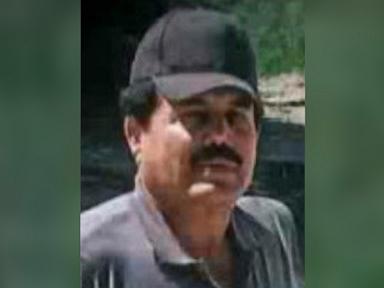
Ismael "El Mayo" Zambada Garcia spent nearly four decades running the Sinaloa Cartel without spending a single night behind bars. He outlasted rival kingpins, evaded armies, and quietly built a global narcotics network that shipped tons of cocaine, heroin, methamphetamine, and fentanyl into American cities.
That historic run came to an end in a Brooklyn federal courtroom.
U.S. District Judge Brian M. Cogan sentenced the 76-year-old drug lord to life in prison without the possibility of parole. The court also handed down a staggering $15 billion forfeiture judgment, attempting to claw back four decades of illegal profits.
If you watched the court proceedings unfold, you saw a very different man than the mythical figure who ruled the Mexican underworld. Dressed in a beige prison jumpsuit, his hair and beard fully white, El Mayo limped up to the podium. He read a prepared statement through an interpreter, calling for peace in Sinaloa and offering an apology for the destruction his organization wrought on millions of lives.
It was a surreal moment. The world's most evasive drug lord was quietly surrendering to his fate. But to understand how we got here, you have to look past the courtroom drama and examine the strategic calculations that brought El Mayo from the mountains of Culiacán to a federal cell.
Why El Mayo Took a Guilty Plea Instead of Going to Trial
When federal agents took El Mayo into custody in July 2024 after an extraordinary ambush on a private airstrip, legal observers expected years of pretrial litigation. Instead, the case moved with remarkable speed. By August 2025, Zambada stood in front of Judge Cogan and pleaded guilty to charges of running a continuing criminal enterprise and racketeering.
He didn't plead guilty out of sudden moral clarity. It was simple math.
Federal prosecutors took the death penalty off the table during negotiations. Once capital punishment was removed, going to trial offered zero upside for a 76-year-old man in failing health. His former partner, Joaquín "El Chapo" Guzmán, chose a high-profile 11-week trial in 2019. That trial cost taxpayers tens of millions of dollars and ended with El Chapo being shipped directly to ADX Florence, the notorious administrative maximum facility in Colorado where inmates spend 23 hours a day in solitary confinement.
El Mayo's legal team, led by attorney Frank Perez, took a completely different approach. By pleading guilty, acknowledging responsibility, and saving the federal government a grueling trial, Perez set the stage to advocate for a medical facility.
Zambada suffers from serious, age-related health conditions that require constant supervision. His defense argued that locking an elderly, ailing man in a Supermax facility makes no sense when a federal medical center can handle his security while treating his illnesses. Whether the Bureau of Prisons agrees to that request remains to be seen, but the guilty plea was his only realistic shot at avoiding Supermax.
The July 2024 Betrayal That Shattered the Sinaloa Cartel
You can't discuss El Mayo's sentence without addressing how he ended up in American hands in the first place. For decades, conventional wisdom held that Mexican authorities would never capture Zambada because his security apparatus was too tight and his political protection ran too deep.
He wasn't caught by a military raid or a DEA sting. He was betrayed from within.
In July 2024, Joaquín Guzmán López—one of the sons of El Chapo known collectively as "Los Chapitos"—convinced El Mayo to board a private plane, ostensibly to look at real estate or resolve a local political dispute. Once in the air, the aircraft headed north, landing at an airport near El Paso. U.S. federal agents were waiting on the tarmac to take both men into custody.
Zambada later confirmed that he was ambushed, tied up, and forced onto the plane against his will.
That single act of treachery sparked an all-out civil war across Sinaloa. The two main factions—those loyal to El Mayo and those loyal to Los Chapitos—turned Culiacán into a warzone. Shootouts, blockades, and targeted assassinations spiked dramatically throughout late 2024 and 2025.
When El Mayo read his statement in court asking people to stop fighting, he was addressing that exact feud. He knows his capture broke the delicate balance of power that kept the cartel running smoothly for decades.
The Fallacy of Dismantling Cartels Through Kingpin Sentencings
Washington officials celebrated Monday's sentencing as a decisive victory against international drug trafficking. Top law enforcement figures gathered to declare that the Sinaloa Cartel's leadership had been neutralized.
It sounds convincing on paper. In practice, the illicit drug trade doesn't work that way.
Taking out top leaders creates a vacuum, but it rarely cuts off the supply chain. When El Chapo was sentenced in 2019, fentanyl shipments didn't slow down; they exploded. The infrastructure El Mayo built over forty years—the smuggling routes, supply chains for chemical precursors from Asia, distribution hubs across North America—operates independently of any single executive.
The market demand in the United States remains massive. So long as that demand exists, mid-level operators and rival syndicates will fight violently to take over those market shares.
What the sentencing actually marks is the end of an era in Mexican organized crime. El Mayo represented the old guard—capos who preferred negotiation, political bribery, and quiet operations over loud, public acts of terror. The younger generation taking over lacks that discipline. They rely heavily on reckless violence and social media bravado, making the criminal landscape far more volatile.
Key Takeaways and What Happens Next
If you are tracking security policy or following international news, here is what you need to watch over the coming months:
- Prison Designation Decision: The Bureau of Prisons will decide whether Zambada goes to a high-security facility like ADX Florence or a Federal Medical Center. His defense team's request for medical placement sets a unique precedent for high-level cartel leaders who plead guilty.
- Sinaloa Security Dynamics: Watch for how rival factions interpret El Mayo's court statement calling for peace. Historical precedents suggest that statements made under custody rarely stop bloodshed on the ground when billions of dollars in revenue are at stake.
- Precursor Chemical Enforcement: With the core leadership of the Sinaloa Cartel sentenced, federal law enforcement will shift its focus toward precursor supply networks and financial laundering nodes in Asia and Latin America.
The sentencing of El Mayo closes the book on one of the most powerful figures in drug war history. But as history continuously reminds us, locking up the boss changes who receives the profits, not whether the business continues.