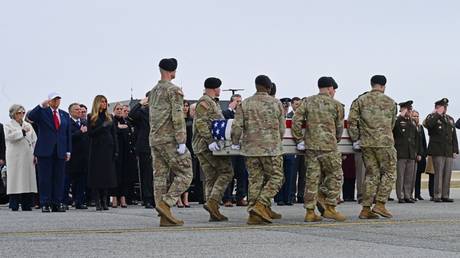
Military casualty reports are supposed to give citizens an honest accounting of human cost. Yet the growing fight between newsrooms and defense officials over Pentagon casualty numbers in the Iran war reveals a gaping divide in how injuries get tracked, packaged, and released.
When a military strike hits a base, news outlets expect prompt updates on how many service members were hurt. Military officials, on the other hand, often treat non-fatal injury numbers as operational secrets. That friction flared up when news reports revealed that several drone and missile strikes in Jordan left dozens of U.S. personnel wounded weeks before the Pentagon publicly acknowledged them.
If you're trying to figure out what's actually happening on the ground, reading official defense statements isn't enough. You have to understand how the Department of War logs data, why combat injuries get delayed, and how press freedom intersects with battlefield security.
What official Pentagon casualty numbers in the Iran war actually show
The military does maintain public databases for casualties. The Defense Casualty Analysis System publishes running counts of fatalities and total injuries across active combat theaters.
Official totals currently log 17 dead U.S. service members and over 430 wounded since hostilities erupted. Those figures represent verified cases where medical personnel processed official paperwork.
Numbers don't always move in real time.
A servicemember knocked down by a concussion wave in Jordan might get evaluated in the field, return to duty two hours later, and only show up on official records weeks after a full medical evaluation. That delay creates a natural lag between what happens in the sand and what shows up on a government dashboard.
Why the Department of War keeps quiet on minor injuries
Why doesn't military leadership announce every strike injury immediately? Official military spokespersons, including Sean Parnell, maintain that publishing raw injury counts after every skirmish gives enemy forces free diagnostic data.
If an Iranian drone unit fires three munitions at a forward site and U.S. Central Command immediately announces twelve concussions and two damaged helicopters, Iran knows its targeting parameters were accurate. Keeping quiet on minor injuries prevents the opponent from adjusting their aim.
CENTCOM regulations do not force officers to report injuries publicly when service members return to duty right away. Fatalities must be released within 24 hours of next-of-kin notification. Wounded counts don't carry the same legal requirement.
Critics argue that hiding behind operational security lets leadership obscure the war's true human footprint. When dozens of troops suffer traumatic brain injuries or smoke inhalation without a word from officials, public trust erodes quickly.
Honestly, both sides have a point. Commanders want to keep troops safe from follow-up strikes. Journalists want to keep the government accountable to the voters paying for the conflict.
How casualty tracking works during middle east deployments
Military injury tracking is complicated. It's not as simple as counting hospital beds.
Field Assessment
Immediate care happens at the site of impact. Medics treat cuts, blast concussions, and minor burns. If the troop can hold a rifle, they often go straight back to work.✨ Don't miss: zip code for logan wvTraumatic Brain Injury Screening
Concussion symptoms don't always show up instantly. Blast-induced TBI symptoms can take days or weeks to manifest fully. Troops who felt fine initially might report severe migraines later, triggering an official medical report long after the strike took place.System Logging
Once a military doctor signs off on a combat injury, the record moves up through medical channels to Central Command before reaching defense databases in Washington.Non-Combat Misclassification
Routine training accidents, sprained ankles, and vehicle breakdowns get lumped into general injury data. Sorting combat wounds from non-combat accidents takes time, creating fuel for arguments over whether figures are being manipulated or just cleaned up.
How to track military casualty reports with a critical eye
If you want to cut through spin and track the true human cost of ongoing conflict, rely on a structured approach rather than single press releases.
- Cross-check primary databases directly. Don't rely solely on media quotes. Visit the Defense Casualty Analysis System directly to review raw casualty updates.
- Look for Traumatic Brain Injury follow-ups. TBI numbers almost always rise weeks after major missile or drone bombardments. Check CENTCOM medical updates a month after major events to see full counts.
- Compare local hospital transfers. Heavy injuries require medical evacuation to regional facilities like Landstuhl Regional Medical Center in Germany. Watch for transport reports from independent defense reporters.
- Read official statements carefully. Pay attention to phrasing like "returned to duty" versus "evacuated for treatment." The former usually signals minor concussions, while the latter indicates long-term casualties.


.jpg?width=1200&auto=webp&trim=0%2C0%2C0%2C0)