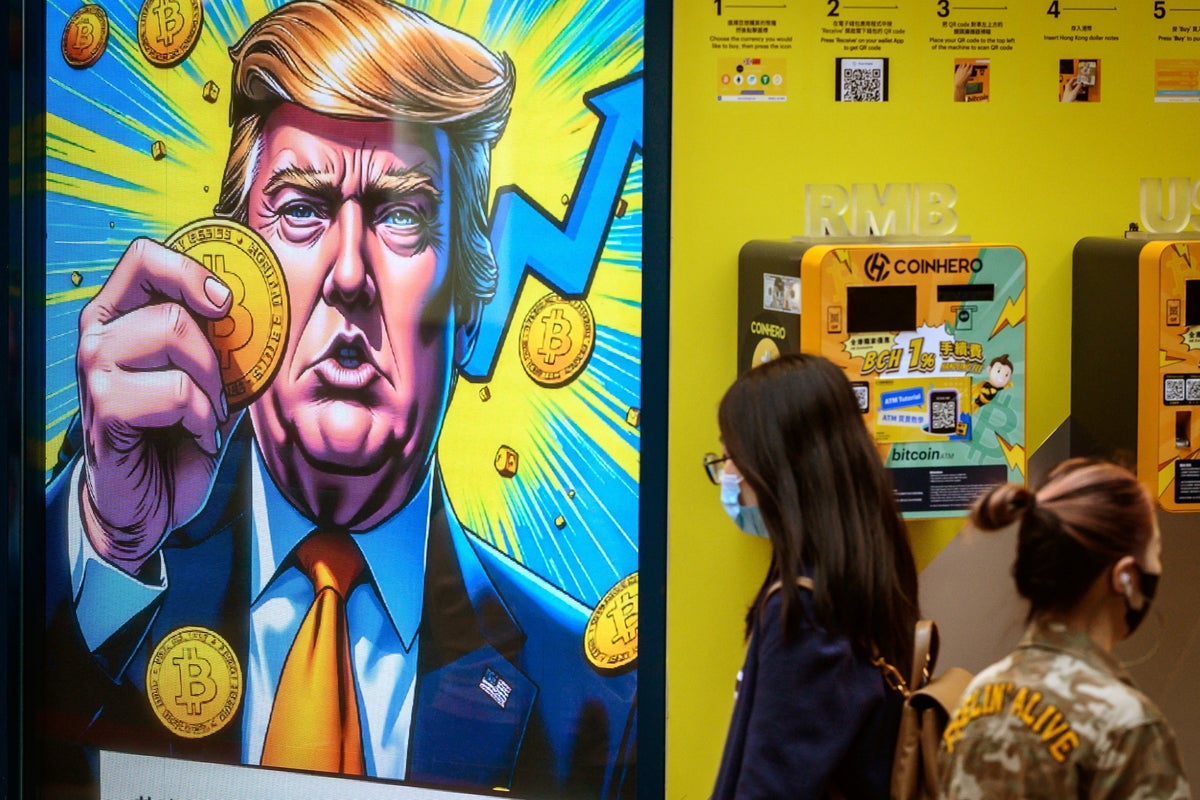
Donald Trump used to think cryptocurrency was a scam. Back in 2021, he explicitly called Bitcoin a disaster waiting to happen and argued it threatened the supremacy of the US dollar. Fast forward to today, and he has built a massive Trump crypto empire that completely reshaped his personal net worth. While thousands of retail investors are left holding volatile, depreciating digital tokens, the Trump family pulled off one of the most lucrative cash outs in modern financial history. It didn't happen by risking their own capital. It happened through a masterclass in brand monetization.
Newly released financial disclosures from the US Office of Government Ethics paint a staggering picture of this transformation. In 2025 alone, Trump recorded roughly $1.4 billion in income solely from cryptocurrency activities. This windfall single-handedly drove the near tripling of his personal fortune, pushing his net worth from $2.3 billion up to an estimated $6.5 billion. It's an unprecedented intersection of presidential politics, digital asset speculation, and corporate licensing. If you want to understand how the modern financial system really works for the ultra-wealthy, you have to look past the hype and look at the actual filing documents. You might also find this connected story interesting: The Bangkok Bar Fire Tragedies We Keep Failing To Prevent.
The real shocker isn't just the sheer volume of money. It's where that money went immediately after it hit his accounts.
The Great Crypto Pivot
People like to point out the hypocrisy of a man calling something a scam and then becoming its biggest cheerleader. That misses the point entirely. Trump didn't change his mind about the underlying technology of blockchain networks. He changed his mind about the liquidity. He realized that the crypto crowd possesses an unmatched willingness to buy into a brand. As discussed in detailed articles by Reuters, the results are significant.
By the time he hit the stage at the Bitcoin 2024 conference in Nashville, the transformation was complete. He promised to make America the crypto capital of the world and vowed to fire regulators who wanted to crack down on digital assets. For the crypto community, it looked like a total ideological victory. For Trump, it was the ultimate marketing launchpad.
The numbers from his 927-page financial disclosure form outline three distinct pillars of this financial juggernaut.
First, World Liberty Financial, a decentralized finance startup launched in late 2024 by Trump's sons and close associates. Trump took the title of co-founder emeritus. The platform issued its own token, WLFI, and brought in over $550 million from token sales in 2025. On top of that, Trump and his family obtained an additional 22.5 billion WLFI tokens through an intermediary entity named DT Marks Defi, bringing their paper value even higher.
Second, the memecoin business. Under a licensing agreement with an outfit called Celebration Coins, Trump pulled in over $635 million in royalties from the $TRUMP cryptocurrency. This token launched just hours before his inauguration. He didn't write code, manage liquidity pools, or deal with smart contract security. He just licensed his name and watched the royalties roll in.
Third, the corporate sell offs. His disclosures reveal an additional $196 million in income from an equity sale of Stablecoin Holdco, alongside another $260 million from selling off direct corporate interests in the World Liberty Financial business entity itself.
The Zero Risk Playbook vs Retail Losses
If you examine the financial structures of these ventures, a clear pattern emerges. The Trump family strategy relies on a zero risk, maximum reward model.
Traditional crypto whales put millions of dollars of their own capital on the line to provide liquidity, buy mining equipment, or fund development teams. Experts estimate that each of Trump’s digital ventures cost less than $1 million in actual startup expenses. The family's multi-billion dollar financial gains came almost entirely from upfront licensing fees, equity grants, and direct revenue sharing. They didn't have capital at risk.
While the creators reaped billions, the story for everyday retail buyers looks drastically different. A recent analysis tracked the performance of the main Trump-affiliated crypto projects and found that everyday buyers had absorbed an estimated $2.3 billion in cumulative losses by April.
The mechanics behind these losses aren't complicated. When a hyped token launches, the initial excitement drives the price to an artificial peak. Early insiders and licensed entities collect their guaranteed cuts or sell their allocations. Once the initial marketing buzz fades, the broader market faces a lack of utility and a wave of sell pressure. Retail investors who bought at the top are left holding assets that dropped significantly in value.
Where the Money Actually Went
The ultimate irony of the Trump crypto empire is what his money managers did with the profits. You might think a newly minted crypto billionaire would keep their wealth in cold storage wallets, building up a massive reserve of Bitcoin or Ethereum.
The financial disclosure forms show the exact opposite.
Trump’s money managers quietly channeled the vast majority of this crypto windfall right back into conventional, old-school Wall Street assets. Over the course of 2025, his holdings of traditional stocks and corporate bonds grew sharply. At the end of 2024, his conventional stock portfolio was valued between $225 million and $608 million. By the end of 2025, that same category soared to somewhere between $703 million and $2.6 billion.
The White House defended these moves by pointing to a broader bull run in the stock market, with Trump noting to reporters that he's profiting because he has a lot of cash and the market is up. His money managers understand basic asset allocation. They used a highly volatile, speculative asset class to generate liquid cash, then immediately parked that cash in the safest, most stable traditional assets available.
Despite this aggressive reallocation into blue-chip stocks, Trump didn't dump every single digital asset. He still held 15.75 billion World Liberty governance tokens at the end of last year, and his affiliated entities maintained around $160 million in Bitcoin and Ether. But the message from his balance sheet is loud and clear. Use crypto to make the money, use the traditional financial system to keep it.
This shift reveals a massive gap between public rhetoric and private financial management. Publicly, the administration champions digital currencies as the future of global finance, working to appoint friendly regulators and deregulate the crypto sector. Privately, the family’s wealth managers treat crypto as a high-yield marketing funnel designed to fund a traditional, diversified investment portfolio.
Smart Protections for Everyday Investors
You don't have to be a billionaire to protect your money from the hype machine. If you want to navigate this market without getting burned by celebrity tokens or political memecoins, you need to change how you evaluate digital assets.
Separate the brand from the underlying utility. When a high-profile figure backs a token, ask yourself who is taking the risk. If the founders didn't lock up their own capital or if they're making hundreds of millions purely off licensing fees, you aren't an investor. You're the liquidity.
Look at the disclosure documents of any project before you buy in. Check the tokenomics to see what percentage of the supply goes to insiders, marketers, and founders. If the distribution heavily favors the creators through free allocations, the price is rigged against retail buyers from day one.
Treat celebrity and political tokens as pure entertainment, not a retirement plan. If you choose to trade them, use money you can afford to lose entirely. Never let the fear of missing out drive you into a position where you become someone else's exit strategy. Follow the real playbook of the ultra-wealthy. Take your profits when things go up, and move that money into proven, stable assets that build long-term wealth over time.