You think you know how a snakebite plays out. You get nipped, you rush to the ER, they pump you with a couple of vials of antivenom, and you go home with a crazy story and a hefty medical bill.
That is not what happened to Chris Howarth. Meanwhile, you can explore similar developments here: The Graham Platner Scandal Nobody Wants To Talk About.
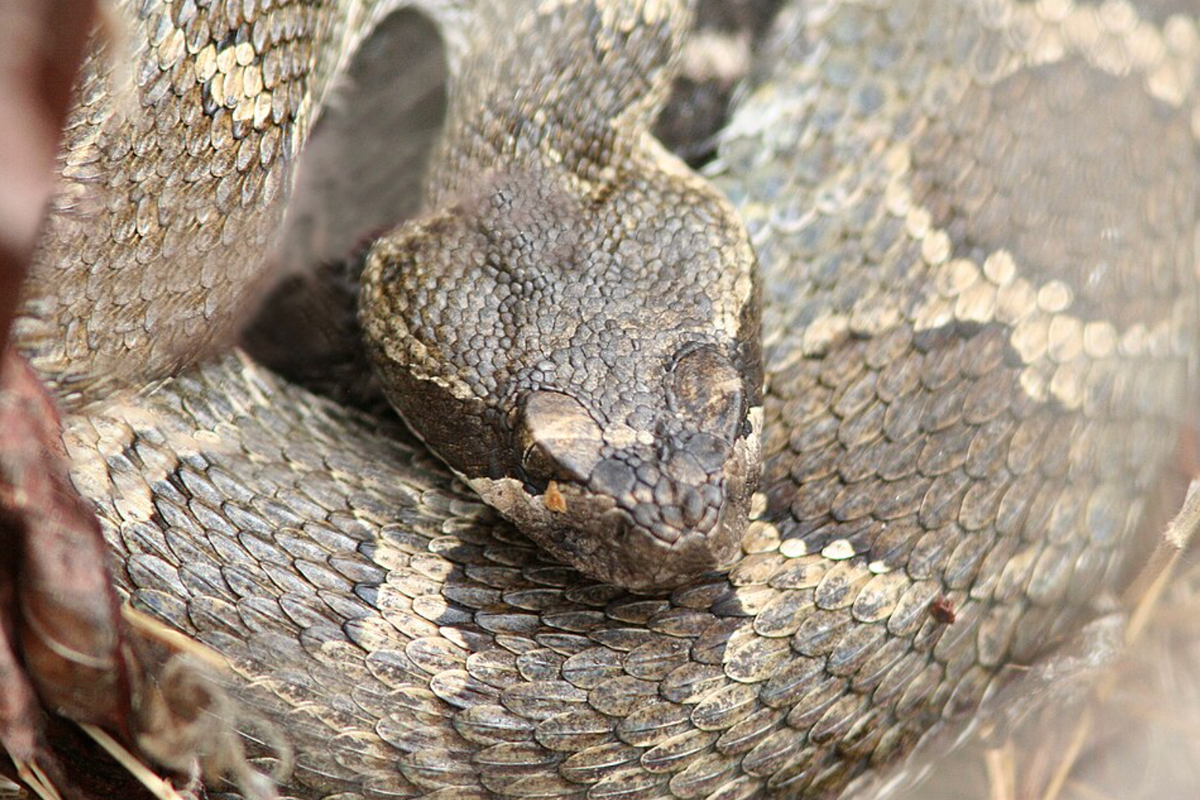
When the Idaho resident stepped into his parents' backyard in Oroville, Northern California, to check a waterline, he wasn't looking for a fight. It was May 26, a period when local rattlesnakes were waking up angry after an unseasonably wet stretch followed by sudden heat. He felt a sharp prick. He looked down. A western rattlesnake—specifically a northern Pacific rattlesnake—had just clamped onto his leg.
It bit him twice. One puncture was shallow. The other went deep, sinking straight into a vein. That single anatomical accident turned a standard wilderness emergency into a medical horror story that devoured 54 doses of antivenom, emptied a local hospital's entire pharmacy supply, and forced an emergency helicopter evacuation to Stanford Medical Center. To understand the bigger picture, we recommend the excellent report by TIME.
The Intravenous Nightmare
Most snakebites are subcutaneous. The venom pools in the fat and muscle tissue, leaking slowly into the lymphatic system. It gives doctors time.
When a viper fang pierces a vein, the venom goes directly into the central bloodstream. It's an immediate, overwhelming biological assault. By the time Howarth's wife, Jenny, drove him to Oroville Hospital fifteen minutes away, his body was already crashing. His tongue went numb. His lymph nodes swelled like golf balls. He couldn't breathe.
Emergency room doctors started the protocol within an hour, administering the standard starting doses of antivenom. Usually, a patient needs between four and twelve vials to neutralize the proteins in rattlesnake venom.
Howarth's body just kept consuming it.
The venom of a northern Pacific rattlesnake is a brutal cocktail of hemotoxins and cytotoxins. It destroys tissue, liquefies blood vessels, and disrupts the blood's ability to clot. Because the venom was cruising through his veins rather than filtering slowly through tissue, it created a rolling wave of systemic destruction. For days, the medical team was trapped on a horrific roller coaster. They would pump Howarth full of antivenom, his symptoms would briefly stabilize, and then the venom would regain the upper hand, requiring more vials.
When the Blood Turns to Water
By day three, the situation deteriorated from critical to catastrophic. Despite a continuous stream of antivenom, Howarth developed a terrifying condition called disseminated intravascular coagulation, or DIC.
Think of DIC as a catastrophic system failure of your blood's plumbing. The venom tricks the body into creating thousands of tiny, microscopic blood clots throughout the vascular network. These clots block blood flow to vital organs. Worse, the process burns through the body’s entire supply of platelets and clotting factors in a matter of hours.
Once those clotting resources are totally spent, the body loses all ability to stop internal bleeding. You face a high risk of bleeding out from the inside.
Howarth’s leg swelled to a grotesque size, expanding far past the diameter of his hip. Doctors frantically began pumping him with blood plasma and bags of platelets to replace what the venom was destroying, alongside round-the-clock infusions of antivenom.
Then came day six. The pharmacy shelves at Oroville Hospital went bare.
The hospital had used 36 vials on a single patient. That wiped out their stock.
People don't realize that antivenom isn't sitting in endless warehouses. It's incredibly expensive to manufacture, highly perishable, and rural hospitals keep limited quantities on hand based on average seasonal needs. A single patient requiring 36 vials is a statistical outlier that can instantly break a local healthcare supply chain.
Realizing they were completely out of options and medication, the Oroville team coordinated with a specialized toxicology and hematology unit at Stanford Hospital. At 6:00 AM, Howarth was loaded onto a medical helicopter.
The Stanford Switch and Different Antivenom Types
At Stanford, the medical team had to approach the problem differently. They didn't just give him more of the same treatment; they switched to a different type of antivenom entirely.
In the United States, two primary antivenoms treat pit viper bites: CroFab and Anavip. They are manufactured differently. CroFab uses antibodies derived from sheep, while Anavip uses antibodies derived from horses. Crucially, they have different half-lives in the human body.
Anavip's specific formulation keeps the antivenom active in the bloodstream for a longer duration, which drastically reduces the chance of "late coagulopathy"—the exact phenomenon causing Howarth's recurring bleeding crisis.
Stanford doctors administered an additional 18 doses of antivenom over his stay, finally neutralizing the residual toxins circulating in his deep tissue. By the time Howarth was discharged after 12 days in the intensive care unit, his body had absorbed 54 total vials of medication.
Dr. Rais Vohra, the medical director for the California Poison Control System's Fresno-Madera division, later noted how incredibly rare this case was. On the bell curve of snakebite victims, the vast majority settle out at a fraction of this treatment. But when a deep venom deposit combines with a severe systemic immune and hematological reaction, the standard rulebook flies out the window.
The Legend of the Muffled Rattle
This ordeal highlights a massive misconception about wilderness safety in California. We are taught to listen for the warning rattle. If you don't hear it, you think you're safe.
Jenny Howarth, who happens to be a registered nurse, pointed out a critical detail about the environment where the bite occurred. The weather in Northern California had been wet and muddy before a sudden heat spike brought the snakes out.
When a rattlesnake's tail buttons get caked in wet mud or soaked with water, the acoustic mechanics of the rattle fail. The segments can't click against one another properly. The rattle either makes zero sound at all, or it produces a faint, muffled buzz that sounds more like a cricket than a deadly viper.
Howarth never had a warning. He just stepped into his yard, and the strike happened instantly.
Actionable Survival Steps for a Rattlesnake Strike
If you spend time hiking, working, or living near rattlesnake habitats, you need to throw out the old-school folklore you saw in movies. Forget the old suction kits, the razor blades, and the tourniquets. Those methods cause amputations and accelerate tissue death.
If a snake strikes you or someone you're with, execute these precise steps immediately.
Freeze and Back Away
The snake can strike again. A defensive snake will often bite multiple times if it feels cornered. Move at least ten feet away from the animal immediately. Do not try to kill it or capture it for identification. Doctors do not need to see the snake to treat you, and trying to catch it usually ends with a second victim in the ER.
Call 911 Instantly
Do not wait for symptoms to appear. Some bites are "dry bites" where no venom is injected, but you cannot verify that at home. If the venom hit a vein like it did with Howarth, you have minutes before airway constriction and neurological symptoms set in. Your single goal is getting to an emergency room with an antivenom supply.
Strip Off All Jewelry and Tight Clothing
Rattlesnake venom causes rapid, extreme swelling. If you are wearing a wedding ring, a wristwatch, tight boots, or restrictive clothing, they will quickly act as makeshift tourniquets. They will cut off blood flow to your extremities and cause permanent tissue damage. Rip them off before the swelling starts.
Keep the Bite at Heart Level
Old manuals said to keep the limb below the heart. Current toxicology guidelines recommend keeping the limb neutral, roughly at heart level. Elevating it too high can dump venom rapidly into your central circulation; dropping it too low can worsen the localized swelling and compartment syndrome pressure in the limb.
Do Not Apply Ice or Chemical Packs
Extreme cold constricts blood vessels and traps the highly destructive cytotoxins directly in the localized tissue around the bite area. This drastically increases the likelihood that you will lose your skin, muscle tissue, or the entire limb to necrosis. Keep the wound clean and dry.
The Long Road Back
Six weeks after the bite, back at his home in Meridian, Idaho, Howarth was still dealing with lingering symptoms and was completely unable to return to his job as a mail carrier. The damage from a 54-vial bite doesn't just vanish when you leave the ICU.
Hospitals across the country use instances like this to evaluate how they share resources during peak snake seasons. If you live or hike in snake country, your best defense is situational awareness. Watch your step, look before you reach into brush, and remember that a wet snake won't always sound an alarm before it defends its territory.