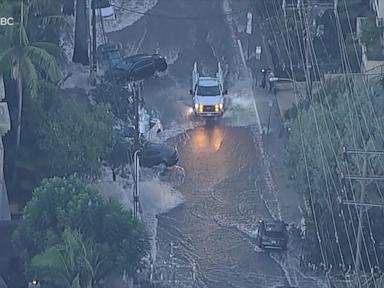
Water everywhere. That was the brutal reality on the morning of July 16, 2026, when a quiet West Hollywood neighborhood suddenly transformed into a raging, muddy river.
If you think a water main break is just a minor inconvenience that slows down your morning commute, think again. The massive West Hollywood water main break that struck before dawn did not just flood streets; it swallowed parked cars, collapsed sidewalks into deep sinkholes, destroyed local businesses, and left subterranean parking garages looking like murky lakes.
This disaster is a stark warning about a ticking time bomb buried right beneath our feet.
What Happened on Sunset Boulevard
The chaos started in the dark. Around 3:15 a.m., a massive underground transmission line ruptured near the intersection of North Palm Avenue and Harratt Street.
Within minutes, highly pressurized water began erupting through the asphalt. It quickly carved a path of destruction from Sunset Boulevard and Holloway Drive all the way down to Santa Monica Boulevard.
Timeline of the Disaster:
- 3:15 a.m.  --> First reports of the water main rupture near Palm Ave.
- 3:55 a.m.  --> LADWP receives the official notification and dispatches crews.
- 7:00 a.m.  --> Crews manage to shut off the main flow of water.
- Afternoon  --> In-person claim assistance centers open on Palm Ave.
By the time residents woke up, the local streets looked like a waterpark. But nobody was laughing.
The fast-moving torrent turned the Metro bus yard near San Vicente Boulevard into a shallow lake. It buckled roads and completely filled underground parking structures. At one apartment building on Hancock Avenue, more than a dozen vehicles were fully submerged, with dirty brown water rising all the way up to their windows.
Popular local businesses, including the beloved Dialog Cafe on Holloway Drive, suffered severe flood damage and had to shut their doors indefinitely. Because the water eroded the soil beneath the pavement, a sidewalk on Palm Avenue simply caved in, creating a massive, terrifying sinkhole.
The Science of Why Old Pipes Burst at Night
Why do these major pipe failures always seem to happen when everyone is fast asleep? It is not just bad luck. There is a very specific engineering reason for this timing.
During the day, millions of people in the Los Angeles area are using water. We brush our teeth, flush toilets, run dishwashers, and shower. This constant demand keeps the water flowing and keeps the overall pressure within the system relatively stable.
But late at night, demand plummets. Almost everyone is asleep. Because the pumps keep running to ensure the system is ready for the morning rush, water pressure naturally spikes to its highest levels of the day.
If you have a modern, strong pipeline, it handles this pressure change without any issues. But if you are dealing with a pipe that has been buried in the dirt since Woodrow Wilson was in the White House, that pressure spike is a death sentence.
The pipe that burst in West Hollywood was a 36-inch riveted steel trunk line installed in 1916.
Think about that. It was a 110-year-old piece of metal holding back massive amounts of highly pressurized water. Over more than a century, steel pipes rust from the outside due to wet soil and corrode from the inside due to chemical reactions with the water. The metal walls get thinner and thinner. Eventually, a nightly pressure spike finds the weakest point, and the pipe simply explodes.
A Deeper Crisis in Our Water Infrastructure
This is not an isolated incident. It is part of a much larger, systemic problem that Los Angeles and many older American cities are facing.
The Los Angeles Department of Water and Power (LADWP) manages an incredibly vast network of pipes. We are talking about 7,400 miles of water lines running beneath the city.
According to LADWP’s own data, roughly 30% of these main lines are more than 80 years old.
LADWP replaces about 45 miles of pipeline every year. That sounds like a lot. But do the math. At a rate of 45 miles a year, it would take more than 160 years to replace the entire network. Many pipes simply will not last that long.
We have seen this play out before on the very same street.
- In 2014, a 93-year-old pipe ruptured under Sunset Boulevard near UCLA. It sent 20 million gallons of water flooding onto the campus, destroying the historic Pauley Pavilion and trapping dozens of cars in underground garages.
- In 2020, a 99-year-old pipe burst in the same general area, causing more flooding.
- In 2021, an 82-year-old pipe failed further west on Sunset Boulevard.
LA Mayor Karen Bass has pointed out that the region has long lacked a unified, citywide infrastructure plan. Because West Hollywood and Los Angeles are separate cities but share the same water grid, repairing and upgrading these systems requires massive, coordinated efforts. Mayor Bass recently introduced a comprehensive infrastructure plan, which officials hope will help speed up pipe replacements, but funding and execution will take years.
How to Protect Your Property and File a Claim
If you live in an area with aging infrastructure, you need to know how to protect yourself before a main breaks, and what to do if you are caught in the aftermath.
If a water main break floods your street or building, do not try to drive through the water. A foot of rushing water can easily sweep a car away. Even standing water can hide collapsed pavement or active sinkholes.
If your car, home, or business was damaged in this West Hollywood event, you must act quickly to document the damage and get compensated.
Document Everything Immediately
Take clear photos and videos of all damage before you clean anything up. Capture the high-water marks on your walls, the mud in your garage, and the water level inside your vehicle.
File a Claim with the Utility
Because this ruptured line belonged to the LADWP, the utility is responsible for the damages.
- Visit LADWP Claims to download and submit the official claim form.
- You can also call 1-800-DIAL-DWP to speak with a representative.
- Be prepared to provide repair estimates, towing receipts, and photos of the damage.
Contact Your Insurance
Do not rely solely on the utility company. File a claim with your auto insurance (if your car was flooded) or your renter's/homeowner's insurance. They can often pay out faster than a government agency, and they will go after the utility company to get their money back.
What We Must Do Next
We cannot keep patching up century-old pipes and hoping for the best.
Every time a major main breaks, it costs millions of dollars in emergency repairs, property damage, and lost business revenue. It is far cheaper in the long run to proactively replace these old riveted steel lines before they burst.
As voters and residents, we must hold local leaders accountable. We need to support funding measures that directly target water line replacements and push for a faster, more aggressive upgrade schedule. Until we do, the next major flood is not a matter of if, but when.