Mark Kellogg didn't intend to become a historical footnote or a martyr for American journalism. He was a struggling 43-year-old widower, a part-time wordsmith, and a guy trying to scratch out a living in the brutal Dakota Territory to support his two daughters.
But exactly 150 years ago, on June 25, 1876, he rode down into a dusty Montana ravine with Lieutenant Colonel George Armstrong Custer.
We all know what happened to Custer. His tactical arrogance led the 7th Cavalry straight into an absolute meat grinder against Lakota, Northern Cheyenne, and Arapaho warriors.
What people usually miss is that Kellogg was right there beside him, scribbling in a pocket diary and carrying a Spencer carbine rifle.
He didn't just report on the catastrophic slaughter. He died in it.
The tragic intersection of ego and press access created a template for combat reporting that we still see today. Kellogg became the very first Associated Press-affiliated journalist killed in action.
His final dispatch included a line that sounds eerie now, though it was meant quite differently at the time.
"I go with Custer and will be at the death."
Most people assume he had a dark premonition. He didn't. In the 19th century, "at the death" was a common foxhunting phrase. It meant being there to witness the final kill of the prey. Kellogg fully expected Custer to run over the Native American village. Instead, the prey turned around and wiped them out.
Why Custer Needed a Public Relations Machine
Let's look at the actual reality of how Kellogg got on that horse in the first place.
Military commanders in the late 1800s weren't running transparent operations. They generally hated reporters. Clement Lounsberry, the founder of The Bismarck Tribune, was originally supposed to go on the expedition. At the last minute, Lounsberry had to back out because his wife fell seriously ill.
He sent Kellogg instead.
Custer didn't mind the switch. He was an extreme egomaniac who was obsessed with his public image and harbored massive political ambitions back east. He wanted a friendly pen along for the ride to guarantee that the glowing stories hitting the newspapers highlighted his battlefield genius.
Kellogg was happy to oblige. Writing under the pen name "Frontier," he spent weeks producing total propaganda for the military. He described Custer as a brave, faithful, gallant soldier and the hardest rider in the West.
This wasn't objective reporting. It was a 19th-century public relations campaign designed to justify the violent seizure of Native American lands. Kellogg openly referred to the indigenous defenders as "red devils" and eagerly anticipated them being "gobbled" up by the cavalry.
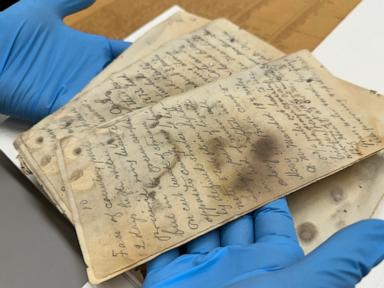
If you look at the surviving pages of his diary, preserved by the State Historical Society of North Dakota, you get a sense of the mundane reality before the chaos. He noted how many antelope the guides shot, the raw west wind, the heavy mud, and how Custer was "suffusing with energy" at the front of the line.
Then the diary abruptly stops.
The Price of Breaking the News
When the smoke cleared on that ridge, Kellogg's scalped body was found not far from Custer's position. Because he was a civilian, his clothes weren't stripped in the same manner as the soldiers, but he paid the same ultimate price.
The aftermath of his death triggered one of the biggest media scoops in history.
The Bismarck Tribune ran a massive transmission that totaled 15,000 words. Sending that dispatch east via telegraph cost an astronomical $3,000 at the time—a fortune in 1876 money.
Because Kellogg died on that field, The New York Herald managed to beat every single major newspaper east of the Mississippi River with the definitive account of the massacre.
The media mogul James Gordon Bennett Jr. was so taken by Kellogg's sacrifice that he claimed the fallen writer as the Herald's own. Bennett sent $2,000 to support Kellogg's orphaned daughters and eventually arranged a monthly stipend of $100 for their ongoing care and education, alongside a $5,000 payout when they reached adulthood.
It was a strange, grim trade. Kellogg lost his life for a story he never got to write, but his death bought financial security for the family he left behind.
Modern military embedding owes its structural roots to these early, muddy campaigns where reporters carried guns and shared the exact same rations—and risks—as the infantry. The line between observer and participant was completely blurred. Kellogg was acting as a soldier just as much as a newsman during those final miles.
If you want to understand how deep this history runs, look up the memorial wall at the Associated Press headquarters in New York. Kellogg's name sits right at the very top of the list of fallen journalists, followed by dozens of others who died in places like Sierra Leone, Vietnam, and Gaza.
Instead of treating historic press dispatches as objective truth, you should regularly analyze the biases of the people who wrote them. To see exactly how these early frontier dispatches shaped American mythology, read through the digitized pages of Mark Kellogg's original 1876 diary at the State Historical Society of North Dakota. It shows just how ordinary the days looked right before everything fell apart.
To learn more about his journey from a small-town editor to a casualty at Custer's Last Stand, watch this detailed account of Mark Kellogg's life and role at Little Bighorn which highlights his early career in La Crosse and his final fateful decision.