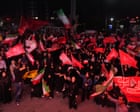
India won't send Prime Minister Narendra Modi to Iran for the funeral ceremonies of late Supreme Leader Ayatollah Ali Khamenei. Instead, the government is dispatching Bihar Governor Lt. Gen. Syed Ata Hasnain (Retd) and Minister of State for External Affairs Pabitra Margherita. They'll head to Iran for a multi-city mourning schedule starting July 4.
The decision is raising eyebrows in diplomatic circles. Some veteran diplomats call the move disappointing. They argue it doesn't match the immense stature of a leader who shaped West Asian politics for four decades. Iranian President Masoud Pezeshkian personally extended an invitation to Modi last week, but South Block opted to scale down the representation.
Official channels claim Modi has prior diplomatic commitments. He is scheduled to visit Indonesia, Australia, and New Zealand between July 6 and July 11. But in the nuanced world of foreign policy, who you send to a funeral speaks volumes.
The Strategic Balance Behind the Delegation
Sending a regional governor and a junior minister isn't just about scheduling conflicts. It's a calculated diplomatic dance.
Khamenei was killed on February 28 during a joint US-Israeli strike on his Tehran compound. Because of the raging conflict that followed, his burial was delayed for months. Now that the ceremonies are finally set—running from July 4 to July 9 across Tehran, Qom, and Mashhad—New Delhi has to walk a razor-thin tightrope.
On one side, India needs to maintain its historical, energy, and strategic links with Iran. Think about the Chabahar Port. Think about access to Central Asia. On the other hand, New Delhi cannot afford to alienate Washington or Tel Aviv. By avoiding a Prime Minister-level or even a Cabinet Minister-level presence, India signals to the West that it isn't endorsing Iran's hardline stance, while still keeping a foot in the door in Tehran.
Who is Going and Why It Matters
The composition of the team tells its own story.
- Lt. Gen. Syed Ata Hasnain (Retd): The current Bihar Governor is a highly respected former military commander. Crucially, he's one of the few prominent members of the Shia community holding a high constitutional position in India. His presence offers a deep cultural and religious nod to Iran's Shia leadership.
- Pabitra Margherita: As the Minister of State for External Affairs, he represents the political arm of the Indian government. He already attended the chehelum (40th-day mourning ceremony) at the Iranian Embassy in New Delhi back in April, so he's the familiar political face for this file.
Diplomatic Backlash and the Silence from New Delhi
Not everyone thinks this cautious approach is smart. Former Ambassador to Saudi Arabia Talmiz Ahmad voiced sharp criticism, noting that Khamenei had met every single Indian Prime Minister over the last forty years, including Modi in 2016. Lowering the delegation level during a massive regional shift might be seen as a missed opportunity to cement ties with an evolving Iranian administration.
This fits a broader pattern of hesitation. When Khamenei was killed in February, India didn't immediately issue a formal public condolence statement. The opposition party slammed the government's silence. It took four days for Foreign Secretary Vikram Misri to quietly visit the Iranian Embassy just to sign a condolence book. The Ministry of External Affairs even briefly told foreign missions to hold off on signing condolence books before reversing the order.
What Happens Next in Iran
The funeral will be massive. Iranian authorities are preparing for millions of mourners. If you're tracking the region, here's the timeline for the events the Indian delegation will navigate:
- July 4–5: Public viewing and farewell at Tehran's Grand Mosalla complex.
- July 6: The main state funeral procession through a secure corridor in the capital.
- July 7: Religious ceremonies in the holy city of Qom.
- July 9: Final burial at the Imam Reza shrine in Mashhad.
The timing is incredibly delicate. A June 17 security understanding between the US, Israel, and Iran is already fraying due to fresh border skirmishes and maritime friction.
Keep a close watch on how Tehran receives Hasnain and Margherita. If they get sidelined during bilateral side-meetings in favor of delegations from Russia, China, or Pakistan—who are sending high-profile teams—it will show exactly where India stands in the new West Asian order. Watch for official press releases from the Ministry of External Affairs around July 5 for the first indicators of how these meetings are playing out.