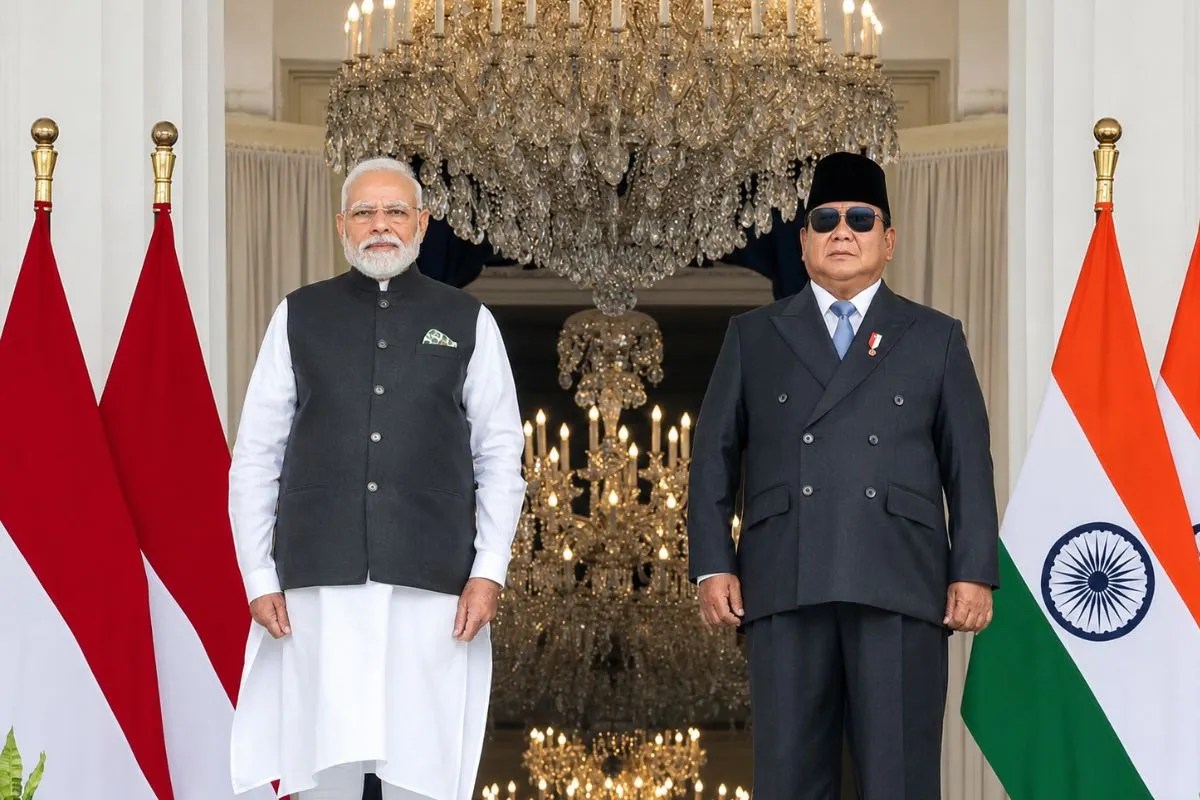
When Narendra Modi dropped a Bollywood line in Jakarta, people didn't just laugh. They cheered. Addressing the Indian diaspora on his three-day state visit, India's Prime Minister cheekily pointed out how much Indonesians love the song Kuch Kuch Hota Hai. Then he delivered the real punchline to Indonesian President Prabowo Subianto. He said that when India and Indonesia join hands, it goes way beyond kuch kuch (something). It leads to bahut kuch (so much more).
It's a clever bit of wordplay. Filmmaker Karan Johar even jumped on Instagram to thank the PM for making his debut film's title live forever. But let's look past the viral reels and soft power optics. Why does this strategic partnership actually matter right now?
The truth is, geopolitical relationships aren't built on 90s cinema. They're built on trade routes, defense pacts, and shared anxieties over regional security.
Moving From Soft Power To Hard Reality
For decades, India and Indonesia shared a quiet, polite relationship. They shared cultural roots from the Ramayana and Mahabharata. They shared a love for Shah Rukh Khan. But polite cultural appreciation doesn't secure maritime borders.
Things are shifting fast. During this visit, President Prabowo Subianto openly welcomed deeper defense cooperation. We aren't just talking about joint naval exercises anymore. The two nations are actively discussing integration involving the BrahMos supersonic cruise missile system. That's a major upgrade from historical non-alignment.
Think about the geography. Indonesia sits right at the mouth of the Malacca Strait. That narrow strip of water is a global economic artery. Most of India’s trade to the East passes right through it. If that strait gets blocked or dominated by an aggressive superpower, India's economy takes a massive hit. New Delhi needs Jakarta to be a strong, stable, and friendly gatekeeper.
The Indian DNA Connection
Diplomacy gets incredibly interesting when it gets personal. President Prabowo shared a wild detail during the state banquet. He revealed that before his state visit to India, he underwent a genome sequencing test. The result? He discovered he has Indian DNA.
"Whenever I hear Indian music, I find my body moving," Prabowo joked, adding that many of his ministers and generals probably share that same genetic connection because they sing Indian songs so well.
It's a lighthearted moment, but it underscores a deeper reality. Indonesia is the world's most populous Muslim-majority nation, yet its cultural landscape is heavily laced with Hindu-Buddhist history. Garuda is their national airline. Hanuman is a revered cultural icon. This deep cultural mirror means both nations don't have to work hard to understand each other's societal values.
Historical Ties (Ramayana/Mahabharata) ➔ Modern Soft Power (Bollywood/Football) ➔ Strategic Security (BrahMos/Malacca Strait)
Maritime Security Is The Real Goal
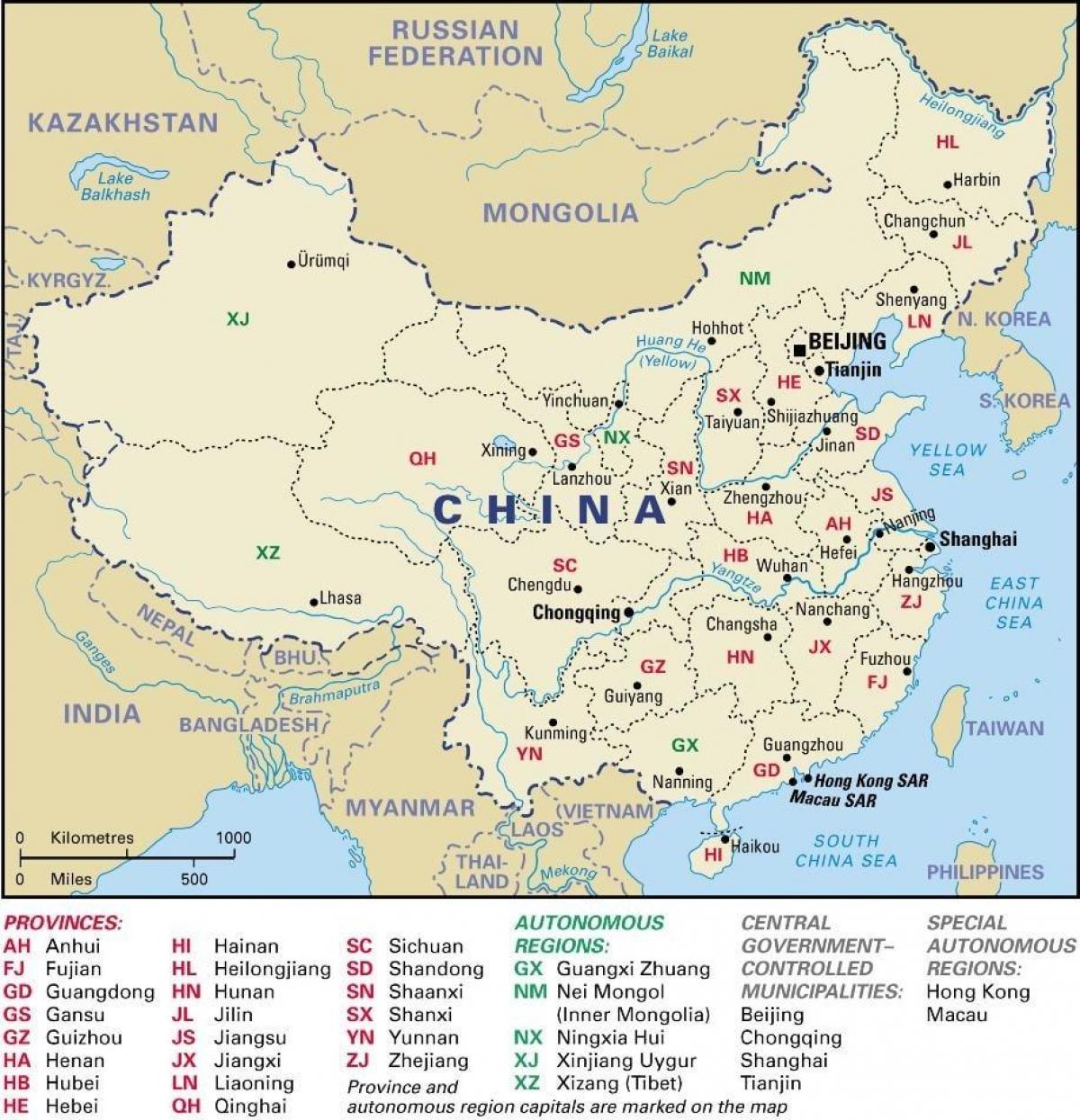
Forget the songs for a minute. Let's talk about China.
Neither Modi nor Prabowo named Beijing directly in their public addresses. They don't need to. Beijing's aggressive posturing in the South China Sea hangs over Southeast Asia like a dark cloud. Indonesia has repeatedly clashed with Chinese fishing boats and coast guard vessels near the Natuna Islands. India faces its own unending border tensions in the Himalayas.
By upgrading defense ties, India and Indonesia are creating a subtle maritime counterweight. Indonesia just awarded Modi the Bintang Adipurna (the Star of the Republic of Indonesia), its highest civilian honor for foreigners. You don't hand out that kind of medal just because a leader makes a witty movie joke. You give it because you view that leader as an essential anchor for your country's long-term survival.
Trading Beyond The Usual Boundaries
Right now, trade sits around $30 billion to $40 billion annually. It's heavily weighted toward palm oil and coal. Honestly, that's amateur hour for two economies of this size.
The real expansion is happening in digital infrastructure and healthcare. India's Unified Payments Interface (UPI) technology is actively being eyed for cross-border integration with Indonesia’s digital payment systems. If you're a small business owner in Chennai or Jakarta, seamless digital transactions mean direct trade without dealing with Western banking intermediaries. That's where the bahut kuch actually manifests into dollars and rupees.
Actionable Next Steps For Observers
If you're tracking international relations or looking at emerging market investments, don't get distracted by the cultural fluff. Here is what you need to watch next:
- Track the BrahMos Delivery Timeline: Watch how fast the defense ministries move from verbal agreements to actual hardware delivery. Speed indicates true urgency.
- Monitor the Sabang Port Development: India has been eyeing infrastructure development at Indonesia's Sabang port. If India gains deep-water access there, it completely rewrites the naval balance in the Andaman Sea.
- Watch Digital Payment Pacts: Look out for official central bank memos regarding UPI integration. Once that drops, tech and e-commerce sectors between both nations will see a sudden investment surge.