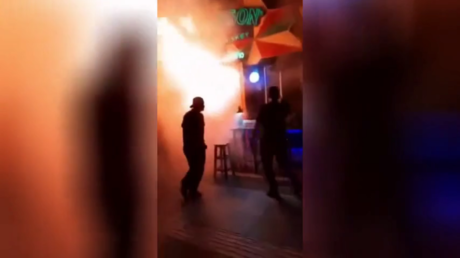
Ash fell like grey snow over Le Vaudoué on Sunday afternoon. The air smelled of char, thick and suffocating. Valerie and Daniel didn't have time to pack their lives into suitcases. They grabbed their cats, whistled for their dogs, threw them into the back of the car, and fled. Fire lined both sides of the road.
This isn't the south of France. This isn't the Mediterranean coast or the dry pine forests of Gironde. This is the Fontainebleau forest, a mere 60 kilometers southeast of Paris. It's a weekend getaway for city dwellers, a former royal hunting preserve, and an iconic haven for hikers. Right now, it's a tinderbox.
The massive wildfire that erupted on July 12, 2026, has already scorched over 800 hectares of historic woodland. It shut down a major section of the A6 highway, the main artery connecting Paris to the south. It choked the railway network, leaving passengers stranded at Gare de Lyon with delays stretching up to six hours.
If you think climate disasters only happen somewhere else, this blaze is your wake-up call. The threat has officially moved north.
The Day the Paris Region Caught Fire
The fire started late Sunday afternoon around 4:40 PM right alongside the motorway. Within hours, the blaze turned into what local residents openly called a monster. Fueled by shifting winds and an unforgiving heatwave, the flames moved with terrifying speed.
More than 400 firefighters threw themselves into the lines overnight. By Monday morning, authorities had to take a historic step. For the first time, water-bombing planes were sent up from their usual bases in the south to battle a blaze in the Paris region. People living along the Seine watched in disbelief as massive Canadair aircraft dipped low into the river to scoop up water.
Interior Minister Laurent Nuñez confirmed that around 900 homes faced evacuation orders across the area. In Le Vaudoué alone, about half of the 700 residents had to leave everything behind. They gathered near local war memorials and in makeshift shelters, staring back at the smoke columns rising above the trees.
The physical damage is easy to count in hectares and delayed trains. The psychological shift is harder to measure, but it's far more permanent. Paris is no longer insulated from the climate crisis.
Shifting Danger Zones
For years, northern Europeans viewed devastating forest fires as a tragic but distant reality. We watched Greece burn. We watched Portugal burn. We watched Spain suffer. In fact, right now, Spain is dealing with a brutal blaze that killed at least 13 people in an expat community.
We comforted ourselves with the idea that our damp, temperate northern climates would protect us. That comfort is dead.
France is currently baking under its third red-alert heatwave of the summer. Temperatures in Paris are hovering around 37°C, while western and central areas have blown right past 40°C. The heat is so intense that organizers of the Tour de France had to shorten Sunday’s stage by 30 kilometers just to keep riders from collapsing.
When you combine those temperatures with prolonged drought, forests like Fontainebleau become bombs waiting for a spark. The European Union’s Copernicus Climate Change Service keeps reminding us that Europe is warming twice as fast as the global average. Fontainebleau isn't an anomaly. It's the new baseline.
The Arson Factor and Forest Vulnerability
While climate conditions created the perfect tinderbox, the spark itself might have a darker origin. Regional administration head Pierre Ory stated that authorities are looking into arson as a strong possibility. A second fire even broke out in a completely different section of the forest on Monday morning while crews were still fighting the first one.
This points to a massive vulnerability in how we manage our natural spaces. Fontainebleau isn't a remote wilderness. It's heavily visited, easily accessible, and crisscrossed by major infrastructure. Millions of people visit these woods every year. A single discarded cigarette, a poorly managed campfire, or a malicious actor can instantly trigger a catastrophe that threatens thousands of lives and cuts off national transport links.
The fire national statistics are jarring. Before this weekend, forest fires had already consumed 17,000 hectares across France this year. Once the final tally for the Fontainebleau disaster and concurrent southern fires comes in, that number will skyrocket past 25,000 hectares. That's double the damage recorded during the exact same period last year.
How to Prepare for the Unthinkable
If you live near any wooded area in northern France, you can no longer afford to be complacent. Emergency services are stretched thin. They can't be everywhere at once. You have to take responsibility for your own safety before the smoke appears on the horizon.
Clear a safety zone around your property. If your home borders a wooded patch, clear out dead brush, dry grass, and overhanging branches within at least 50 meters of your structure. This basic clearing gives firefighters a defensible space to work with if the worst happens.
Prepare a go-bag today. Don't wait until a firefighter is knocking on your door telling you that you have ten minutes to leave. Keep your essential documents, emergency cash, necessary medications, and pet supplies packed in a single, easily accessible bag.
Have a clear evacuation plan. Know at least two different routes out of your neighborhood. The Fontainebleau fire blocked a major highway and trapped people in local bottlenecks. If your primary escape route is cut off by smoke or emergency vehicles, you need an immediate alternative.
Stay informed during high-heat days. Download local emergency apps, monitor prefectural social media channels, and pay attention to wind directions when temperatures cross the 35°C mark. If an evacuation warning comes, leave immediately. Delaying by even fifteen minutes can mean getting trapped on a road choked with smoke and panic.
The era of assuming northern forests are safe is over. Treat the woods with respect, prepare your home, and don't assume the damp northern winters will save your summer.