You are probably making a dangerous assumption in your kitchen right now. You buy a bag of pre-washed salad greens, dump them into a bowl, maybe give them a quick rinse, and think you are safe.
You aren't.
Right now, a massive outbreak of a microscopic parasite called Cyclospora cayetanensis is sweeping across the United States. It has already sickened thousands of people, with Michigan serving as the absolute epicenter of the crisis. State health officials just pointed a finger at lettuce and leafy salad greens as the primary suspects.
If you think a splash of cold tap water is going to protect your family from weeks of explosive, watery diarrhea, you need to think again.
The Scale of the July 2026 Outbreak
This is not a minor food poisoning blip. It is a full-blown public health storm.
By mid-July 2026, Michigan health officials reported a staggering 2,640 cases of cyclosporiasis. For perspective, Michigan usually sees only 40 to 50 cases in an entire year. That is a mind-boggling increase. The surge is so intense that local hospitals have already seen dozens of admissions for severe dehydration.
Other states are getting hammered too. Ohio has recorded hundreds of cases, with New York closely following. The Centers for Disease Control and Prevention (CDC) has confirmed cases across 31 states.
The scary part? The official numbers are almost certainly a massive undercount.
The CDC faces a reporting lag of up to six weeks. Because Cyclospora has an incubation period of up to two weeks, people do not even realize they are sick until long after they have eaten the contaminated food. By the time health officials interview a patient, trying to remember what was eaten a month ago is nearly impossible.
The Chemistry Problem with Cyclospora
Many people think foodborne illness is always bacterial. They think of E. coli or Salmonella.
Those are bacteria. Cyclospora is a protozoan parasite. This difference is crucial.
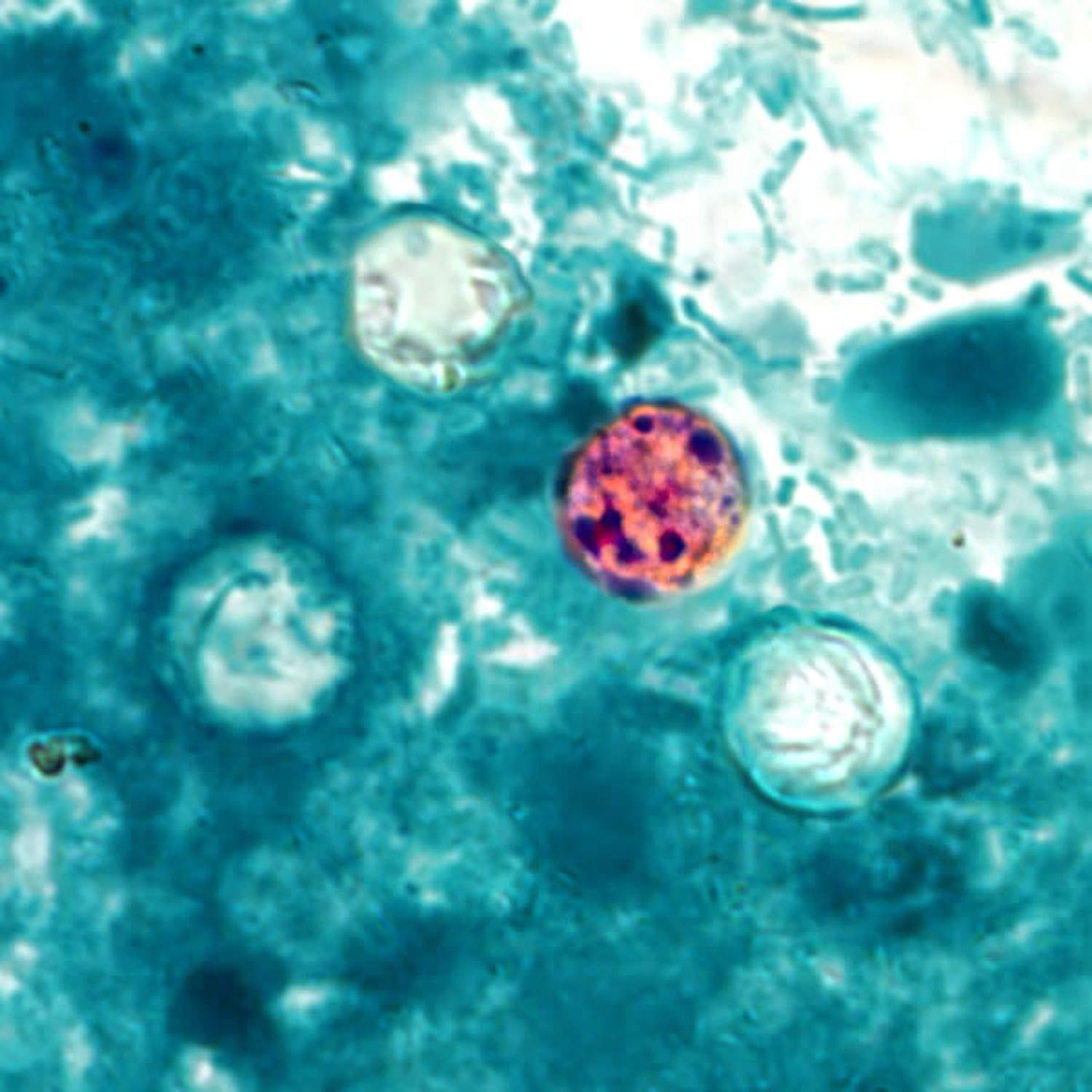
Bacteria can often be killed or reduced by standard sanitizing rinses. But Cyclospora is a tough, spherical little beast protected by a thick, resilient outer wall. This shell makes it highly resistant to chemical disinfection.
Chlorine washes that commercial facilities use to clean pre-packaged salads do not reliably kill it. Routine kitchen vegetable washes do not kill it either. The parasite behaves like microscopic Velcro. It clings tightly to the rough, textured surfaces of leafy greens, herbs, and fruits.
Once it is on your food, it is incredibly difficult to dislodge.
To make matters worse, food safety technicians cannot grow this parasite in a laboratory culture. With bacteria, scientists can easily grow samples and use genetic fingerprinting to trace the exact farm it came from. With Cyclospora, that traceback process is a slow, agonizing puzzle of supply-chain paperwork and consumer interviews. That is why the Michigan Department of Health and Human Services (MDHHS) has not yet been able to name a specific grower, brand, or supplier, even though they are confident that "lettuce or salad greens" are the culprit.
Why Bagged Salad is a Major Risk
Bagged salad kits are the ultimate convenience. They are also a major point of vulnerability during a foodborne illness outbreak.
Think about how bagged salad is made. Millions of leaves from multiple farms are harvested, shipped to a central processing plant, shredded, mixed together in giant vats, and packaged.
If just one head of lettuce harvested from a field irrigated with contaminated water enters that processing plant, it can contaminate thousands of bags of salad mixes distributed across multiple states.
Historically, packaged salad mixes and kits are a recurring culprit for Cyclospora outbreaks. During an active outbreak like this one, buying pre-shredded romaine, iceberg blends, or spinach mixes is simply a bad idea. You are playing Russian roulette with your digestive tract.
How to Protect Your Kitchen Right Now
You do not have to stop eating fresh produce entirely, but you must change how you buy and prepare it. Here is how you can dramatically lower your risk while health agencies hunt down the source.
Ditch the Bag and Buy Whole Heads
Stop buying bagged, pre-cut salad mixes. Instead, buy whole heads of lettuce—like romaine, iceberg, or butter lettuce.
When you get a whole head of lettuce home, do this immediately:
- Strip away and discard the outer two to three layers of leaves entirely. The outer leaves are the most exposed to soil, water, and handling.
- Pull the remaining inner leaves apart so they are completely individual.
- Wash each individual leaf under cold, running tap water. Do not just soak them in a filled sink, which can just spread the parasite from one leaf to another.
Use the Vinegar Method
Washing with water alone will not remove all parasites. To help slide the parasite off the slick surface of your greens, try a mild acid rinse.
Submerge your separated lettuce leaves in a large bowl filled with three parts water and one part white vinegar. Swish the leaves around vigorously for a couple of minutes. The vinegar does not kill the parasite, but it breaks the tension holding the parasite to the leaf, allowing it to slip off more easily.
Afterward, rinse the leaves thoroughly with clean running water to remove the vinegar taste, and run them through a salad spinner to dry.
Cook What You Can
The only guaranteed way to destroy the Cyclospora parasite is heat. If you cook your greens to a temperature of at least 158°F (70°C), you render the parasite completely harmless.
Obviously, you are not going to cook a Caesar salad. But you can easily sauté spinach, kale, or Swiss chard. If you are using herbs like fresh cilantro or basil—which have also been linked to major Cyclospora outbreaks in the past—incorporate them into cooked dishes like soups, stews, or sauces rather than eating them raw.
Beware of Bumpy Fruits and Herbs
Leafy greens are not the only danger. The physical shape of certain foods makes them excellent hiding spots for parasites.
- Raspberries: Their bumpy, fragile surface is full of tiny crevices where parasites hide. Washing them thoroughly without crushing them is nearly impossible. Opt for frozen raspberries instead, or cook them down into a glaze or jam.
- Green Onions: The hollow tubes can trap contaminated water inside. Trim the roots, peel away the outer skin layer, and wash them intensely.
- Melons: Even if you do not eat the rind, your knife will push parasites from the outside of the melon straight into the flesh when you slice it. Scrub the outside of your cantaloupes and watermelons with a brush under running water before cutting.
Spotting the Symptoms
If you have eaten leafy greens recently and started feeling off, you need to know what to look for. Cyclosporiasis does not feel like a standard 24-hour stomach bug.
The primary symptom is watery, frequent, and sometimes explosive diarrhea. This is often accompanied by:
- Extreme fatigue and muscle aches
- Severe abdominal cramps and bloating
- Loss of appetite and rapid weight loss
- Low-grade fever and nausea
Without medical intervention, these symptoms do not just fade away in a couple of days. They can drag on for a month or more, or they might seem to disappear only to return with a vengeance a week later.
If you suspect you have been infected, do not bother taking over-the-counter anti-diarrheal medications. They will not cure the underlying infection. You need to see a doctor and ask specifically for a stool test that screens for parasites. If you test positive, a healthcare provider will prescribe a specific course of antibiotics (typically trimethoprim-sulfamethoxazole) to clear the parasite from your system.
Action Steps for Consumers
Stop waiting for a formal recall notice to change your habits. By the time a specific farm is identified, the contaminated batch of lettuce will already be out of grocery stores, and the damage to your health will be done.
Take control of your kitchen today:
- Clear the fridge: Toss any pre-packaged bagged salad mixes, salad kits, or pre-cut greens you bought recently.
- Switch to whole heads: Buy only whole heads of lettuce, strip the outer leaves, and wash the inner leaves individually.
- Wash your tools: Sanitize your cutting boards, salad spinners, and knives with hot, soapy water after preparing raw produce.
- Ask at restaurants: If you are dining out—especially in Southeast Michigan or surrounding Midwest states—skip the raw side salads and raw garnishes. Go for cooked vegetable options instead.