A holiday weekend rolls around and the national political machine shifts its gaze toward Chicago. The script is predictable by now. Gunshots ring out in neighborhoods that rarely see public investment, local activists scream for resources, and federal politicians turn the bloodshed into a rhetorical weapon.
The recent Juneteenth weekend was no exception. It was a tragic showcase of how local trauma gets converted into cheap political theater. Over the course of just a few days, a wave of shootings left at least eight people dead and 38 others wounded across the city. Before the shell casings were even cold, President Donald Trump fired off a Sunday morning broadside on Truth Social, taking direct aim at Illinois Governor J.B. Pritzker and demanding military intervention.
"Why isn't Governor Pritzker calling me for help," Trump posted. He went on to assert that he could transform Chicago into a safe haven within a single month or year.
It is a bold claim. It is also an overly simplistic fix for a generational crisis that ails America's third-largest city. The reality on the ground contradicts both the apocalyptic narratives peddled by national figures and the defensive talking points offered by local leaders. When you strip away the partisan spin, you find a city caught between structural neglect and cyclical violence, where real solutions are continuously sacrificed for talking points.
Inside the weekend that shook the South Side
To understand what actually happened, you have to look past the political social media posts and look at the streets. The violence over this specific weekend was not a monolith. It was a series of distinct, tragic incidents scattered across several neighborhoods, capping off a weekend that was supposed to be a double celebration of Father's Day and Juneteenth.
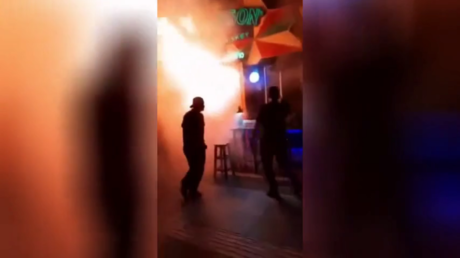
The most horrific single event occurred on Friday night in the Princeton Park neighborhood on the South Side. Around 11 p.m., an ordinary summer evening near 95th and Wentworth Avenue turned into a war zone. A dark SUV pulled up to a crowd gathered on the street, and two people inside opened fire.
More than 100 shell casings littered the asphalt. When the dust settled, 12 people lay wounded, ranging in age from 17 to 47 years old. The group included eight men and four women who were quickly scattered across four area hospitals. Two men were left in critical condition, fighting for their lives.
Earlier that very same day, a completely different scene unfolded on the South Side. Former President Barack Obama and former first lady Michelle Obama were welcoming the very first visitors to the newly minted Obama Presidential Center. The star-studded opening featured appearances by local icons and massive celebrations, illustrating the profound duality of Chicago. One pocket of the South Side was celebrating a monumental legacy of hope, while another pocket, just hours later, was ducking under a hail of automatic gunfire.
The rest of the weekend saw no respite. On Saturday night on the West Side, an 18-year-old boy lost his life inside a home near Quincy Street and Cicero Avenue. Police managed to recover a weapon and arrest a 17-year-old suspect, but the damage was done. An hour later, over in North Lawndale, officers responding to a large gathering were caught in the crossfire when shots rang out, leaving three teenagers wounded and a bullet hole inside the hood of a Chicago Police Department squad car.
Local advocates like Pastor Donovan Price, who spend their weekends comforting grieving families at crime scenes, summarized the exhausting heartbreak. He noted that a holiday meant for reflection and community pride was shattered, forcing families to mistake celebratory fireworks for lethal gunshots.
The myth of the quick military fix
Trump's immediate reaction to the bloodshed was a renewal of his long-standing promise to send federal troops or federalize the National Guard to police American streets. He pointed to Washington, D.C., claiming his administration's deployment turned it from one of the worst to one of the safest cities.
Local Democratic leadership, including Governor Pritzker and Chicago Mayor Brandon Johnson, have consistently pushed back against this approach. Pritzker has previously gone as far as filing lawsuits to block the federalization of National Guard members within Illinois, viewing the move as a dangerous overreach of executive authority that treats American citizens like an occupying force.
If you look at the data, the idea that deploying soldiers solves urban gun violence does not hold up under close scrutiny. A study published by the nonpartisan Niskanen Center examined the exact scenario Trump referenced. They tracked the impact of National Guard deployments on violent crime rates in Washington, D.C. The conclusion was clear. The military presence had a minimal, practically negligible effect on reducing violent crime.
Soldiers are trained for foreign warfare and asset protection, not local community policing. They do not know the local blocks, they do not have relationships with neighborhood fixtures, and they cannot investigate domestic disputes or gang retaliations. Putting camouflage and rifles on street corners might provide a temporary visual sense of order for suburban onlookers, but it fails to address the underlying networks driving the violence.
What the national crime data actually tells us
The favorite talking point of critics is that Chicago is a lawless wasteland experiencing an unprecedented spiral of chaos. The favorite talking point of local administrators is that crime is down and everything is under control. Both narratives are fundamentally misleading.
The truth requires looking at two competing data realities simultaneously.
According to official Chicago Police Department data, there was a slight uptick in shooting incidents during the first half of the year compared to the exact same period last year. That means the immediate anxiety felt by residents on the South and West sides is grounded in a tangible reality. The shots are being fired, and people are getting hurt.
When you zoom out to look at the broader multi-year trajectory, violent crime rates in Chicago have actually fallen from their pandemic-era peaks. This downward trend mirrors national patterns seen across other major metro areas like New York, Los Angeles, and Houston.
The city is technically safer than it was three years ago, but it remains significantly more dangerous than it was a decade ago. This nuance gets lost in the political spin. Critics focus entirely on the short-term uptick to declare the city a failed state, while local politicians hide behind the long-term downward trend to avoid answering for a weekend that left 38 people wounded.
The failure of local leadership defensive playbook
While federal intervention plans are flawed, local city officials do not get a free pass. The response from Mayor Brandon Johnson's administration often feels stuck in a loop of thoughts, prayers, and systemic blame.
Following the Juneteenth drive-by, Mayor Johnson released a statement on X condemning the violence. He stated that what should have been a night of celebration was shattered by a horrific act, adding that violence has no place in the city and that perpetrators would be held accountable.
Residents are growing tired of the same press releases. The frustration stemming from community members is not about a lack of empathy; it is about a lack of execution. Local organizers point out that grassroots violence interrupters and community peacekeepers are continually asked to put their lives on the line to mediate conflicts on hot spots like Englewood, Austin, and Princeton Park, yet they operate on shoe-string budgets compared to the massive municipal funds funneled elsewhere.
When local leadership continuously blames historical inequities without showing immediate, tangible improvements in emergency response and neighborhood safety, they create a vacuum. That vacuum gets filled by authoritarian promises of military intervention.
Why structural neglect keeps the cycle alive
You cannot fix Chicago's gun problem by simply changing the police superintendent or screaming louder on social media. The violence is concentrated in a highly predictable geographic footprint, specifically within neighborhoods that have experienced decades of intentional disinvestment.
When industries fled the South and West sides, they left behind food deserts, closed public schools, and a lack of living-wage jobs. If a young person has no viable economic future, a crumbling local school system, and a lack of mental health resources, the alternative economies of the street become incredibly appealing.
The city has repeatedly poured billions into upgrading the commercial downtown Loop and North Side tourist districts while leaving neighborhoods like North Lawndale or Garfield Park to fend for themselves. Gun violence is merely the late-stage symptom of this economic starvation. Until local, state, and federal budgets treat economic revitalization on the South Side with the same urgency as a downtown corporate stadium project, the shooting tallies will fluctuate but they will never permanently drop.
Practical steps to move past the rhetoric
Resolving this crisis requires abandoning the standard political playbook. Instead of debating whether to deploy the military or writing another empty press statement, policymakers need to focus on immediate, actionable steps that target the root of the issue.
First, stabilize and fund the grassroots infrastructure. Organizations like the Peacekeepers and Violence Interrupters should not be scrambling for grants every fiscal quarter. They need permanent, localized municipal funding to maintain a 2026 presence in known conflict corridors. These individuals are capable of de-escalating retaliatory gang disputes before shots are fired, a task that neither a Chicago police officer nor a National Guard soldier is equipped to handle.
Second, pivot municipal resources toward targeted economic intervention. True public safety is tied to local employment. Providing direct tax incentives for supermarkets, healthcare facilities, and manufacturing hubs to open within the specific ZIP codes experiencing the highest rates of gun violence does more to reduce crime than a thousand police patrols.
Third, hold federal gun laws accountable. Chicago has relatively strict gun regulations, but it borders Indiana and Wisconsin, states with incredibly lax firearm laws. A significant percentage of illegal guns recovered on Chicago streets are traced back to out-of-state straw purchases. Federal leaders who want to help Chicago should focus on closing these interstate trafficking loopholes rather than threatening to send troops into neighborhoods they only view through a news camera.
The finger-pointing will undoubtedly continue through the summer months. But for the families on 95th and Wentworth, the political squabbling offers zero comfort. It is time to stop using Chicago as a rhetorical punching bag and start treating its residents like people who deserve real safety, real investment, and real solutions.