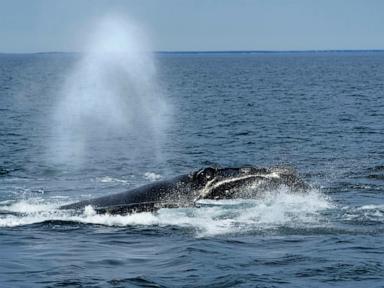
There are roughly 380 North Atlantic right whales left on planet Earth. That isn't a typo. It's a terrifyingly small number for a giant marine mammal that used to dominate the U.S. Eastern Seaboard.
Yet last week, lawmakers in Washington took a massive step toward freezing new federal protections for these animals until 2035.
If this bill passes the full Congress, conservation efforts will basically remain on ice for nearly a decade. The debate pits two distinct American interests against each other: a historic New England lobstering industry fighting for its financial survival, and ocean scientists warning that a single bad season could push a species into an irreversible extinction spiral.
Here's what is happening behind closed doors, why the policy fight is so intense, and what it actually means for the ocean.
The Push to Freeze Regulations
On July 15, the House Natural Resources Committee voted to extend an existing moratorium on new federal right whale rules all the way out to 2035. The original pause—put in place back in 2022—was scheduled to expire in 2028.
The extension bill was introduced by Representative Jared Golden, a Maine Democrat, alongside Republican Representative Mike Lawler of New York. The proposal has received strong support from the White House, making its passage through a Republican-controlled Congress extremely likely.
The core argument from Golden and local fishing groups comes down to time and economic survival.
"Mainers are not asking for much," Golden said during discussions around the bill. "We just need more time."
💡 You might also like: bolger funeral home williamsburg pa
Supporters of the delay argue that existing conservation rules are already rigorous. They point out that commercial lobstermen have adapted to strict gear modifications, seasonal area closures, and mandatory weak-link rope requirements. Adding more federal mandates right now, industry leaders argue, could wipe out thousands of family-owned fishing businesses without offering proven benefits to the whales.
They also claim the government needs more time to collect precise oceanographic data. In their view, previous regulatory proposals relied on flawed tracking models that didn't accurately show where whales were traveling.
The Case Against Further Delays
Environmental organizations like Oceana and the Natural Resources Defense Council see the situation through a completely different lens. To them, postponing protective measures for another nine years is a death sentence.
The right whale population dropped by roughly 25% between 2010 and 2020. While recent calving seasons showed mild improvement—23 mother-calf pairs were reported in the most recent birthing season—the overall population remains deeply vulnerable.
The two biggest threats to these whales are well-documented:
- Vessel Strikes: Ships colliding with whales swimming near the surface. Slower boat speeds reduce fatal collisions dramatically, but expanding mandatory speed zones to smaller vessels has faced heavy pushback.
- Entanglement: Getting wrapped up in heavy commercial fishing lines. Entangled whales often drag gear for months, suffering severe injuries or slowly starving because they can't feed properly.
Conservation groups point out that climate change is shifting where these whales feed. As ocean waters warm, right whales are migrating into untracked territories outside traditional protected zones. Freezing federal regulatory adjustments until 2035 prevents wildlife managers from responding to these changing migration patterns in real time.
When animals are moving into new waters, frozen rules mean zero agility.
Technology Versus Speed Limits
Much of the political debate centers on whether brand-new technology can replace hard legal mandates like mandatory boat speed limits or fishing gear bans.
Federal managers and trade groups have shown growing interest in high-tech solutions. They are looking into:
- Acoustic Monitoring Buoys: Underwater listening devices that detect right whale vocalizations and warn nearby ships in real time.
- Thermal Imaging Cameras: Ship-mounted infrared systems designed to spot whale blowhole spouts in low-visibility conditions.
- On-Demand Gear: Ropeless fishing setups that keep lines resting on the ocean floor until a boat triggers them to surface.
These technologies sound promising on paper. However, marine scientists urge caution. Ropeless gear remains extremely expensive for individual lobstermen to buy at scale. Meanwhile, real-time acoustic tracking doesn't catch silent or resting whales drifting near the surface.
For now, oceanographers maintain that basic operational changes—like slowing ships down to 10 knots in high-risk corridors—remain the single most reliable way to prevent fatal collisions.
What Happens Next
The bill extending the moratorium to 2035 now moves toward a full floor vote in the House, where it holds strong momentum.
For citizens and ocean advocates wanting to track or influence marine policy, key next steps include:
- Monitor Congressional Votes: Keep an eye on the full House vote schedule regarding federal fishery management and Endangered Species Act reauthorizations.
- Track NOAA Public Comments: The National Oceanic and Atmospheric Administration regularly opens public comment portals regarding vessel speed rules and regional marine management plans.
- Support Gear Innovation Funds: Direct resources or advocacy toward grant programs that subsidize ropeless fishing tech for local independent fishermen, bridging the gap between industry survival and species safety.