California is about to find out exactly what happens when you try to squeeze the ultra-rich to save a safety net.
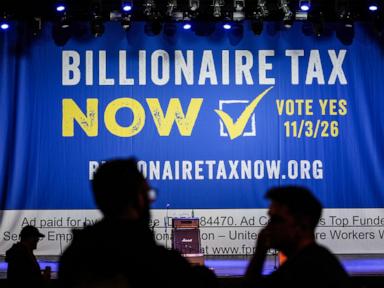
In November 2026, voters will decide on a ballot measure that sounds like a progressive dream or a fiscal nightmare, depending on who you ask. The California Billionaire Tax Act will officially hit the ballot after a wild, late-night scrambles of union negotiations, hospital backroom deals, and outright fury from the governor's mansion.
If it passes, the state will hit anyone living in California with a net worth over $1 billion as of January 1, 2026, with a one-time 5% wealth tax. The goal? To drag in roughly $100 billion over five years to prop up collapsing healthcare systems, public schools, and food assistance programs.
But the real story isn't just about taxing the rich. It's about a massive political crack-up. This initiative has created a bizarre political alignment where progressive icons like Governor Gavin Newsom, Planned Parenthood, and the California Teachers Association are standing shoulder-to-shoulder with Silicon Valley tech titans to kill it.
The Mechanics of the 5% Wealth Grab
Let's look at how this thing actually works because it's not a standard income tax hike. Most tax increases target what you pull in annually. This one goes after what you already own.
The measure takes a snapshot of a billionaire’s worldwide net worth on December 31, 2026. If that number clears ten figures, they owe 5%. To keep things from breaking entirely, the state lets them pay it out in 1% installments over five years. It also carves out directly held personal real estate, though real estate owned through a business entity is still fair game.
For the tech founders whose fortunes exist mostly on paper, the measure includes a deferral mechanism. If your wealth is locked up in an illiquid, private startup, you can theoretically delay payments until you sell shares, go public, or take out cash distributions.
The Institute on Taxation and Economic Policy (ITEP) notes that California is home to roughly 213 billionaires, holding a collective wealth of about $2.18 trillion. That is more than a quarter of all billionaire wealth in the entire United States. Proponents figured that even with a 10% tax avoidance rate—people hiding cash or successfully arguing down their valuations—the state will still walk away with a cool $100 billion.
Why a Healthcare Union is Declaring War on Sacramento
The muscle behind this ballot fight is the Service Employees International Union-United Healthcare Workers West (SEIU-UHW). They aren't backing down, even after other major unions cut deals to pull competing measures from the November ballot.
The union’s motivation is straightforward survival. Recent federal legislative overhauls cut deep into Medicaid and safety-net funding. The union argues these cuts threaten to trigger widespread closures of emergency rooms and rural clinics across the state.
"Regular working people pay higher effective tax rates than the wealthiest Americans," says Suzanne Jimenez, chief of staff for SEIU-UHW. "Asking those who have benefited most from the economy to contribute more—particularly to stabilize healthcare systems under direct threat—is a reasonable step."
Last-minute panic hit Sacramento right before the state's June certification deadline. Organizers from the California Federation of Labor Unions managed to get hospitals and unions to withdraw two other vicious, multi-million-dollar ballot fights. But SEIU-UHW refused to drop the billionaire tax. Even when the union offered a massive concession—dropping the proposed rate from 5% down to 2%—Newsom flatly rejected the compromise. The deadline passed, and the war was certified.
The Progressive Alliance Trying to Kill the Bill
You'd think a wealth tax would bring out the entire progressive base in lockstep. It didn't. Instead, it fractured them completely.
Governor Gavin Newsom has been one of the most aggressive opponents from day one. Newsom, who is staring down his final months in the governor's office and eyeing a future presidential run, argues that state-level wealth taxes create a race to the bottom. His political adviser, Brian Brokaw, calls the measure a "one-time grab" that will decimate California’s long-term budget stability.
The state relies on the top 1% of earners for nearly half of its total personal income tax revenue. If you push even a dozen billionaires to pack up and head to Texas, Nevada, or Florida, you don’t just lose the wealth tax—you lose their massive annual income tax contributions forever.
The nonpartisan Legislative Analyst’s Office backed up this fear. Their independent scoring projects that while the state would see an initial flood of cash, subsequent income tax revenues would likely drop by hundreds of millions of dollars every single year as wealth migrates out of state.
That economic reality explains why traditional progressive heavyweights are running anti-tax campaigns:
- Planned Parenthood Affiliates of California: They agree the wealthy should pay more, but labeled the measure "short-sighted," arguing it offers no sustainable, long-term funding path for healthcare.
- California Teachers Association: The state's massive teachers union opposes it because a highly volatile, one-time wealth tax threatens the stability of general fund revenue, which directly dictates public school funding formulas.
- California Medical Association: Doctors and healthcare administrators fear that creating a massive, temporary fund will distort state budgets and leave clinics worse off when the money runs out in five years.
Silicon Valley's Nine-Figure Defensive Shield
The billionaires themselves aren't just sitting around waiting for November. They're spending historic amounts of cash to build an island of political defense.
Google co-founder Sergey Brin has poured $82 million into a political action committee called Building a Better California. The committee has raised more than $118 million from fewer than twelve ultra-wealthy donors. The cash is fueling a massive media campaign designed to tank public support before the fall election.
And for those who aren't fighting with cash, they're fighting with their feet. The measure tries to block the exits by applying retroactively to anyone who was a resident on January 1, 2026. Leaving the state now won’t technically erase the initial liability if the law survives court challenges. But asset managers in Silicon Valley have spent months shifting holdings into out-of-state trusts and moving corporate structures to mitigate the damage.
UCLA political science professor Martin Gilens points out that while the public is generally sympathetic to taxing the rich during times of high inflation and budget cuts, support for complex ballot initiatives historically plummets once the opposition saturated the airwaves with warnings about economic doom.
What Happens Next
If you're tracking this issue or managing assets in California, the next four months will be loud and incredibly expensive. Here is how to keep tabs on the situation:
- Watch the Polling Trajectory: Public support for wealth taxes usually starts high but drops fast when voters are told it could crater public school funds. Look for independent field polls in August and September to see if the tech-backed ad campaigns are working.
- Audit Your Entity Locations: If you run a high-growth business or hold significant equity in California, consult with tax counsel now regarding how the state defines "worldwide net worth" and the explicit rules surrounding illiquid business deferrals.
- Track the Legal Framework: If the measure passes, expect immediate constitutional challenges based on interstate commerce and retroactive taxation. The legal battle will take years to resolve before a single dollar is actually collected.