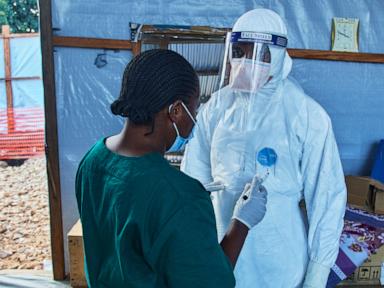
The ground is slipping away from health workers in the Democratic Republic of the Congo. We are currently staring down the fastest-growing Ebola outbreak ever recorded on the continent. Even worse, health officials admit they have lost the trail.
On July 14, 2026, Dr. Chikwe Ihekweazu, Executive Director of the World Health Organization Health Emergencies Programme, returned from the front lines in Bunia with a grim reality check. An astonishing 80% of new Ebola cases in eastern Congo are originating from unknown chains of transmission.
When four out of five patients showing up with a deadly hemorrhagic fever are completely off the grid of contact tracers, it means the virus is moving silently through communities, entirely undetected until it is too late.
The Scale of the Bundibugyo Crisis
This is not the standard Ebola Zaire strain we have grown accustomed to fighting. The culprit behind this rapid spread is the rare Bundibugyo virus. The outbreak, which authorities officially declared on May 15, 2026, after weeks of silent transmission, has ballooned into the third-largest Ebola outbreak in history.
As of July 13, 2026, the numbers paint a stark picture:
- 1,926 confirmed infections across three main provinces in the DRC, with spillover cases already confirmed in neighboring Uganda.
- 702 deaths officially recorded.
- 80 new cases confirmed in a single 24-hour window, marking record highs.
The official statistics represent only what is visible. The WHO warns that statistical modeling indicates the actual scale of the epidemic is likely two to four times larger than what is being reported.
Why Unknown Chains of Transmission Are a Nightmare
In any outbreak response, contact tracing is the primary weapon. When a patient tests positive, health workers immediately list every single person that patient has interacted with over the incubation period. Those contacts are monitored daily. If they show symptoms, they are isolated immediately. This breaks the chain of transmission.
When 80% of cases are from unknown chains, that entire system breaks down. It means the virus is circulating in communities among people who do not even know they have been exposed.
The most alarming aspect of Dr. Ihekweazu's brief is that many victims are dying in their homes, completely cut off from medical care. They are buried without safe, dignified protocols, creating massive, highly infectious exposure events for family members and neighbors.
A Perfect Storm of Insecurity, Mistrust, and Strikes
The containment efforts are not failing due to a lack of clinical scale. In Bunia, the epicentre in Ituri province, treatment capacity has expanded to nearly 800 beds. Diagnostic capacity has also expanded from a single laboratory to 14.
The issue is not the science. It is the environment.
Active Conflict and Physical Danger
Eastern Congo remains a volatile conflict zone. Militia activity and targeted attacks on health centers make it incredibly dangerous for field teams to trace contacts or transport patients. If field workers cannot physically enter a neighborhood safely, contact tracing becomes impossible.
Localized Mistrust
Decades of conflict have left local communities deeply suspicious of outside intervention. When teams in full protective gear arrive to take away sick loved ones, it can trigger fear rather than relief. Some families actively hide symptomatic relatives, which keeps those individuals off the contact lists.
Economic and Logistical Hurdles
Even the frontline workers are reaching their limits. On July 13, 2026, dozens of health workers at a major treatment center in northeastern Congo went on strike over unpaid salaries and bonuses. When the people risking their lives to treat Ebola are not getting paid, the entire system grinds to a halt.
What We Can Do Next
There are no easy solutions when dealing with a rare strain like Bundibugyo, especially because there are currently no fully approved vaccines or treatments specifically licensed for it. However, clinical trials did begin last week in Bunia to test experimental therapies.
To turn the tide, the global health response must pivot away from standard containment models and focus on immediate practical changes.
- Fund the front line immediately: International donors must close the funding gap to ensure local health workers and contact tracers are paid on time, preventing further strikes.
- Shift to community-led surveillance: Instead of relying solely on external response teams, local leaders and youth groups must be trained and equipped to identify cases early within their own neighborhoods.
- Secure transit corridors: Regional governments must coordinate to protect health infrastructure and ensure safe transit for humanitarian staff, including organizations like the one employing the American aid worker who recently tested positive.