When the power grid collapsed across Central Maryland and Virginia during a brutal summer heatwave, ambient temperatures climbed above 102 degrees Fahrenheit. Millions of people suddenly faced a dangerous reality. Their air conditioners shut off, food began spoiling in dark refrigerators, and cell towers struggled under massive demand.
Most people think buying a generator is a simple weekend task. You run to the home improvement store, buy whatever box is on sale, stick it in the garage, and call yourself prepared. That mindset is a disaster waiting to happen.
Different weather disasters demand completely different energy strategies. A three-hour summer blackout caused by grid overload requires a very different response than a five-day blackout after a Category 3 hurricane. If you buy the wrong system for your specific climate risks, you end up with an expensive paperweight when you need electricity most.
The Brutal Reality of Heat Wave Blackouts versus Storm Power Outages
Extreme heat and severe storms wreck the electrical grid in totally different ways. Understanding this distinction is the first step toward building a system that actually keeps your lights on.
During a heatwave, the grid fails because of sheer demand. Millions of air conditioners run simultaneously at maximum output, causing transformers to overheat and voltage to drop. These outages usually happen during peak afternoon hours. The good news is that physical power lines are often intact, meaning the outage might only last six to twelve hours. However, the heat inside your house rises fast. Without cooling, indoor temperatures can reach dangerous levels for children, older adults, and pets within hours.
Storms present the opposite challenge. High winds, falling trees, and ice destroy physical infrastructure. Downed poles and snapped high-voltage lines take days or even weeks for utility crews to rebuild.
Fuel availability vanishes quickly during prolonged storm blackouts. Gas stations lose power or run out of fuel within hours. If your backup strategy relies entirely on gasoline, you will find yourself waiting in two-hour lines with gas cans in hand, hoping the station's backup generator keeps working long enough to pump fuel.
Why Gasoline Generators Are Losing Their Appeal
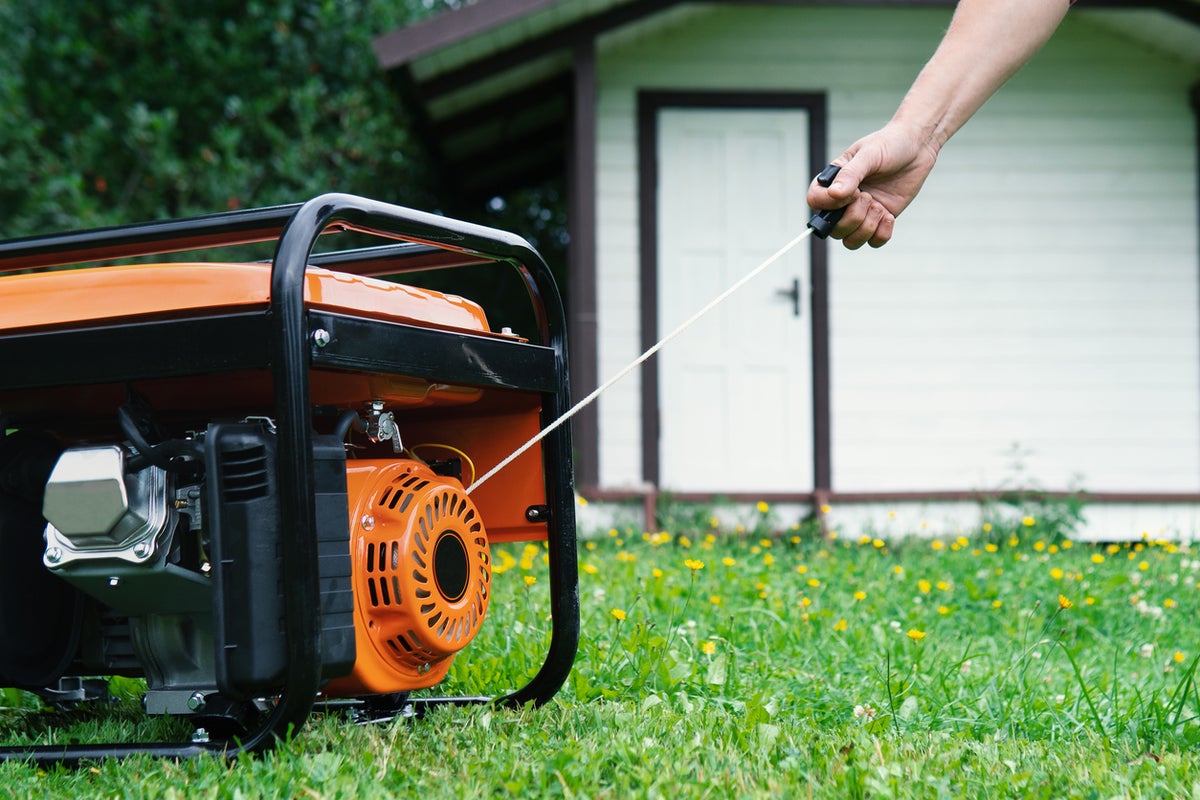
Gasoline generators used to be the gold standard for home backup. They deliver raw power at a relatively low upfront cost. A standard 5,000-watt portable gas generator costs anywhere from $500 to $1,200 and can easily start a window air conditioner, run a refrigerator, and charge electronics.
Gas generators have severe limitations that most salespeople forget to mention.
First, they are noisy. A typical portable gas generator runs at 70 to 80 decibels. That is as loud as a vacuum cleaner running right outside your window twenty-four hours a day. In a neighborhood where three or four homes run gas units, the noise pollution becomes unbearable fast.
Second, they require endless fuel and maintenance. A standard portable generator burns roughly five to eight gallons of gasoline per day under moderate load. During a five-day blackout, you need over thirty gallons of fresh fuel stored safely on your property. Gasoline spoils after a few months unless you add chemical stabilizers, and carburetor jets clog easily if fuel sits inside the machine over the winter.
The biggest danger is carbon monoxide poisoning. Every year, scores of people end up in emergency rooms because they placed a running generator in an attached garage, near an open window, or under a covered patio. You must run gas units at least twenty feet away from your home, regardless of how hard it is raining outside.
If you choose a fuel-based generator, dual-fuel or tri-fuel models that run on propane or natural gas make much more sense. Propane stores indefinitely in sealed tanks without degrading. Natural gas connects directly to your municipal line, giving you continuous fuel without ever filling a tank.
Portable Power Stations Are Redefining Modern Emergency Backup
Rechargeable portable power stations have evolved rapidly over the past few years. Brands like EcoFlow, Jackery, Bluetti, and Anker have transformed what used to be weak camping batteries into serious home energy reserves.
A portable power station is essentially a large lithium iron phosphate battery enclosed in a durable casing with built-in AC outlets, USB ports, and high-speed charging circuits.
The immediate advantage of battery backup is indoor safety. Batteries emit zero fumes, generate minimal heat, and run almost silently. You can put a power station on your nightstand to run a medical device, set it on the kitchen counter for the refrigerator, or keep it next to your desk to power your router and computer.
Small battery units about the size of a lunchbox cost around $200 to $400. These are designed for charging smartphones, laptops, LED lamps, and portable fans. They are fantastic for short power blips, but they will not run heavy appliances.
Mid-sized units providing roughly 1,000 to 2,000 watt-hours of capacity range between $800 and $1,800. These carry enough muscle to power a modern home refrigerator for eight to twelve hours, or keep a Wi-Fi router, laptop, and standing fan running for over two days straight.
Large modular battery systems priced from $3,000 to $6,000 offer expandable capacity. Units like the EcoFlow Delta Pro or Bluetti Apex series can output enough wattage to start heavy power tools, run microwave ovens, and even power select 120-volt portable air conditioners or heat pumps.
The Secret Advantage of Pairing Batteries with Portable Solar Panels
Batteries are fantastic until they run dry. If a blackout stretches into day three or day four, a standalone battery becomes empty weight. That is where portable solar integration completely changes the equation.
Pairing a portable power station with foldable solar panels creates a self-sustaining microgrid. During the day, you set the solar panels outside in direct sunlight while keeping the battery safely indoors. The panels replenish the power you consumed overnight while simultaneously feeding energy to your appliances.
Solar recharging is quiet, free, and completely independent of disrupted fuel supply chains. In a post-storm scenario where gas stations are closed, solar panels continue generating power as long as the sky clears up.
Solar output drops significantly on heavily overcast or rainy days. A panel rated for 400 watts might only generate 80 to 120 watts under thick cloud cover. Expecting solar panels to instantly recharge a massive battery bank during a storm is unrealistic. You must size your battery capacity large enough to carry your essential loads through two full days of bad weather.
Whole-House Standby Generators versus Whole-Home Solar Battery Systems
When you move past portable equipment, you enter the territory of permanent, hard-wired home backup solutions. These systems automatically detect when grid voltage drops and restore power to your entire house within seconds.
Traditional standby generators from brands like Generac, Kohler, or Cummins run on natural gas or liquid propane. They connect directly to your electrical panel through an automatic transfer switch. The moment utility power fails, the transfer switch disconnects your home from the street grid and signals the generator to start.
A typical 14kW to 26kW standby generator costs between $5,000 and $12,000 for the unit itself, with professional installation, gas plumbing, and electrical permitting adding another $3,000 to $8,000. They easily run central air conditioning systems, electric water heaters, ovens, and every light in the house simultaneously.
Standby gas generators are mechanical engines that require annual servicing, oil changes, and fresh spark plugs. They can also face fuel disruptions if extreme weather damages municipal natural gas pipelines or blocks propane delivery trucks.
On the other side of permanent power are residential solar-plus-battery installations. Systems using Tesla Powerwall, Enphase IQ batteries, or EP Cube pair rooftop solar arrays with permanent wall-mounted lithium batteries.
These setups cost significantly more upfront, often ranging from $18,000 to $35,000 before federal tax credits or local incentives. However, they operate silently, require zero maintenance, and pay for themselves year-round by offsetting daily electricity costs.
During normal operations, smart home batteries charge from solar energy during low-cost morning hours and discharge stored power into your home during expensive evening peak hours. When the grid drops out during a summer heatwave, the system instantly isolates your home and keeps critical circuits running without a single flicker of your lights.
How to Calculate Your Essential Power Needs Before Buying Anything
Buying backup equipment without calculating your actual energy needs is the fastest way to waste money. People frequently buy a small battery expecting it to run a central air conditioner, or buy a massive gas generator just to charge two phones and power a lamp.
Start by listing the non-negotiable devices you must keep operational during an emergency. Categorize them into continuous running loads and short-term operational loads.
Medical equipment like CPAP machines or oxygen concentrators must come first. A standard CPAP machine without a heated humidifier uses around 30 to 60 watts per hour. Running it for eight hours of sleep requires about 400 watt-hours of battery capacity.
Food preservation comes next. A modern Energy Star certified refrigerator draws roughly 100 to 200 running watts, but it requires a sudden surge of 800 to 1,200 watts for a few seconds when the compressor kicks on. A 1,500 watt-hour battery bank can easily run a refrigerator for twelve to fifteen hours if you keep the door closed.
Cooling and heating depend heavily on equipment type. A small window air conditioner or portable unit draws 500 to 1,200 watts continuously. Running one for ten hours during a scorching afternoon requires 5,000 to 12,000 watt-hours of power. That load will quickly drain small portable batteries and demands either a large modular battery system or a fuel generator.
Communications devices are low draw. A home Wi-Fi router consumes 10 to 20 watts. A smartphone takes about 10 to 15 watt-hours for a full charge. A modest 500 watt-hour portable power station can keep your communication setup online for several days continuous.
Multiply the running wattage of each device by the number of hours you need it to operate daily. Add 20 percent to your total number to account for inverter power loss and startup surge demands. That final number is your absolute minimum energy target in watt-hours.
Using Electric Vehicles as Home Emergency Batteries
Vehicle-to-Load and Vehicle-to-Home technology is transforming how electric vehicle owners handle grid failures. Electric vehicles are essentially giant batteries on wheels, holding anywhere from 60 to 135 kilowatt-hours of stored energy. That is five to ten times larger than a standard home wall battery.
Vehicles like the Ford F-150 Lightning, Hyundai Ioniq 5, Kia EV6, and Rivian trucks come equipped with high-power AC outlets directly built into the vehicle. You can run heavy extension cords from the truck into your house to power refrigerators, portable AC units, power tools, and lights for days at a time without starting an engine or burning gas.
Advanced Vehicle-to-Home systems go even further. Using specialized bidirectional chargers, the car feeds power back through your home's main electrical panel. When the grid goes dark during a storm, the car automatically powers your house.
A fully charged electric vehicle battery can power an average home's essential electrical loads for three to seven days straight. If you already own or plan to buy a compatible electric vehicle, exploring its bidirectional capability is far more cost-effective than buying a standalone stationary generator.
Smart Action Steps to Prepare Your Home Today
Preparing for the next storm or heatwave blackout does not require spending ten thousand dollars overnight. You can build resilience in sensible, budget-friendly stages.
Start small by buying a quality 300 to 500 watt-hour portable battery bank and a few rechargeable LED lanterns. Keep this unit fully charged in a cool closet. This handles immediate communication, light, and phone charging for any unexpected multi-hour outage.
If you live in an area prone to severe weather or extreme heat, step up to a 1,500 to 2,000 watt-hour portable power station paired with a 200-watt or 400-watt solar panel array. This keeps your refrigerator cold, runs fans or small cooling units, and preserves your food without noise or dangerous exhaust fumes.
For homeowners facing frequent multi-day grid disruptions, consult a licensed electrician to install a manual transfer switch or interlock kit at your main electrical breaker panel. This allows you to safely connect a larger portable dual-fuel generator or heavy-duty battery system directly to your home wiring without dangerous backfeeding.
Check your existing battery systems twice a year. Lithium batteries hold charges remarkably well, but checking capacity levels every six months ensures your emergency setup is ready to go when severe weather strikes. Charge them back to 80 or 90 percent, inspect all cords for wear, and keep your gear accessible so you are never left searching in the dark.