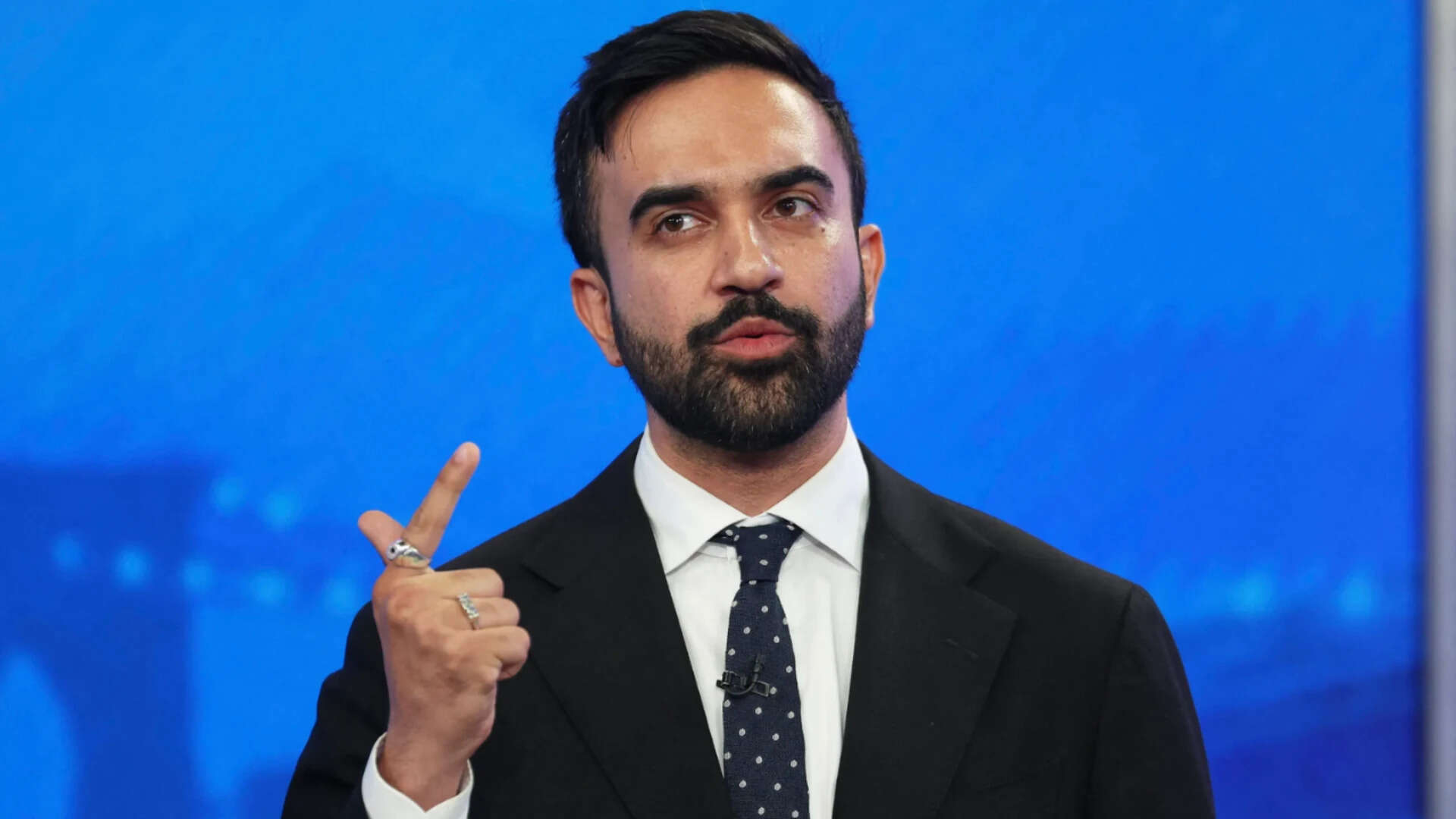
Setting your thermostat to 78 degrees in the dead of summer sounds like a recipe for a sleepless, sweaty night. When New York City Mayor Zohran Mamdani suggested exactly that during a brutal July heat wave, he probably expected some grumbling from locals. Instead, he triggered an immediate national political meltdown. Within hours, prominent Republicans were treating a standard piece of grid-preservation advice as an authoritarian plot to destroy American comfort.
The backlash was swift, loud, and highly coordinated. From Texas to Florida, conservative commentators and politicians lined up to bash the self-proclaimed democratic socialist mayor. They claimed his modest request to ease demand on the power grid was proof that collectivism fails. But beneath the culture-war theater lies a funny reality. The advice Mamdani gave is identical to federal guidelines established under Republican administrations, and it's exactly what red-state governors tell their own citizens when the weather turns nasty. Meanwhile, you can explore other stories here: What Most People Get Wrong About The Expected Rise In College Closures.
The tweet that set the internet on fire
As a dangerous heat dome settled over the East Coast, forecasters warned that Central Park could hit 100 degrees for the first time since 2012. With humidity factored in, the heat index threatened to climb to a suffocating 110 degrees. Knowing that millions of air conditioners humming at once could cause localized blackouts, Mamdani took to X to plead for cooperation.
He asked New Yorkers to set their AC to 78 degrees, turn off unnecessary lights, and unplug idle electronics. He noted that city government buildings were leading by example, keeping municipal offices at 78 and powering down non-essential equipment. To understand the complete picture, check out the recent analysis by USA.gov.
The response from the right was instantaneous. Vivek Ramaswamy posted that this is what socialism looks like, arguing that the solution should be drilling and fracking rather than asking citizens to cut back. Arkansas Governor Sarah Huckabee Sanders chimed in to declare that socialism isn't free. Florida Governor Ron DeSantis sneered about the warmth of collectivism. Barstool Sports founder Dave Portnoy went even further, screaming on social media that 78 degrees was straight-up communism.
It was a fascinating display of political theater. An optional, routine public safety announcement from a city mayor was suddenly transformed into a referendum on the future of American capitalism.
The long boring history of the 78-degree rule
The funniest part of the outrage is that Mamdani didn't invent this number. He didn't even modify it. The 78-degree recommendation is decades old and has been pushed by politicians of every political stripe.
In 2023, former NYC Mayor Eric Adams issued the exact same warning during a July heat advisory. Go back further to 2008, and billionaire Independent Mayor Michael Bloomberg declared a heat emergency and forced municipal buildings to stay at 78 degrees while asking residents to do the same. This isn't radical leftist doctrine. It's standard operational procedure for running a massive metropolis during a climate emergency.
Even the federal government agrees. The United States Department of Energy recommends setting your home thermostat to 78 degrees in the summer when you're at home and need cooling. They suggest raising it even higher when you're away. The goal is to balance personal comfort with energy efficiency and grid stability. Yet, when a democratic socialist says it, the recommendation magically transforms into a Marxist mandate.
Red states do the exact same thing
The hypocrisy reached its peak when federal and state officials from conservative strongholds joined the pile-on. Senator Ted Cruz mocked the announcement by writing that people could actually turn on the AC in a first-world country.
Community notes on social media immediately checked him. Cruz's home state of Texas, managed by the Electric Reliability Council of Texas (ERCOT), regularly begs Texans to conserve energy and raise their thermostats during peak summer heat to prevent their independent grid from collapsing entirely. In fact, Texas faced catastrophic grid failure during a 2021 winter storm that left millions without power.
Nikki Haley also jumped into the fray, tweeting a simple welcome to socialism. Reviewing her own record as governor of South Carolina reveals multiple instances where her state administration urged residents to dial back power consumption during extreme weather events to avoid rolling blackouts.
When a red state asks its citizens to conserve power, it's called civic responsibility and managing infrastructure. When a progressive New York mayor does it, it's labeled a tyrannical restriction on freedom.
How the New York City power grid actually works
A common complaint among angry internet users was the bright lights of Times Square. Dozens of critics pointed out that the city's massive, neon-soaked commercial hub remains fully illuminated while everyday residents are asked to sweat it out in their apartments. It feels unfair on the surface. Why should an average renter in Queens suffer while corporate billboards blast electricity all night long?
The argument collapses once you understand how the New York City electrical system is built. The city's utility provider, Con Edison, doesn't operate on one giant, interconnected power loop. Instead, the city is divided into more than 80 distinct, isolated underground cable networks.
Power cannot easily be routed from one network to another. If a residential grid in Washington Heights is Maxed out because thousands of window units are drawing power simultaneously, turning off a digital billboard in Times Square won't help. The local transformers in that residential neighborhood are the ones at risk of overheating and blowing out. If they blow, that specific neighborhood loses power, regardless of what's happening midtown.
The city did ask commercial partners and the Times Square Alliance to reduce power where possible. But keeping residential ACs at a reasonable 78 degrees is the most effective way to prevent localized equipment failures that leave vulnerable populations without any cooling at all.
The real cost of political posturing
This entire controversy highlights a troubling trend in American politics where basic engineering realities are sacrificed for cheap political points. Infrastructure doesn't care about ideology. A power grid doesn't care if a mayor is a capitalist, a socialist, or an independent. Copper wires and transformers have physical limits. When those limits are exceeded, they fail.
By framing an optional conservation request as an ideological war, critics risk convincing their followers to ignore public safety warnings entirely. MAGA personality Nick Adams proudly tweeted that he cranks his AC down to 60 whenever he pleases because this is America. That sort of spite-driven energy usage might feel like a win against progressivism, but it actively harms the community if it pushes a local transformer past its breaking point.
Managing a heat wave requires a mix of emergency services and community cooperation. New York City didn't just tweet advice. They opened hundreds of cooling centers, extended public swimming pool hours until late in the evening, opened public libraries over the holiday weekend, and deployed over 600 street outreach workers to check on vulnerable elderly residents.
Actionable steps for surviving a city heat wave
You don't have to ruin your summer to protect the grid and save money. Smart energy management keeps your space bearable without causing a blackout.
First, focus on airflow rather than raw temperature. Setting your AC to 75 or 76 degrees while running a ceiling or floor fan creates a wind-chill effect that makes the room feel several degrees cooler. Fans use a fraction of the energy that an air conditioner compressor requires.
Second, block out the sun. Keep your blinds, curtains, or shades fully closed during the peak daylight hours of 11 a.m. to 4 p.m. Radiant heat from the sun coming through window glass accounts for a massive percentage of indoor heat buildup. Stopping that heat from entering means your AC doesn't have to work nearly as hard.
Third, shift your appliance use to late evening. Don't run dishwashers, washing machines, or clothes dryers during the hottest parts of the day. These machines generate substantial internal heat and moisture, forcing your air conditioner to battle the very appliances running inside your home.
Finally, know your limits. If your apartment gets dangerously hot and you can't cope with a higher thermostat setting, don't risk your health. Head to a designated public cooling center, a local library, or a shaded park. Keeping the grid stable is important, but preventing heat stroke is always the true priority.
Watch this broadcast detailing the city's extreme weather plans to learn more about how local officials are responding to the rising temperatures and deploying cooling resources across the five boroughs.