History has a bad habit of cleaning up its records to suit a specific narrative. For over a century, the standard story of World War I focused on the trenches of the Western Front, told through a largely Eurocentric lens. But a massive database update has smashed that old narrative.
The Commonwealth War Graves Commission (CWGC) just added 9,909 British Indian Army servicemen to its official casualty database. This is the largest single revision of their records in more than 80 years. Most of these nearly 10,000 forgotten souls were from the undivided Punjab region. They fought, bled, and died for an empire that ultimately left their names out of the official master lists. Don't forget to check out our recent article on this related article.
This isn't just about clerical corrections. It is about a systematic omission that took over a century to fix.
The Bureaucratic Erasure of the British Indian Army
Why did it take until 2026 for these men to find their way into the official history books? The answer lies in the cold, transactional nature of the colonial British Indian government. If you want more about the history of this, USA Today offers an excellent breakdown.
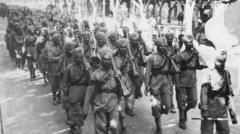
During the Great War, undivided Punjab was the primary recruitment ground for the British Indian Army. Around 300,000 Punjabi men—Sikhs, Muslims, and Hindus alike—left their villages to fight in places like France, Gallipoli, Mesopotamia, East Africa, and Palestine. In total, 1.4 million men from the subcontinent served.
When the war ended, the Punjab government compiled massive, handwritten village registers documenting nearly 320,000 servicemen. But the British colonial administration drew a sharp, cruel line when it came to commemorating the dead.
If a soldier died directly on the battlefield, they usually made the official cut. But if a sepoy was severely wounded, shipped away from the front lines, and died of his injuries or disease later on, the bureaucratic machinery of the British Indian government often excluded them. They essentially became non-persons in the empire's official tally of sacrifice.
How a Basement in Lahore Changed Everything
The correction of this historic injustice didn't come from top-down government benevolence. It happened because independent researchers and volunteers refused to let the paper trail rot.
For decades, 26,000 pages of these fragile, handwritten village registers sat unread and gathering dust in a basement at the Lahore Museum in present-day Pakistan. Because Punjab was brutally fractured during the 1947 Partition, families were displaced, oral histories were broken, and these records became physically isolated from the descendants of the people listed inside them.
Researchers from the UK-based Punjab Heritage Association, collaborating with academics like Dr. Gavin Rand from the University of Greenwich, spent years digitizing and analyzing these fading pages.
The data they unearthed is staggering:
- 9,909 previously omitted servicemen have now been officially recognized.
- The religious breakdown of these newly added soldiers reflects the diverse fabric of old Punjab: roughly 40% Muslim, 25% Sikh, and 25% Hindu.
- Volunteer rates in some of these small rural villages reached as high as 40% of the eligible male population.
The Direct Human Connection
When you look past the raw data, you find the real human cost. Families in the UK and South Asia are finally getting the closure that colonial authorities denied their great-grandparents.
Take Sunney Palahey, a dentist based in Leicester. He spent years trying to track down concrete evidence of his great-grandfather, Kesar Singh, who served in the war. For over a century, Kesar's sacrifice existed only as a hazy family memory. Now, Kesar Singh has an official entry in the Commonwealth War Graves Commission database. Palahey noted that having an authority finally acknowledge the sacrifice makes the multi-generational search feel worth it.
Then there is Jasmin Basra, a PhD student involved in the research project. While combing through the fragile registers, she actually found the names of her own great-great-grandfather and his brother. Discovering those names transformed an academic exercise into a direct emotional bridge to her own lineage.
For these families, it is written proof that their ancestors weren't just background characters in Britain's wartime drama—they were on the front lines.
Why This Timing Matters
This isn't just a win for family genealogy. It changes the historical reality of what the British war effort actually looked like. For a long time, public memory of WWI has been dominated by a very specific image of the British tommy. Pop culture has occasionally even pushed back against the inclusion of minority soldiers in historical media, claiming it "inaccurate."
These 9,909 newly recovered names prove that the British war effort was inherently multicultural from day one. You can't talk about British wartime survival without talking about the sepoys of Hoshiarpur, Rawalpindi, or Jalandhar.
The CWGC's decision to reverse these century-old colonial policies is a major step toward dismantling a Eurocentric bias that has dominated global history books for way too long.
What to Do With This Information
If you come from a Punjabi or South Asian background and suspect your family had a connection to the Great War, don't let their stories remain buried.
- Search the Updated Database: Check the Commonwealth War Graves Commission casualty database. The nearly 10,000 newly added names mean your ancestor might finally be officially listed.
- Look Up Digitized Village Registers: Explore the archives digitized by the Punjab Heritage Association and the University of Greenwich. You can search by specific village names to see who volunteered from your family's ancestral home.
- Preserve Oral Histories: Talk to the oldest living members of your family now. Write down names, regiments, or even fragments of stories before they are lost entirely.
History isn't static. Sometimes, it takes over a hundred years to get the story right.
This BBC video report provides deeper insight into the erased histories of Indian and Sikh soldiers, highlighting why inclusion in modern remembrance is so vital for families who carry these memories.