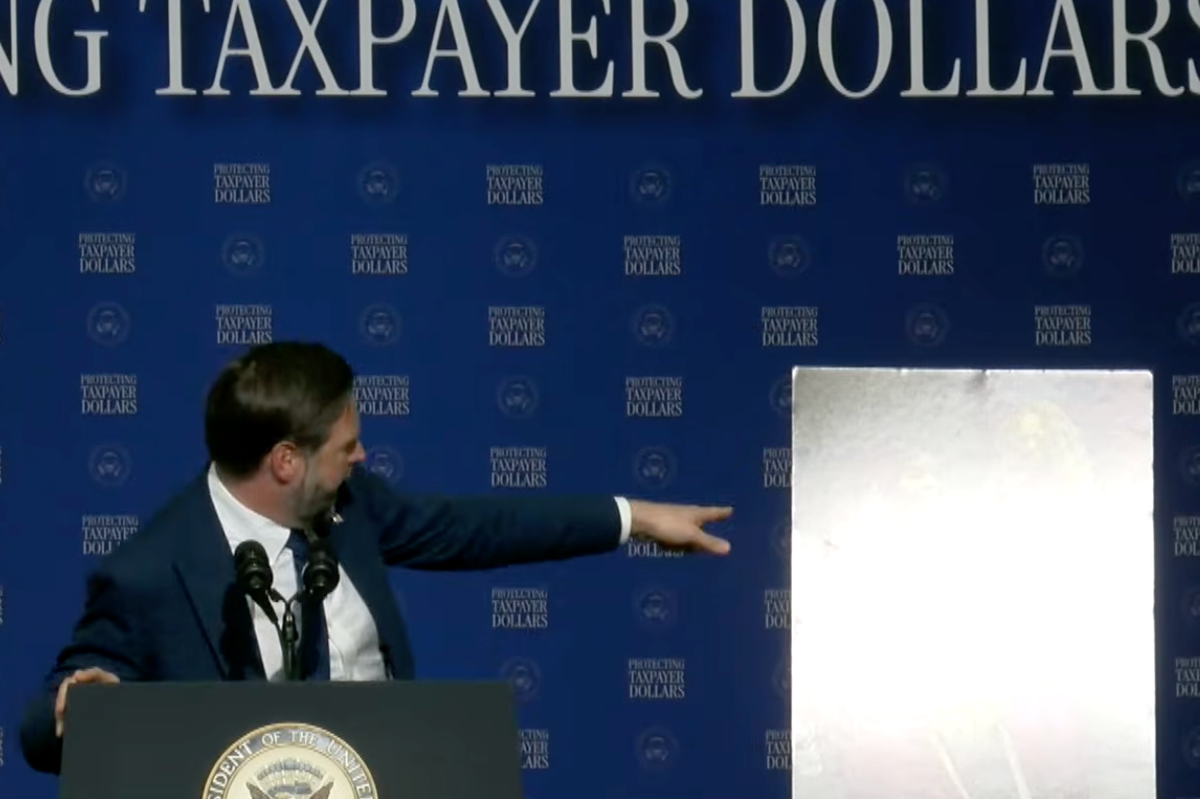
The White House press shop just learned a brutal lesson in basic photography. In a bizarre public meltdown, the administration's newly minted media compliance apparatus lashed out at a journalist, accusing them of intentionally scrubbing or hiding critical visual information from a speech delivered by Vice President JD Vance.
There's just one problem. Nobody hid anything. The missing context wasn't a malicious edit or a deepfake; it was a blinding blast of light hitting a physical screen. The Trump communications team effectively staged a war against a camera lens glare, and in doing so, exposed the deep paranoia driving their modern media strategy.
The Glare That Set Off the West Wing
The friction began when the White House updated its official Media Bias Reporter site. The page took aim at British tabloid coverage, specifically targeting reporters who shared an image from Vance's high-profile remarks. In the photo, a massive digital display behind the Vice President was almost entirely washed out by an intense, white overhead lighting reflection.
The administration's media watchdog claimed the publisher purposefully presented an obscured image to deceive the public and minimize the presentation's impact.
It didn't take long for photojournalists and tech experts to point out the obvious. The image wasn't manipulated. The camera simply captured physical reality. The venue's intense spotlighting hit the slick surface of the background screen at the exact angle needed to create a blinding hotspot for anyone standing in the press pen. The "hidden information" was just basic physics.
Paranoia is Not a Media Strategy
This isn't an isolated tech flub. It's a symptom of a much larger, combative relationship between the current administration and the press corps. By launching a formal White House portal dedicated to tracking and publicly blast-listing individual journalists for minor, everyday technical realities, the press office has crossed a weird line. They're treating standard photographic limitations as organized political sabotage.
This aggressive posture often backfires. When you scream wolf over an overexposed photo, you lose the leverage to fight actual misinformation. Press teams should focus on clear communication rather than monitoring the exposure levels and contrast ratios of photos taken by the White House pool.
Next Steps for Savvy News Consumers
Don't let aggressive political framing dictate how you interpret visual news.
- Look for multiple angles. If a photo looks weirdly framed or obscured, check competing outlets to see if it was a venue-wide lighting issue or a specific camera placement.
- Ignore the meta-drama. Turn off the noise from official government bias trackers. They are designed to rally a base, not to provide objective media criticism.
- Focus on transcripts over staging. The real value of any political press conference is what's said on the record, not whether the backdrop looks pristine on camera.
:max_bytes(150000):strip_icc()/TAL-nassau-bahamas-BEAUTCARIB0323-4fbfce903e5a4418b895e03717e3de0d.jpg)