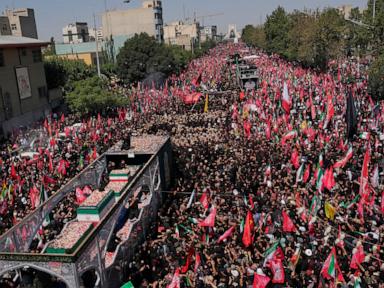
The sea of black clothing stretching across Tehran today isn't just a display of grief. It's a calculated, high-stakes message sent straight to Washington and Tel Aviv. On Monday, July 6, 2026, millions of citizens poured into the capital as the funeral procession in Tehran for Iran's Supreme Leader Ayatollah Ali Khamenei got underway, turning the multi-lane Azadi Street into a dense, chanting river of humanity. To an outside observer, it looks like a nation consumed entirely by sorrow after losing its long-time ruler in the opening airstrikes of the war back in late February. But look closer at what's actually happening on the ground. This historic gathering is a massive political statement. The regime wants the world to know that its institutions are fully intact, even as it sits at the negotiating table with the United States to secure a permanent end to the conflict.
Many Western analysts predicted that the death of the 86-year-old cleric would cause the immediate collapse of the Islamic Republic. They thought the country would fracture from the inside out. They were wrong. Instead of a collapse, the streets of Tehran are holding a gathering that helicopter footage shows might actually dwarf the massive 2020 turnout for General Qassem Soleimani. People didn't just show up to weep. They showed up with clenched fists, holding placards calling for revenge against U.S. President Donald Trump and Israeli Prime Minister Benjamin Netanyahu. The true intent behind this massive mobilization is to show domestic solidarity and project raw, unyielding strength during a moment of extreme vulnerability.
The Raw Reality on the Streets of Tehran
The atmosphere in Tehran right now is heavy, sweltering, and intensely volatile. Temperatures are climbing past 90 degrees Fahrenheit. Fire trucks are parked along the main route, using ladders to spray misted water over the tightly packed crowds to prevent people from fainting. Volunteers hand out water, while security forces carrying assault rifles line the perimeters of the streets. The central focus of the entire procession is a large truck decorated to look like the ornate grating of a holy Shia shrine. On top sits the flag-draped coffin of Khamenei, topped with his signature black turban to signify his status as a direct descendant of the Prophet Muhammad. Alongside his casket are those of his family members who died in the same February 28 strike.
The human stories on the asphalt reveal a complex mix of deep religious devotion and furious political defiance. Ali, a 59-year-old local who arrived at dawn, made it clear that attendance wasn't optional for him. He viewed the late leader as his imam and felt showing up was a core duty. A few feet away, 25-year-old Fatemeh echoed that sentiment, vowing to continue down the path the leader set.
But the grief quickly turns into a demand for blood. Mourners are reaching out just to touch the side of the truck or throwing their personal scarves to the attendants so they can be brushed against the coffin for a final blessing. While some cry quietly, others lead massive chants demanding immediate retaliation. Fatima Hassan, a visible mourner in the crowd, openly stated that the public didn't gather merely to say goodbye. They gathered for revenge. Signs along the route feature Trump's effigy being hanged, showcasing the deep-seated anger that years of conflict have produced.
A Regime Bruised But Refusing to Break
Losing a supreme leader is a rare, seismic shock for this country. It has only happened once before since the 1979 Islamic Revolution, when Ayatollah Ruhollah Khomeini died in 1989. That funeral was chaotic, dangerous, and nearly spun out of control as frantic crowds stormed the carriage. This time, the authorities are desperate to maintain strict order. Officials blast instructions over loudspeakers, begging people to walk slowly and stay to the edges of the street to avoid deadly crowd surges.
The political establishment is using these six days of mourning across five cities as a makeshift referendum on its own survival. Negar Mortazavi, a senior fellow at the Center for International Policy, pointed out that this event goes way beyond simple religion. The state is actively proving that its core infrastructure didn't die with its leader. This sentiment is shared at the highest levels of the current government. Clerics like Ayatollah Mohammad Saidi have publicly called the multi-million-person turnout a fresh vote of confidence for the system.
Look at who walked alongside the public today. Figures who vanished from the public eye when the war erupted suddenly re-emerged. Former president Mahmoud Ahmadinejad made his first major public appearance in months. The new Revolutionary Guard commander, Ahmad Vahidi, was out in the open, alongside Esmail Qaani, the head of the Quds Force. Their presence sends a clear signal to foreign intelligence agencies. The command structure is alive, functional, and standing on the streets of Tehran.
The Enigma of the Next Supreme Leader
While the regime puts on a masterclass in public unity, there's a massive elephant in the room. The newly appointed supreme leader, Ayatollah Mojtaba Khamenei, is completely missing from the public eye. He hasn't made a single appearance during the days of funeral rites.
Reports indicate that Mojtaba, the late leader's son, was wounded in the very same airstrike that killed his father. He is currently believed to be in hiding, tucked away in a secure location due to ongoing security threats. During the height of the recent fighting, Israel targeted several top Iranian leaders. Rumors have circulated that foreign intelligence agencies are actively trying to locate the younger Khamenei to disrupt the transition of power.
This creates a bizarre contrast. Millions of people are marching to support the office of the Supreme Leader, yet the man who now holds that office cannot step outside to join them. Some mourners gathered at the Grand Mosalla over the weekend remained stubborn, insisting he would eventually show his face. Others realistically acknowledged that the security risks are simply too high. His absence leaves a glaring question mark over how smoothly the internal transition will go once the mourning period wraps up on Thursday with the burial at the Imam Reza shrine in Mashhad.
Geopolitical Theater in the Shadow of Peace Talks
Don't mistake this funeral for a closed domestic affair. It is an international event designed to alter the course of ongoing diplomatic negotiations. Right now, Iran and the United States are trying to hammer out a permanent end to the war. The stakes are incredibly high, involving the full reopening of the Strait of Hormuz, a critical global energy choke point that Iran closed during the fighting.
The funeral has temporarily put those talks on ice. Trump told reporters that the United States would rather make a deal but is fully prepared to finish the job if negotiations fail. By packing the streets with millions of angry, anti-American demonstrators, Iran is showing its negotiating partners that it isn't operating from a position of absolute surrender. It is leverage wrapped in a shroud.
The guest list also tells us exactly where Iran stands on the global stage. Dozens of foreign delegations arrived in Tehran over the weekend. High-ranking officials came from Russia, China, India, and Pakistan, including Pakistani Prime Minister Shehbaz Sharif, who has acted as a key mediator between Washington and Tehran. Delegations from Cuba, Oman, Qatar, and Afghanistan also attended. This heavy presence from the global south shows that despite months of devastating airstrikes and severe economic blockades, Iran has managed to preserve its key diplomatic alliances.
What Lies Ahead for the Islamic Republic
The 12-hour journey of the caskets from central Tehran to Mehrabad International Airport is just one phase of this massive state apparatus. The regime has successfully engineered a moment of collective closure, turning a military disaster into a powerful display of public defiance. They managed to get people to focus on national pride rather than the severe economic devastation caused by the war.
But the real test starts on Friday, the day after the burial. Once the crowds clear and the emotional high wears off, the underlying crises will still be waiting.
If you want to understand where this situation is headed, skip the mainstream cable news talking heads and track these three specific areas instead.
- Watch the Strait of Hormuz shipping data. If Iran eases its naval restrictions during the pause in talks, a diplomatic breakthrough is likely close. If they tighten the grip, expect the ceasefire to collapse.
- Monitor state media for Mojtaba Khamenei's first video address. The longer the new Supreme Leader remains a ghost, the more internal factions will fight for control behind closed doors.
- Track the regional proxy movements. Watch the behavior of Hezbollah in Lebanon and the Houthis in Yemen. If they resume drone operations despite local ceasefires, it means Tehran has chosen retaliation over a diplomatic deal with Trump.