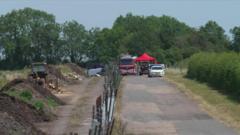
A peaceful Friday morning in East Devon shattered instantly when a light aircraft plunged into a farm field just outside Dunkeswell Aerodrome. Emergency services scrambled to the scene around 10:00 BST on June 26, 2026. Smoke billowed from the crash site, prompting local farmers to mistake the blaze for a burning barn.
The solo pilot, a woman in her 40s, died at the scene.
Devon and Cornwall Police quickly cordoned off the area. Firefighters, paramedics, and police units flooded the rural location at Connetts Farm, directly under the airfield's flight path. Local farm owner Nick Stevens was working nearby when he noticed the intense fire. Upon reaching the site, he discovered the burning wreckage of the small plane instead of agricultural equipment.
The Investigation Moves to the Air Accidents Investigation Branch
National aviation authorities took over the site within hours. The Air Accidents Investigation Branch sent a dedicated team of inspectors to look into the fatal light aircraft crash. They will spend days examining the wreckage, studying radar data, and analyzing local weather logs.
Dunkeswell Airfield sits in the Blackdown Hills, roughly 14 miles northeast of Exeter. It holds a distinct reputation in the British aviation community. Sitting at 839 feet above sea level, it is the highest licensed airfield in the United Kingdom. Originally built as a strategic US naval base during the Second World War, it now serves as a busy hub for private pilots, skydiving clubs, and light recreational aircraft.
Operating at higher altitudes introduces specific aerodynamic factors. Air density changes can alter engine performance and lift dynamics, particularly for smaller piston-engine planes. Investigators will look at whether these geographic realities played any part in the sequence of events.
Eyewitness Media and Next Steps for the Community
Superintendent Jo Arundale urged local residents to cooperate with official investigators rather than spreading unverified claims on social networks.
"We recognise it is a very sad incident and we are appealing to the public not to speculate regarding the crash," Arundale stated. "We would like to ask anybody who may have relevant footage to get in touch with us and not to post it online."
The emergency response phase has concluded, and the long-term forensic review is underway. Investigators will look at mechanical failures, fuel quality, pilot logs, and sudden medical emergencies. A preliminary report from the aviation authority usually takes several weeks, while a full, conclusive determination often requires up to a year of detailed metallurgical and electronic tracking.
If you live in the East Devon area or were driving near Honiton and the Blackdown Hills on Friday morning, check your vehicle dashcam footage. Anyone with video or photos of the aircraft in flight prior to 10:00 BST should bypass social media and upload the files directly to the Devon and Cornwall Police evidence portal. For those tracking general aviation safety updates, monitor the official registry portal for the upcoming preliminary field bulletin.



.jpg)