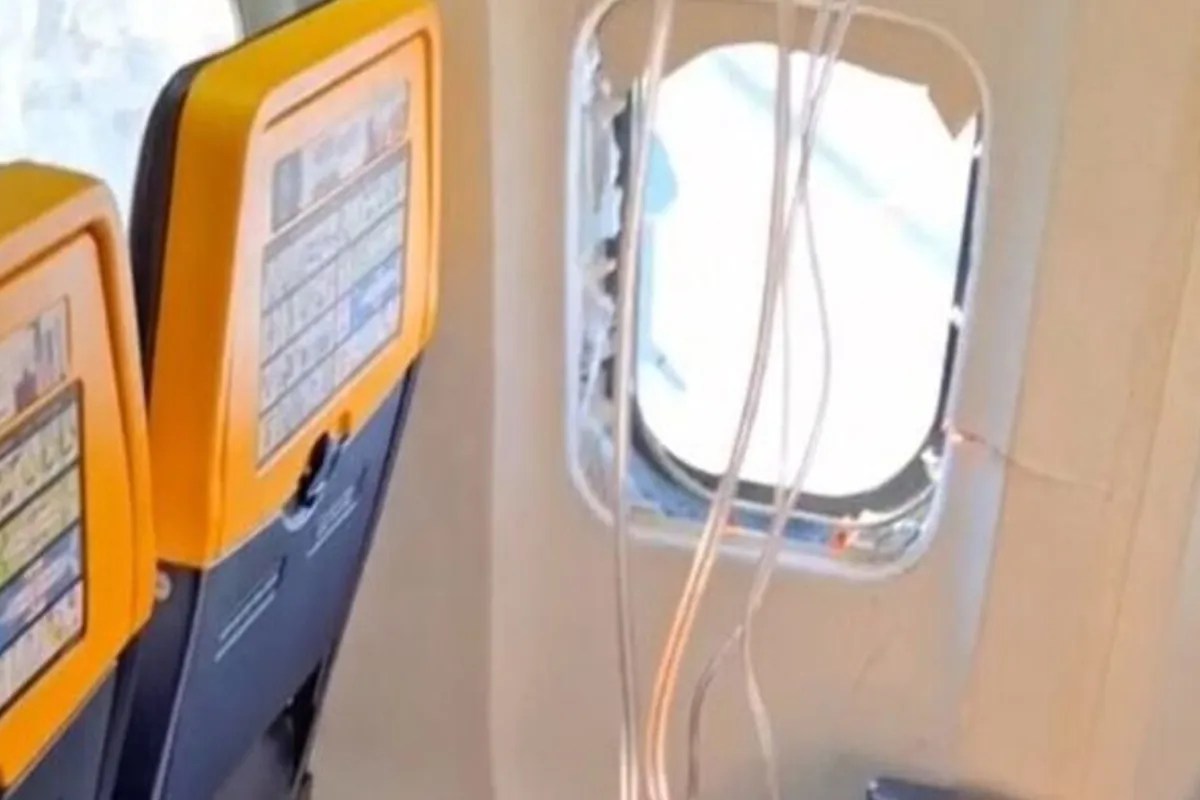
You are sitting on a flight, cruising comfortably, when a sudden blast of freezing wind and a deafening boom shatter the peace. That's exactly what happened on Ryanair flight FR1879 from Thessaloniki, Greece, to Memmingen, Germany. Mid-flight, a cabin window completely detached.
The pressure drop was immediate. A 61-year-old Serbian passenger was lifted right out of his seat and partially sucked out of the plane, his head and shoulders hanging into the slipstream at 16,000 feet. He survived, but not because of luck alone. He survived because his seatbelt was securely fastened and his wife held onto his legs before fellow passengers pulled him back into the cabin.
The incident leaves us with a massive wake-up call about basic in-flight safety.
What Actually Happened on Flight FR1879
Local reports point to a terrifying chain reaction. The aircraft, a Boeing 737-800 operated by Ryanair's subsidiary Malta Air, suffered what appears to be an engine-related issue. Pieces of debris detached from the engine, flew backward, and smashed directly into the acrylic cabin window.
The window shattered instantly. The cabin lost pressure, the oxygen masks dropped, and a chaotic rush of air began pulling everything toward the opening. The victim suffered friction burns from the freezing outside air and neck injuries, but walked away alive.
Data from FlightRadar24 shows the aircraft was airborne for just over an hour. It circled to burn fuel and returned safely to Thessaloniki Airport. Ryanair quickly swapped the plane and got the remaining passengers to Germany, but the viral videos of dangling oxygen masks have left travelers shaken.
The Physics of a Mid-Air Blowout
Many flyers assume that once the seatbelt sign goes off, they are completely safe to unbuckle and relax. This incident proves why that thinking is flawed.
When a window or door plug fails at high altitude, the air pressure inside the cabin is much higher than the thin air outside. The cabin essentially acts like a popped balloon. Everything close to the breach gets violently pulled toward the hole as the air rushes out to equalize pressure.
It doesn't matter how strong you think you are. You can't fight the physical force of a rapid decompression. In this case, the passenger's seatbelt kept his lower body anchored inside the plane, preventing a total tragedy.
The Reality of Airline Safety
Aviation experts note that structural failures like this are incredibly rare, but they do happen. We saw a similar mid-air scare when a door plug blew out on an Alaska Airlines flight, ripping the shirt off a teenager.
While regulatory bodies like the European Union Aviation Safety Agency (EASA) and the FAA investigate the mechanical cause of this Ryanair incident, your personal safety strategy shouldn't change.
Keep your seatbelt fastened whenever you are in your seat. It's a simple habit that takes zero effort but makes the difference between a scary story and a fatal accident. Don't wait for the captain to turn the warning sign back on.
If you are flying anytime soon, take these immediate steps to stay safe. Keep your seatbelt snug across your lap even during the cruise phase of the flight. Secure your loose personal items like phones and tablets when you aren't using them, as they can quickly become dangerous projectiles during a sudden decompression. Most importantly, always locate your nearest emergency exit as soon as you sit down so you know exactly where to go if things go wrong.