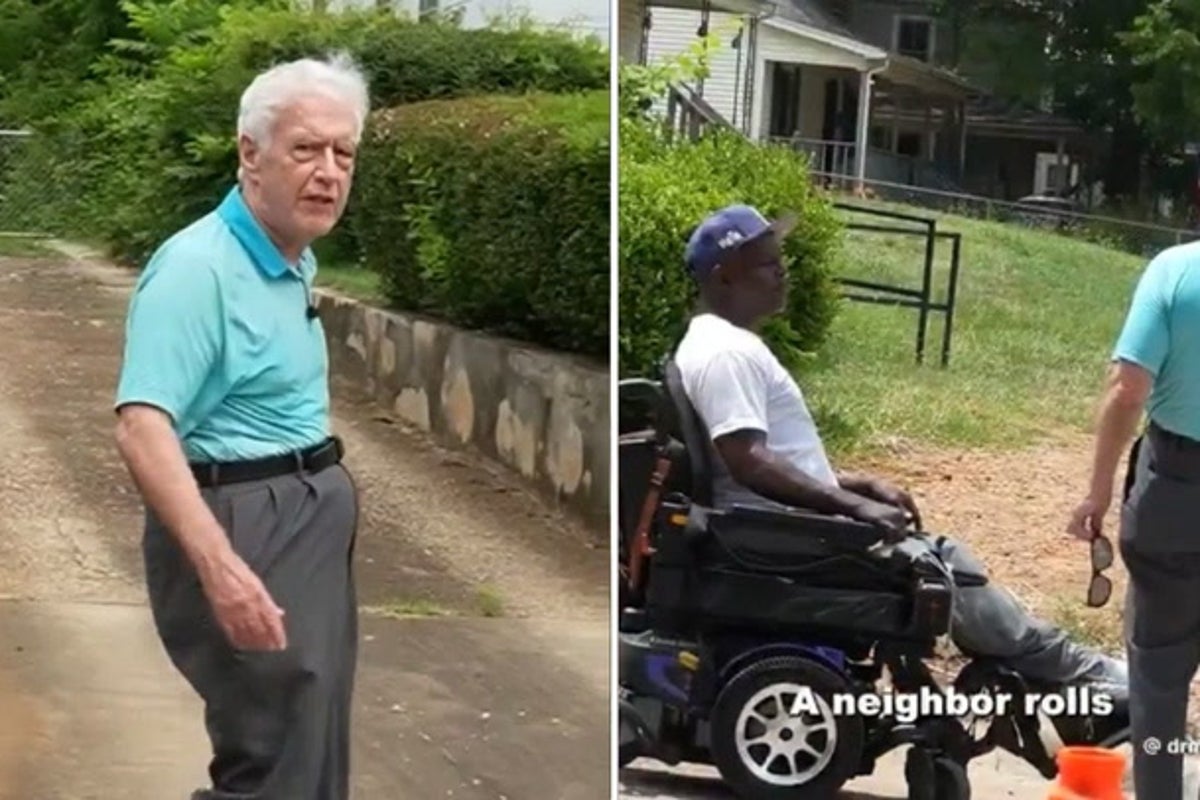
You don't expect a local politician talking about concrete to go viral. Usually, TikTok fame belongs to dance trends, cooking hacks, or comedic rants. Yet Dr. Gary Miller, a city councilman from Danville, Virginia, found himself in the social media spotlight for doing something completely ordinary. He stood near a road and celebrated 600 feet of brand-new sidewalks.
The video struck a nerve across the country. It wasn't flashy or highly edited. It was just a public servant showing off a basic infrastructure update that would keep his constituents safe from oncoming traffic. In an era where national politics feels messy and deeply divided, Miller’s earnest excitement about a walkway reminded everyone what local governance is actually supposed to achieve.
The Viral Walkway That Captured the Internet
Dr. Gary Miller isn't your average social media influencer. He is a practicing cardiologist and a long-serving member of the Danville City Council, having joined back in 2008. When he uploaded a video highlighting a seemingly modest 600-foot stretch of sidewalk, he didn't expect millions of people to tune in.
The message was straightforward. Sidewalks save lives, connect neighborhoods, and give people a safe space to walk without dodging cars. For residents in Danville, this wasn't just a random strip of concrete. It represented a direct response to community needs.
The internet fell in love with the pure utility of the post. Commenters quickly pointed out how rare it is to see a local leader physically stand on a project site to explain how a minor budget allocation directly improves daily life. It turns out that people are starved for practical, tangible governance. They want to see where their tax dollars go, even if it's just a short path alongside a busy street.
Why a Cardiologist Cares So Much About Concrete
To understand why Miller is so passionate about pedestrian infrastructure, you have to look at his day job. As a cardiologist and the president of Cardiology Consultants of Danville, Miller looks at sidewalks through a medical lens. He knows that human health is directly tied to the built environment.
If a neighborhood lacks safe walkways, people don't walk. They drive everywhere. Kids stay indoors, and older adults become isolated. When a city builds a sidewalk, it creates a free, accessible gym for every single resident on that block.
Regular walking slashes the risk of cardiovascular disease, lowers blood pressure, and helps manage stress. When Miller advocates for city infrastructure, he isn't just checking off a municipal to-do list. He is writing a prescription for community wellness. The viral TikTok video resonated because it connected local construction to the fundamental safety and health of everyday people.
The Massive Invisible Crisis of American Pedestrian Safety
Miller's viral moment highlights a massive problem that many American towns ignore. Over the last few decades, suburbia and rural towns expanded rapidly with a heavy focus on car travel. Sidewalks were treated as an afterthought or a luxury.
Walking along a suburban artery or a rural state road without a sidewalk is terrifying. You're constantly looking over your shoulder, hoping a distracted driver doesn't drift onto the shoulder. According to national highway safety data, pedestrian fatalities have been climbing steadily over the past decade, hitting numbers not seen in forty years.
Many towns suffer from a lack of connectivity. A sidewalk might run for a block and then abruptly end in a ditch, leaving walkers stranded. By highlighting a targeted 600-foot fix, Miller showed how cities can systematically close these gaps. It’s unglamorous work, but it stops people from getting hit by cars.
How Local Politicians Are Forcing a Change via Social Media
Traditionally, local politicians communicated through dry press releases, poorly attended town halls, or notices pinned to a bulletin board at city hall. That approach doesn't work anymore. Nobody is scrolling through a city government website on a Tuesday night to look at zoning updates.
By taking to TikTok, Miller bypassed the traditional gatekeepers. He spoke directly to residents and a broader global audience. This shift changes the dynamic of local politics entirely. It forces public servants to be clear, concise, and visual about what they are doing with public funds.
Other local officials are taking note. Seeing a councilman from a small Virginia city earn widespread praise for a sidewalk update shows that authenticity wins online. People don't want polished campaign ads. They want a guy in a suit pointing at a curb and explaining how it keeps children safe on their walk to school.
The Economics of Walking Paths
Skeptics often complain about the cost of installing sidewalks. Pouring concrete, grading land, managing stormwater runoff, and securing easements can run hundreds of dollars per linear foot. For a small city budget, a few blocks of sidewalks can feel like a major financial hurdle.
The long-term return on investment is undeniable. Walkable neighborhoods consistently see higher property values. Local businesses thrive when people can stroll past storefronts instead of whizzing by in an SUV.
There's also the avoided cost of emergency services and medical care. When a city prevents even a single pedestrian accident through better design, it saves hundreds of thousands of dollars in emergency response, hospital bills, and legal costs. Danville has spent years revitalizing its River District and Main Street areas with brick pavers and widened paths because local leaders realized that foot traffic equals economic survival.
Transforming Your Own Neighborhood Infrastructure
If Miller’s viral video made you look at your own street and wish for a safe place to walk, you don't have to just sit there and complain. Local governments are surprisingly responsive when citizens organize effectively.
Start by documenting the problem. Take photos of the worn-down grass paths where people clearly want to walk but can't do so safely. Note if children use that specific route to get to a bus stop or a park.
Next, gather your neighbors. A single email from an annoyed resident is easy for a public works director to ignore. A petition signed by fifty voters living on the same street is much harder to brush aside. Present this data clearly at the public comment section of your local city council meeting. Most municipalities maintain a Capital Improvement Plan that gets updated every year, and citizen input is exactly how projects get added to that list.
You can also look into state-level grants. Many states offer revenue-sharing programs or safe-routes-to-school funds that match local dollars to build out pedestrian networks. When you hand your local council a clear problem paired with a potential funding source, you make it incredibly easy for them to say yes.
Keep tabs on municipal budget hearings. Show up when they discuss public works spending and make a loud, persistent case for pedestrian safety. It takes time, persistence, and a lot of follow-up, but every single sidewalk you see in your town started because someone decided that walking shouldn't be a hazard.