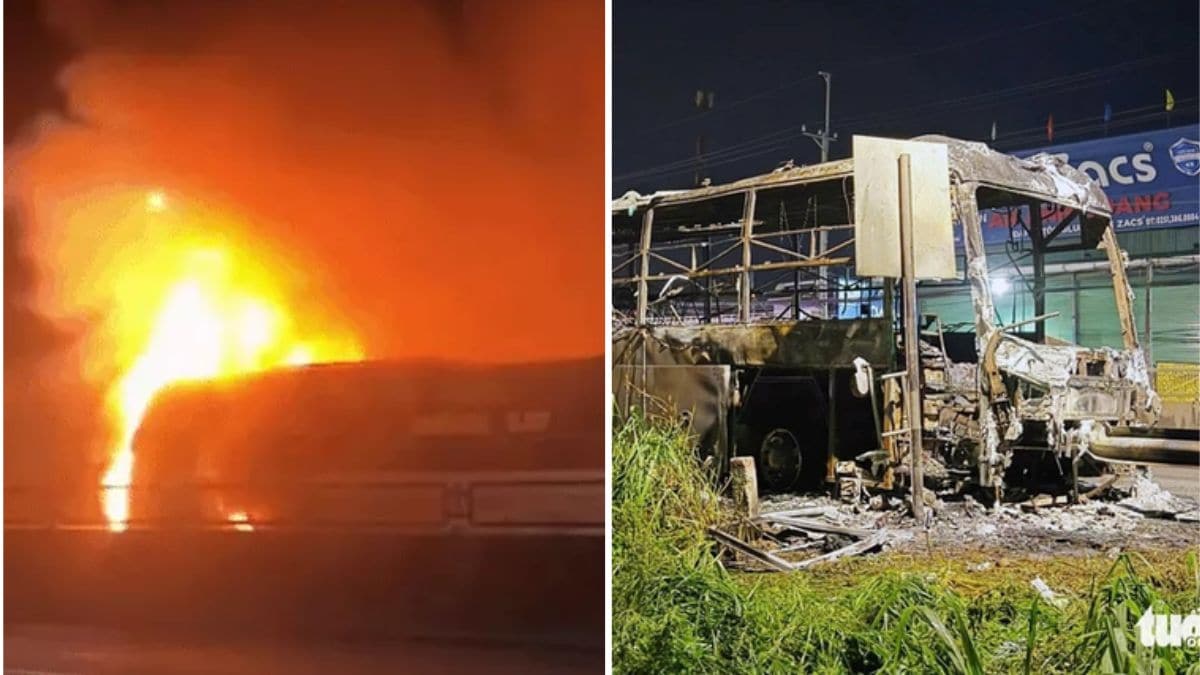
A tragic overnight crash in southern Vietnam has once again exposed the terrifying dangers of long-distance sleeper buses. Early Tuesday morning on July 21, 2026, a 24-berth sleeper coach carrying over 30 passengers slammed into a roadside guardrail on National Highway 1 in Dong Nai province. The collision sparked a sudden, violent fire near the vehicle's front entrance. Within minutes, toxic black smoke filled the narrow aisle, trapping passengers inside.
Seven people lost their lives, including three young children. Five others suffered severe injuries and burns. When police tested the 41-year-old driver, Tran Thanh Hai, his drug and alcohol tests came back completely negative. But his confession was immediate and chilling. He told investigators he was drowsy and lost concentration right before the crash. If you enjoyed this article, you should look at: this related article.
This tragedy isn't an isolated mishap. Just four days earlier, on July 17, another sleeper coach overturned near Hanoi, killing five people and injuring dozens more. If you travel through Southeast Asia or rely on overnight highway transit, this incident highlights urgent questions about driver fatigue, bus safety design, and survival strategies when fire strikes a crowded compartment.
What Happened on National Highway 1 in Dong Nai
The disaster unfolded around 2:00 AM near the Song Thao T-junction in Hung Thinh Commune. The coach, operated by Nam Lu Trading and Transport Co., Ltd., was making a routine run from south-central Vietnam toward Ho Chi Minh City. The vehicle itself was practically brand new—manufactured in 2026 and freshly inspected earlier in the year. For another angle on this story, check out the recent update from The Washington Post.
As the bus moved along National Highway 1, the driver drifted toward the right shoulder. The heavy coach struck the steel guardrail with tremendous force. The violent scrape generated high-heat friction and sparks right next to the fuel intake and front door mechanism. Fuel ignited almost instantly.
Crash Timeline - July 21, 2026
----------------------------------------------------------------------
02:00 AM | Sleeper coach veers into right-side guardrail on Highway 1.
02:01 AM | Friction sparks ignite fuel near the front entrance door.
02:03 AM | Smoke engulfs rear berth area; front passengers jump out.
02:30 AM | Fire crews arrive and extinguish remaining flames.
The location of the ignition created a immediate nightmare for everyone on board. Because the fire erupted directly at the main entrance, the primary exit route became a wall of fire.
Survivor Stories Reveal How Panic and Structural Traps Unfolded
When fire breaks out inside a sleeper bus, seconds determine who lives and who dies. Sleeper buses in Vietnam are packed tightly. Double-decker bunk layouts leave very narrow walking aisles, often barely wide enough for one adult to squeeze through.
Survivor Than Thao described waking up to a deafening crunch and immediate screams. When she opened her berth curtains, flames were already licking the inner cabin doors.
"Everyone rushed to grab their belongings and get out," Thao recalled to local reporters. "Flames shot up from one of the middle doors, so everyone had to run to the front and jump out. There were still many people in the back who couldn't get out in time."
Thao managed to jump through the front exit, escaping with minor burns. She was among the last people to get out alive.
Another passenger, Nguyen Thi Kim Trang, was sleeping near the front row with her young grandchild. She heard the crash impact and saw fire flare up instantly near the entry step. Clutching her grandchild, she stumbled forward into the night air while the driver and assistant tried frantically to pull people free.
"Everything happened so quickly," Trang said. "Smoke and heat filled the bus within moments. If we had been any slower, I don't know what would have happened."
For those in the rear berths, escape proved nearly impossible. Thick, toxic fumes from burning synthetic foam mattresses and plastic interior paneling filled the ceiling area within thirty seconds. Local residents ran from their homes carrying portable fire extinguishers, but the heat was too intense to get anywhere near the rear windows. By the time Dong Nai firefighters suppressed the blaze 30 minutes later, the coach was burnt down to a bare metal skeleton.
The Silent Threat of Shift Worker Fatigue
Why did an experienced driver on a modern bus drift into a guardrail on a straight highway?
Breathalyzer tests and blood screens confirmed driver Tran Thanh Hai was clean of alcohol and illegal narcotics. That leaves the quietest killer on night roads: extreme circadian fatigue.
Between 2:00 AM and 4:00 AM, the human brain experiences its deepest natural circadian dip. Alertness drops drastically. A driver experiencing a "microsleep" can close their eyes for just three to five seconds without realizing it. At 80 km/h, a bus covers nearly 100 meters in three seconds—more than enough distance to cross a lane and crash into a steel barrier.
Long-distance coach drivers in Vietnam often work intense shift schedules with minimal rest intervals between multi-hundred-kilometer legs. While laws dictate rest periods, enforcement on overnight intercity runs remains difficult to monitor in real time.
Why Night Driving Risks Spike Between 1:00 AM and 5:00 AM
----------------------------------------------------------------------
1. Circadian Low    | Natural body temperature and reaction times plummet.
2. Microsleep Risk  | Drivers drop off for 2-6 seconds without awareness.
3. Delayed Reaction | Brake response times double compared to daylight.
4. Visibility Gaps  | Early warning signs like guardrails appear late.
Technical Vulnerabilities of Sleeper Bus Designs
Sleeper buses are popular across Vietnam, China, and India because they offer cheap overnight travel. You get to sleep through an eight-hour trip and save on hotel costs. But from a structural safety perspective, sleeper coaches carry specific hazards during collisions.
Narrow Aisles and High Passenger Density
A standard 24 to 36-berth bus stacks metal bunk frames two levels high down both sides of a tiny aisle. In complete darkness or thick smoke, passengers struggle to orient themselves. Disorientation leads to bottlenecks at the front door.
Highly Combustible Cabin Interiors
Polyurethane foam in sleeper mattresses, polyester curtains, and plastic trim emit hydrogen cyanide and carbon monoxide when burned. Breathing in two or three lungfuls of this superheated smoke causes immediate disorientation and loss of consciousness.
Difficult Emergency Window Access
On standard seated buses, passengers can push open push-out windows or kick through glass easily. In sleeper coaches, upper berths block direct lower window access, and safety hammers are frequently missing, broken, or unreachable in the chaos.
Actionable Safety Steps for Overnight Bus Passengers
You don't have to give up long-distance bus travel entirely, but you must take proactive safety steps before the driver puts the coach in gear. Small preparations dramatically improve your odds during a emergency.
1. Choose Lower Berths Near Emergency Exits
When booking your ticket, select a lower berth in the middle-to-front section of the coach. Avoid the absolute back row where engine heat builds up and exit routes are longest. Lower berths let you drop to the floor quickly to stay underneath rising smoke.
2. Locate the Glass Breaker Hammer Immediately
The moment you take your berth, look around for the emergency hammer mounted on the window pillar. If it's missing, inform the crew right away or consider switching seats. Keep a heavy object—like a sturdy power bank or steel water bottle—in your personal daypack within arm's reach.
3. Keep Shoes On and Basics Packed
Never take off your shoes completely during a night bus ride, or keep slip-on footwear directly under your berth frame. In a crash, glass shards and burning materials coat the floor. Keep your passport, phone, and wallet in a small sling bag attached to your body so you don't waste precious seconds hunting for belongings.
Immediate Emergency Steps Inside a Burning Coach
----------------------------------------------------------------------
Step 1: Stay Low    | Drop to the floor; toxic smoke rises to the ceiling.
Step 2: Cover Mouth | Use a damp shirt or cloth to filter heavy soot.
Step 3: Move Fast   | Leave heavy luggage behind; every second counts.
Step 4: Break Glass | Strike window corners, not the center, to shatter glass.
What Transportation Authorities Must Do Now
Fixing sleeper bus safety requires real regulatory enforcement, not just post-tragedy statements. Authorities in Vietnam and neighboring regions must act on three primary fronts.
- Mandatory Driver Monitoring Systems: Installing AI-assisted dashcams that detect eyelid drooping and issue loud cabin alarms when drowsiness occurs.
- Stricter Speed and Hours Regulations: Enforcing maximum continuous driving limits of 3 hours for overnight trips between 10:00 PM and 6:00 AM, backed by GPS tracking logbooks.
- Fire-Retardant Interior Standards: Mandating non-flammable mattress covers and installing automated fire suppression canisters in rear engine compartments.
- Mandatory Safety Briefings: Requiring crew members to demonstrate emergency exit locations and window-breaking techniques before departure, just like airlines do.
The tragic loss of seven lives in Dong Nai is a dark reminder of how fast highway trips can turn fatal. Until regulators enforce strict vehicle safety updates and rest schedules for night operators, your best protection as a passenger is staying vigilant, knowing your exit routes, and prioritizing safety over cheap ticket prices.
Inspect your berth emergency hammer before the bus departs, keep your footwear accessible, and never hesitate to speak up if your driver shows signs of exhaustion behind the wheel.