A devastating twin seismic disaster just laid bare exactly how fragile Venezuela remains under its new political architecture. When magnitudes 7.2 and 7.5 earthquakes ripped through the northern coastal region on June 24, they didn't just collapse apartment blocks. They shattered the carefully curated illusion of a stable transition. Now, acting President Delcy Rodríguez is fighting a frantic war of words to protect her government's legitimacy while bodies are still being pulled from the rubble of La Guaira.
"We did not wait one day, two days or three days. We activated immediately." That was Rodríguez’s fierce defense during a late-night press conference in Caracas. Wearing a black mourning ribbon, she lashed out at international media outlets and domestic critics. She called the accusations of a slow, botched relief effort the work of "propaganda laboratories."
But if you look past the angry rhetoric, the reality on the ground tells a completely different story. The crisis has blown up into the ultimate test for an interim administration that has been scrambling for domestic authority since January, when the United States helped remove Nicolás Maduro from power.
The Chaos in La Guaira
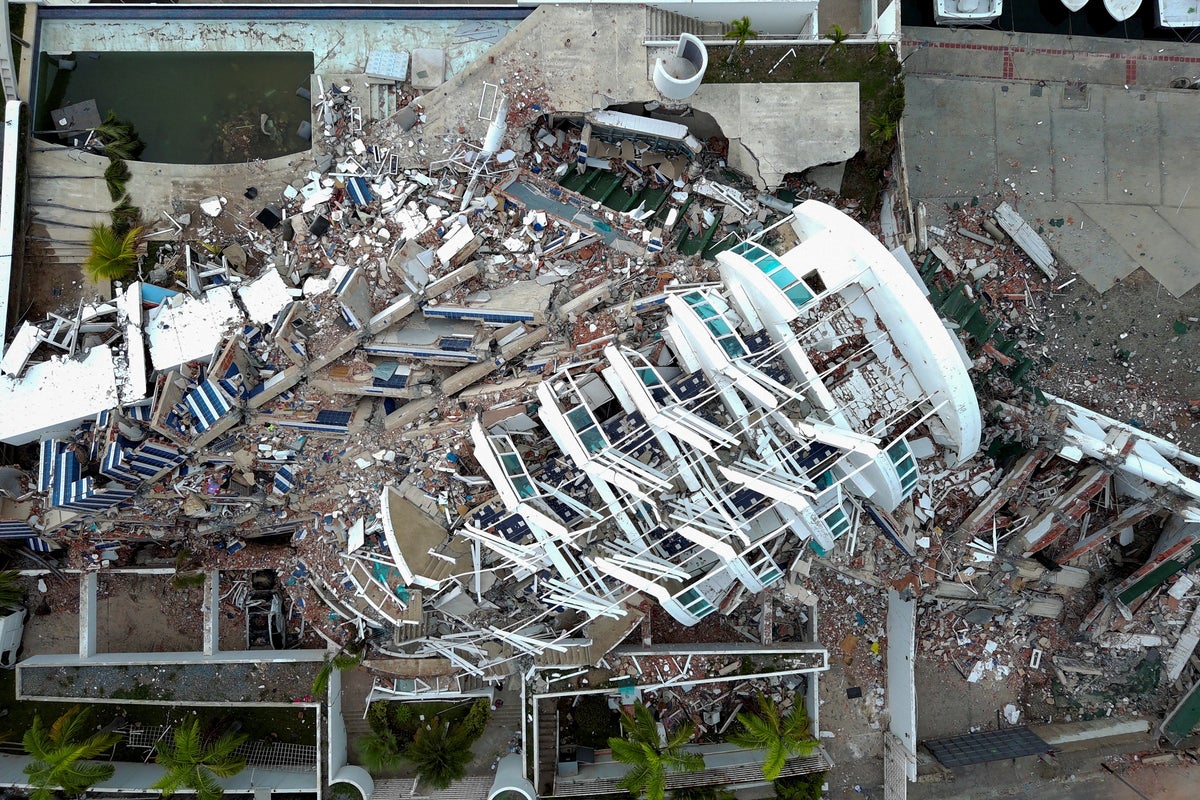
Walk through the streets of Catia La Mar or Caraballeda right now, and the disconnect between government press releases and ground reality hits you instantly. The stench of decomposition is overwhelming. Entire residential blocks are flat. While state television loops footage of Rodríguez meeting with generals and directing highway traffic, local survivors have been digging through concrete with shovels, pickaxes, and their bare hands.
For the first 48 hours after the quakes, heavy machinery was virtually nonexistent in some of the hardest-hit neighborhoods. The burden fell entirely on ordinary citizens, volunteer student doctors, off-duty teachers, and international rescue teams.
Rodríguez eventually conceded that point, though she spun it as a natural occurrence. She noted that survivors and neighbors are always the first to arrive at any collapse site. True. But her claim that the state mobilized its full capacity by day two doesn't match the desperation of families who spent days screaming into crevices, hoping for a sign of life.
There have been rare moments of profound relief. Emergency workers recently pulled 43-year-old security guard Hernán Alberto Gil Flores from the ruins of a collapsed shopping mall. He survived nearly eight days trapped in a tight concrete air pocket, drinking water passed through a tiny gap by rescuers. It was a miracle that national broadcasters replayed on an endless loop.
Yet, one miracle cannot hide a massive logistical failure. The ports are stacked with wooden coffins. Local officials are overwhelmed. The initial response wasn't just slow, it was completely disorganized.
The War Over the Real Death Toll
How many people actually died in the June 24 disaster? The government says one thing, international bodies hint at another, and the political opposition presents a terrifying third option. This data battle highlights the deep mistrust still embedded in Venezuelan society.
The official death toll stands between 2,295 and 2,595. The government insists these figures are rigorously verified and refuses to speculate further. But nobody on the ground believes that is the final number.
Consider what is happening behind the scenes. The United Nations has quietly begun procuring 10,000 body bags specifically for this crisis. Meanwhile, the United States Geological Survey ran models indicating that the final loss of life could easily cross that 10,000 mark.
The most alarming metric comes from an online database set up by the Venezuelan political opposition. It has logged over 38,000 reports of missing persons. Many of these individuals are likely buried deep beneath the pancaked structures of La Guaira state. By keeping a tight lid on official missing person numbers, the Rodríguez administration is trying to control the narrative of the tragedy. They want to avoid the public outrage that would follow an explicit acknowledgment of a five-figure casualty list.
When Socialist Housing Policy Collapses
The structural failures that turned a bad earthquake into a historic massacre have deep political roots. Some of the most severe destruction occurred within the signature social housing complexes built during the presidency of the late Hugo Chávez.
For years, these massive housing blocks were showcased as the crowning achievements of Bolivarian socialism. They were meant to prove the state could provide safe, modern shelter for the poor. Instead, they became concrete tombs. Engineering experts have pointed out that substandard building materials, a lack of structural steel, and a total disregard for seismic building codes left these complexes incredibly vulnerable to a major quake.
When asked directly about these construction failures, Rodríguez deflected. She claimed that 80 percent of the collapsed buildings were actually private developments. She didn't provide any evidence or data sheets to back up that assertion.
The truth is obvious to anyone examining the rubble. The state-built projects failed catastrophically because corruption and corner-cutting defined Venezuelan public works for decades. Blaming private developers is a desperate attempt to shield the socialist movement's legacy from a disaster caused by its own systemic negligence.
The Weird Geopolitics of Relief Aid
The international response to the disaster reveals a fascinating, hypocritical shift in Venezuelan foreign policy. Back in 1999, when catastrophic mudslides killed tens of thousands in La Guaira, Hugo Chávez famously rejected American humanitarian aid, choosing anti-imperialist rhetoric over life-saving equipment.
Delcy Rodríguez cannot afford that ideological luxury. Her 180-day mandate as acting leader was literally expiring the day after her fiery press conference. Her political survival depends entirely on external validation, primarily from Washington.
Consequently, the interim government has welcomed foreign rescue teams and financial aid from across the global political spectrum. The United States deployed over 900 military personnel and committed more than $300 million to rescue operations. Rodríguez explicitly praised Donald Trump and Secretary of State Marco Rubio for their constant support. She even went out of her way to thank Israel, a country with which Venezuela has had no formal diplomatic relations for years.
At the same time, the administration is using international financial institutions to consolidate its grip on power. Rodríguez announced a $200 million reconstruction fund established in cooperation with the International Monetary Fund and the World Bank. The government promises these funds will go to audited contractors, but domestic watchdogs are already skeptical.
The political maneuvering gets even darker. While Rodríguez accepts millions from Washington, her government stands accused of blocking opposition leader and Nobel Peace Prize winner María Corina Machado from returning to the country to coordinate independent relief efforts. The administration is terrified that an effective, transparent opposition-led aid program would make the official state response look completely incompetent.
What Happens Next for Venezuela
The immediate crisis is far from over. If you want to understand where this situation goes next, keep your eyes on these critical developments over the coming days.
First, watch the National Assembly. Rodríguez's initial 180-day interim term has hit its legal limit. The legislature, which is currently controlled by her party, must decide whether to declare the presidency permanently vacant and trigger a snap election, or attempt another highly controversial mandate extension under the guise of an ongoing national emergency.
Second, track the distribution of the $200 million IMF and World Bank reconstruction funds. Independent civil society organizations need to demand open-source registries of every single construction contract handed out. If these funds disappear into the pockets of regime-friendly contractors rather than rebuilding the homes of La Guaira, a popular uprising is highly probable.
Third, monitor the civilian search networks. Do not rely exclusively on state media broadcasts. Follow local journalist networks and humanitarian updates from organizations like the Washington Office on Latin America to get accurate data on the recovery of bodies and the true scale of the missing persons list. The gap between what the government admits and what the community uncovers will dictate the level of civil unrest in the months ahead.