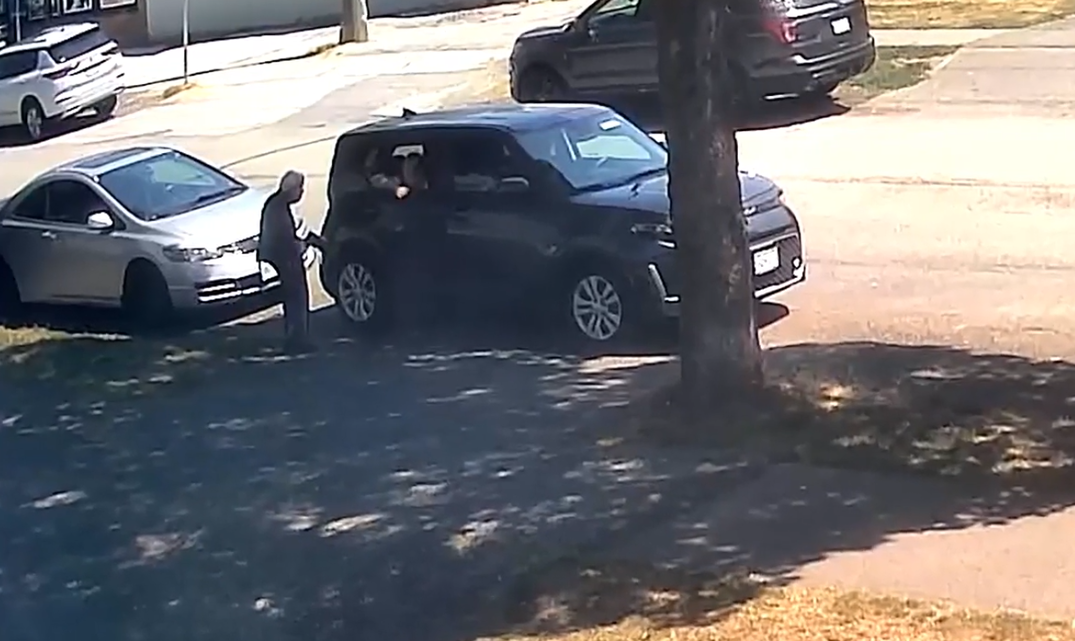
An 88-year-old grandmother stands on her own driveway in East Vancouver. It is a Tuesday afternoon, shortly after noon. The sun is out, and she is doing what many in the neighborhood do during the summer—selling parking spots for the Pacific National Exhibition (PNE) and Playland on her private property. It is a normal, honest way to make a little extra cash and chat with the community.
Then a dark-coloured, four-door Kia Soul pulls up.
A woman in the back seat rolls down the window, gesturing for help. Beside her are two young children. In the driver's seat is a man. The elderly woman, acting on pure, decent human instinct, steps closer to the vehicle to offer assistance.
In a flash, the woman in the car grabs her wrist. She starts talking rapidly, maintaining intense eye contact and keeping the senior off-balance. While the 88-year-old is trying to process what is happening, the thief's hands move with professional speed. She unclasps the senior’s two gold necklaces—one holding a priceless piece of family jade—and replaces them with cheap, fake jewelry.
The car speeds off. The senior is left standing in her own driveway, confused, violated, and missing her family heirlooms.
This is not an isolated crime. It is a calculated, cold-hearted trend that has been quietly sweeping through Metro Vancouver. The Vancouver Police Department (VPD) released surveillance video of this specific incident, hoping someone recognizes the suspects. If you think this is just a quick grab-and-go crime, you are missing the bigger, much darker picture.
The Art of the Swap
Distraction theft relies on a psychological trick called "misdirection." Magicians use it to make coins disappear. Criminals use it to rob vulnerable seniors right under their noses.
In this East Vancouver case, the thieves used a classic "help" script. They weaponize the natural kindness of older generations. Seniors grew up in an era where you helped a stranger who looked lost. When a car pulls up with kids in the back seat, the immediate assumption is safety. You do not expect a mother traveling with children to be a predatory thief.
Once the victim is close enough, physical contact is established. This is the critical moment.
By grabbing the victim's wrist or putting an arm around them, the thief floods the victim's sensory system. The human brain can only focus on so many physical sensations at once. When someone is holding your wrist and talking to you in a high-pressure, rapid tone, your brain completely ignores the subtle feeling of a necklace being unclasped from your neck.
By the time the victim realizes what happened, the car is gone.
The jewelry left behind is always cheap, heavy, gold-colored brass. It is designed to mimic the weight of real gold just long enough for the thieves to make their escape.
The Hugging Stranger and Other Variations
To understand how organized this is, we have to look at another incident that happened on the very same Tuesday, just thirty minutes later.
A 76-year-old woman was waiting for her family near East 11th Avenue and Victoria Drive around 12:30 p.m. A stranger approached her, claiming the senior looked exactly like her mother. The suspect embraced the senior in a tight hug, emotional and warm, saying it was her mother’s birthday.
During that brief, seemingly affectionate hug, the thief unclipped the senior's gold necklace, which held two cherished gold rings. The thief slipped a piece of fake jewelry onto the woman and walked away. The 76-year-old did not realize her real jewelry was missing until half an hour later.
Police strongly suspect these two crimes are linked. The descriptions of the suspects match up. The tactics match up. It is a traveling roadshow of deception.
These criminals are looking for specific targets. They cruise residential areas, looking for seniors who are alone, gardening, walking, or in the case of the 88-year-old, sitting outside their homes.
The True Cost is Not Financial
We often talk about these crimes in terms of dollars. Gold is trading at historic highs, making jewelry a highly liquid asset for criminals. It can be melted down or sold to unscrupulous buyers within hours.
But the financial loss is the least of it.
The gold necklace stolen from the 88-year-old woman carried a jade pendant. Jade holds immense cultural and emotional value in many Asian families. It is often passed down through generations, representing protection, love, and family legacy. You cannot replace a piece of jade given to you by your mother or grandmother. It is gone forever.
There is also the devastating emotional fallout.
Seniors who fall victim to these scams often experience a massive drop in self-confidence. They blame themselves. They feel foolish for being "tricked." This shame can lead to self-isolation. A senior who once loved gardening in their front yard or chatting with neighbors might now refuse to leave the house. They lose their sense of security in the one place they should feel entirely safe—their own doorstep.
Why Our Current Safety Advice is Failing
If you read standard police advisories, they often tell seniors to "be aware of your surroundings" or "avoid carrying valuables."
Honestly, that is lazy advice.
An 88-year-old woman should be able to wear her wedding rings and family necklaces on her own property without being hunted. Telling seniors to simply hide their jewelry ignores the reality of how these predatory groups operate. They do not just spot jewelry from afar; they actively seek out vulnerable targets and get close enough to find it.
We need to change how we talk to our parents and grandparents about safety.
The New Rules of Personal Space for Seniors
If you have elderly relatives, you need to sit down and have a direct, loving conversation with them. Do not scare them, but do not sugarcoat it either. Give them clear, actionable strategies.
1. Guard the Personal Bubble
Seniors are polite. They do not want to seem rude. You need to give them permission to be "rude" to strangers.
Tell them: "If a car pulls up and asks you to come closer, do not do it. Stay back. If they need directions, they can use GPS. If they need help, they can call emergency services. You do not need to step up to their window."
2. The Danger of "The Touch"
Explain the psychology of distraction. If a stranger touches their shoulder, hugs them, or grabs their wrist, that is a red flag. They need to pull away immediately and make noise. Criminals hate noise. A loud, sharp "No!" or "Get away from me!" is often enough to make a thief back off and drive away.
3. Hide the Gold in Public
While we want seniors to enjoy their belongings, the reality of 2026 is that exposed gold chains are high-value targets. If they are out walking, waiting for a bus, or working in the yard, they should tuck necklaces inside their shirts.
4. Install visible security cameras
Thieves look for easy targets. A highly visible doorbell camera or security system can act as a powerful deterrent. In the East Vancouver case, it was private surveillance footage that gave police the clear images of the suspect vehicle and the suspects inside.
What We Need to Do Right Now
The Vancouver Police Department is actively searching for the suspects in these cases. If you live in the East Vancouver area—specifically near Kaslo and East Hastings, or Victoria Drive and East 11th Avenue—check your dashcam and security footage from Tuesday, July 14, 2026.
Look for:
- A dark-coloured, four-door Kia Soul
- A dark green four-door sedan
- A woman in her mid-30s with olive skin, a round face, and short dark hair
- A male driver with short dark hair and no facial hair
If you see anything suspicious, do not hesitate to contact the VPD.
Protecting our seniors requires more than just passive awareness. It takes active conversation, community vigilance, and a refusal to let our most vulnerable neighbors be targeted in their own yards. Talk to your parents tonight. Share these tactics. It might just save a family heirloom—and their peace of mind.