You don't fix a multi-month war with a shaky piece of paper signed under pressure. If anyone thought the interim memorandum of understanding between Washington and Tehran would bring real peace to the Persian Gulf, the last forty-eight hours just shattered that illusion.
We're watching a dangerous game of military chicken play out in the world's most critical energy corridor. Right now, the United States and Iran are trading heavy military strikes. Each side claims the other broke the fragile truce first. But let's look at the actual sequence of events because the reality is much messier than the official press releases suggest.
The immediate trigger was a series of drone and missile attacks on commercial shipping vessels inside the Strait of Hormuz. First, a cargo ship called the M/V Ever Lovely got hit. The US blamed Iran. The Pentagon launched retaliatory strikes on Friday, June 26, knocking out Iranian coastal radar stations and missile storage sites near Sirik. Instead of backing down, Iranian forces immediately doubled down. By Saturday morning, another one-way attack drone smashed into the M/T Kiku, a Panamanian-flagged tanker carrying over two million barrels of crude oil.
Central Command didn't wait. President Donald Trump ordered an immediate escalation. Within hours, US aircraft pounded Iranian military surveillance infrastructure, air defense installations, and drone warehouses along the southern coast. By Sunday morning, Iran's Islamic Revolutionary Guard Corps fired back by launching a joint missile and drone operation against eight separate US military facilities located across Kuwait and Bahrain.
The ceasefire isn't just fraying. It's basically dead.
The Fatal Flaw of Ceasefire Management
Diplomats love using fancy terms to mask failure. Iranian officials are calling these recent exchanges "ceasefire management" rather than a flat-out violation of the truce. That's a ridiculous spin. You can't claim you're managing a peace agreement while simultaneously targeting international tankers and firing missiles at regional military bases.
The interim deal was signed less than two weeks ago to provide a sixty-day window to hash out a permanent peace treaty. The text explicitly stated that both nations and their regional allies were not to initiate any military operations or use force against each other. It sounded great on paper. In reality, it ignored the fundamental issue of who controls the maritime highway.
Iran wants full authority over the shipping lanes. The country has been squeezed by brutal international sanctions since late 2025 when European nations triggered snapback penalties over enrichment activities. When the full-scale war erupted on February 28 after massive US and Israeli airstrikes, Tehran realized its strongest leverage was choking off global trade.
By threatening the southern routes near Oman, Iran forces the world economy to pay attention. Before this war started, roughly twenty percent of the global petroleum supply moved through this narrow choke point every day. When the conflict choked that supply down to a trickle, oil prices soared, creating massive political headaches for Washington.
The Trapped Fleet in the Gulf
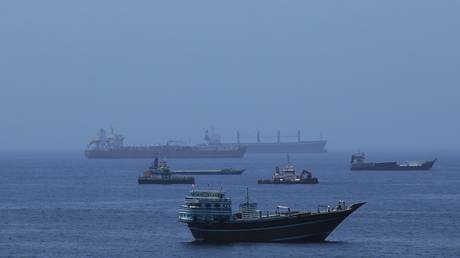
To understand why this flare-up matters so much right now, you have to look at what was happening on the water just hours before the drones started flying. The International Maritime Organization had finally launched a massive operation to rescue hundreds of commercial ships trapped inside the Gulf since early spring.
- Over 600 vessels were stuck when the heavy fighting began.
- A temporary alternative route hugging the coast of Oman allowed about 115 ships to escape last week.
- Nearly 500 ships remain stranded in the danger zone.
The moment the M/T Kiku was hit, the United Nations halted the entire evacuation effort. They won't restart until they get ironclad guarantees that these multi-million-dollar cargo carriers won't become target practice. The maritime agency's decision is a massive blow to global supply chains. If the alternative passage stays blocked, the economic pressure cooker turns right back on.
Political Posturing from Washington to Tehran
The rhetoric coming from both leadership circles shows exactly why diplomacy is stalling. Donald Trump took to social media to warn that a tipping point has arrived, hinting that the US military might have to finish the job if Tehran keeps playing games. Defense Secretary Pete Hegseth echoed that stance, stating that the Pentagon is prepared to set the terms of any future deal through overwhelming force.
On the other side, Vice President JD Vance argued that if Iran has a problem with how the ceasefire is being implemented, they should pick up the phone instead of launching suicide drones. His public warning was direct: violence will always be met with more violence.
But Iran isn't blinking. The Iranian foreign ministry continues to call the American strikes a blatant violation of international law and the United Nations Charter. Their United Nations envoy made it clear that Tehran will not negotiate under direct military intimidation. They view the American strikes as an attempt to force unconditional surrender rather than a mutual compromise.
This disconnect is why the Pakistan-mediated talks in Islamabad are falling apart. The fundamental goals of both nations are completely incompatible.
- The US wants a total end to Iran's nuclear enrichment program and a surrender of past nuclear materials.
- Iran demands immediate, unconditional sanctions relief and the unfreezing of billions of dollars in foreign assets before giving up any military leverage.
- Washington demands guaranteed international security throughout the entire Strait of Hormuz.
- Tehran insists on controlling the maritime routes and dictating which paths commercial vessels can take.
Why This Escalation Changes the Entire Equation
This isn't a minor border skirmish. The retaliatory strikes on US bases in Bahrain and Kuwait represent a massive expansion of the theater of war. By hitting American infrastructure outside of the immediate conflict zone, the Iranian military is trying to show that every US asset in the Middle East is vulnerable.
It's a high-stakes strategy that could easily backfire. If a single Iranian missile causes mass casualties at a base in Kuwait, the pressure on the White House to launch a full-scale campaign against mainland Iran will become unstoppable. The current administration has already demonstrated it has no hesitation when it comes to utilizing air power to destroy coastal infrastructure.
For the average citizen, this isn't just a distant geopolitical puzzle. The immediate fallout will hit your wallet. Shipping data from companies like Windward shows that while the strait technically remains open, commercial confidence has completely cratered. Tankers are already reversing course. Insurance premiums for maritime transit are skyrocketing. That means everything from the gas at the pump to the goods on store shelves will get more expensive over the coming weeks.
Tracking the Next Steps in the Gulf
Don't expect a sudden diplomatic breakthrough to fix this mess by tomorrow. The sixty-day window established by the interim deal is effectively useless if both sides keep firing missiles. If you want to know where this situation is heading, you need to watch specific indicators over the next few days.
Monitor Regional Naval Movements
Watch the deployment of Western naval groups to the Gulf of Oman. If the US and its allies transition from conducting retaliatory airstrikes to enforcing a strict, physical naval blockade, Iran will likely respond by deploying more naval mines. That would close the waterway entirely for months.
Watch the Status of the UN Fleet Evacuation
The 500 stranded commercial ships are a ticking financial time bomb. If the International Maritime Organization refuses to resume evacuations by the end of the week, it means international intelligence agencies believe a wider regional escalation is imminent.
Keep Tabs on the Price of Brent Crude
The energy markets are the truest indicator of geopolitical risk. If oil prices spike past recent thresholds, it means traders are betting on a total collapse of the Islamabad peace process. Physical conflict always manifests in the global markets first.
The current situation proves that you can't build a stable peace on a foundation of mutual distrust and ongoing proxy attacks. Until both Washington and Tehran address the core issue of maritime control and nuclear enrichment limits, any future ceasefire will just be a temporary pause before the next round of explosions.