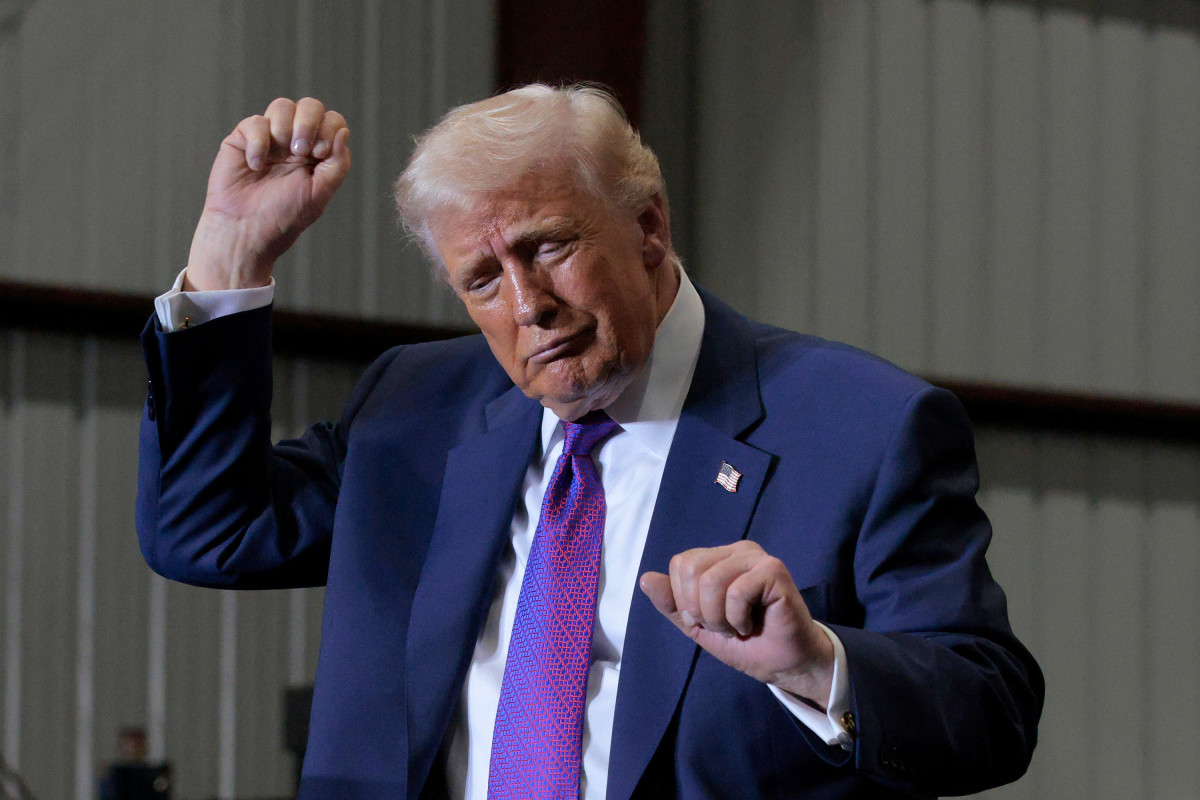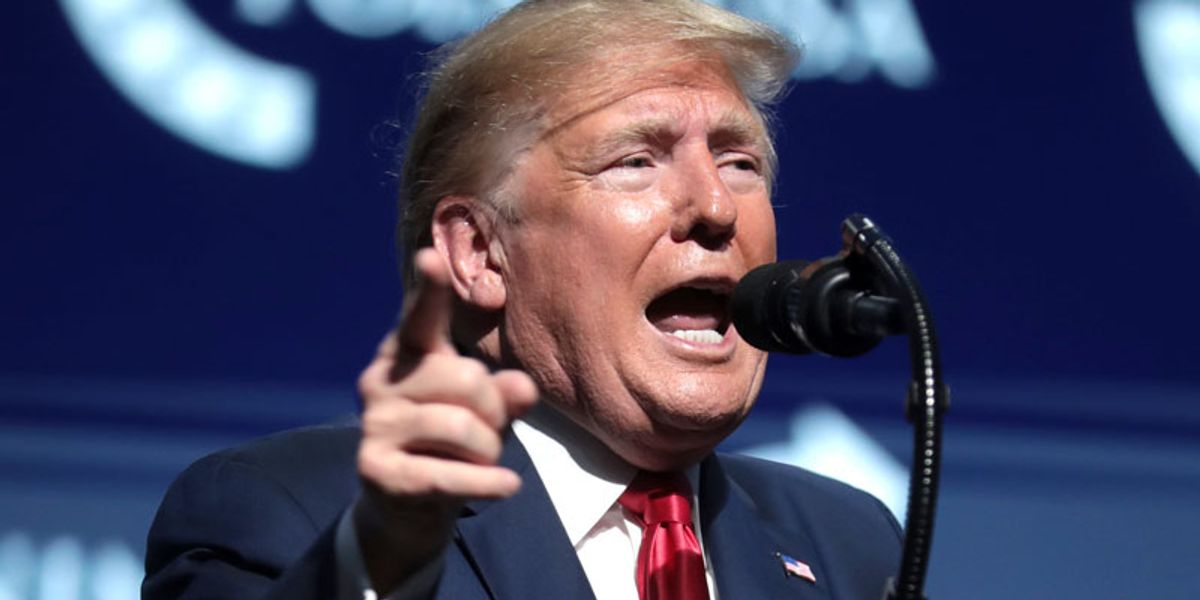
National milestones usually call for a moment of shared reflection. When a country turns 250 years old, you expect a message that binds the edges of a fractured public together. Instead, the United States entered its quarter-millennium marked by a political rally disguised as a historic celebration. Standing before the massive stone faces of Mount Rushmore, President Donald Trump delivered a searing speech that drew a sharp line right down the middle of the nation.
If you expected a grand, apolitical tribute to a long historical journey, you haven't been paying attention to American politics lately. The address did celebrate American exceptionalism and the armed forces. But it quickly pivoted into a fiery campaign stump speech targeting domestic political opponents ahead of the critical 2026 midterm elections. The message was unmistakable. You're either with the current administration's vision of American culture, or you're part of a dangerous ideological wave threatening to destroy the country from within.
Turning a national birthday into a political battleground
The setting itself carried massive symbolic weight. Mount Rushmore has always been a powerful backdrop for presidential rhetoric. On July 3, 2026, the granite eyes of George Washington, Thomas Jefferson, Theodore Roosevelt, and Abraham Lincoln looked out over a crowd packed with fervent supporters. Trump used the moment to hammer home a theme that has dominated his recent rallies. He declared that American identity is facing an existential crisis.
The speech focused heavily on what he termed a rising ideological threat inside the homeland. He explicitly told the crowd that a resurgence of the communist menace is actively taking root in American communities. This wasn't a casual warning about foreign adversaries. It was a direct broadside against the rising anti-establishment left wing of the Democratic Party, which has recently secured key victories in primary elections across the United States.
By framing domestic political disagreements as an battle against communism, the speech immediately stripped away any pretense of holiday unity. He told the audience that patriotism and these opposing political ideals are completely incompatible. You can't be both. This rhetorical strategy effectively turned the semi-quincentennial into a high-stakes test of political loyalty.
The midterms and the legislative push
The timing of this speech makes the political strategy very transparent. With the 2026 midterm elections rapidly approaching in November, the White House is using every tool available to mobilize voters. The Mount Rushmore address didn't just highlight ideological differences. It laid out a specific legislative checklist necessary to secure victory.
Trump openly detailed his demands to protect the Republican congressional majority. He called for the complete abolition of the Senate filibuster to pass sweeping conservative legislation. Chief among his priorities is the SAVE America Act. This controversial piece of legislation would implement strict federal mandates for voting. It would require individuals to provide definitive proof of U.S. citizenship when registering to vote and present a valid photo ID at the ballot box.
Linking the survival of American freedom directly to these specific voting laws shows how deeply integrated campaign politics were into this national anniversary. It transformed a celebration of 1776 into a tactical roadmap for the upcoming election cycle.
Freedom 250 and the battle over celebration control
The political fight wasn't confined to the stage in South Dakota. The entire organization of the United States' 250th birthday has been plagued by intense bureaucratic infighting. Originally, a bipartisan congressional group called America250 was tasked with planning the nationwide celebrations. They spent years designing events that were supposed to focus on shared history, local community achievements, and diverse cultural reflections.
That changed when a conservative-linked group called Freedom 250 took structural control of the core festivities in Washington. The shift altered the tone of the events entirely. The heavy emphasis on local histories and inclusive storytelling was replaced by highly centralized, military-centric programming and massive political rallies.
This administrative takeover has sparked significant public pushback. Many civic organizations and local leaders chose to pull out of the national events altogether, choosing to hold independent ceremonies instead. The official events in the capital faced immediate challenges. The heavily promoted Great American State Fair, meant to be a centerpiece of the birthday week, opened to sparse crowds and empty vendor booths. The lack of participation became a point of widespread discussion online, reflecting just how deeply the partisan split has affected public enthusiasm.
Stifling heat and a split national mood
The physical environment during the celebrations mirrored the tense political climate. A brutal, record-breaking heatwave slammed the eastern half of the country during the first week of July. In Washington, temperatures pushed past 107 degrees Fahrenheit. Local officials issued urgent health warnings, telling tourists to stay indoors and avoid the blistering sun on the National Mall.
The extreme weather failed to alter the president's plans. Days before the event, he publicly bragged about his intention to deliver an exceptionally long speech in the middle of the heatwave simply to demonstrate his stamina. The official schedule moved forward with heavy military flyovers and a massive fireworks display planned directly over the capital.
Away from the official stages, the American public views this milestone through vastly different lenses. Recent polling data reveals a deeply conflicted electorate. Only about 40 percent of adults expressed a clear sense of pride regarding the 250th anniversary. Around 30 percent said they felt genuine excitement. The rest of the responses were a mix of pessimism, indifference, and frustration.
Many citizens openly question whether the nation is still capable of achieving its foundational ideals. While some look at the country's history as a proud narrative of continuous progress and unmatched economic strength, others point to systemic inequalities, deep political divisions, and a historical legacy that frequently marginalized indigenous populations and minority communities.
How this compares to the 1976 Bicentennial
To understand exactly how different the current climate is, you only have to look back fifty years to the U.S. Bicentennial in 1976. That celebration took place right after the Watergate scandal and the end of the Vietnam War. The country was wounded, cynical, and deeply tired. Yet, President Gerald Ford intentionally used the 1976 celebrations as a healing mechanism.
Ford's speeches during the Bicentennial focused heavily on reconciliation. He avoided partisan attacks and kept the spotlight firmly on shared democratic institutions and the resilience of the American people. The events were decentralized, characterized by local tall ship parades, neighborhood block parties, and grassroots historical projects. It wasn't about a single political leader or a specific legislative agenda.
In 2026, that playbook has been completely discarded. The current administration views national milestones not as a chance to heal divisions, but as an opportunity to solidify a political brand. By centering the anniversary around a campaign-style rally and using a national monument as a partisan stage, the event highlighted the deep fragmentation of modern American life rather than offering a path toward unity.
The roadmap for navigating a polarized political landscape
The reality of 2026 is that national symbols are no longer neutral ground. If you're trying to make sense of the current political environment, you need to look past the grand stagecraft and focus on the actual mechanics of the campaigns. Here's how you can cut through the noise of the ongoing anniversary debates.
First, watch the legislative actions surrounding the voting laws mentioned in the speech. The push for the SAVE America Act will be a central talking point in congressional debates over the next few months. Track how individual representatives vote on these measures, as it will signal how much influence the administration's platform holds over moderate lawmakers.
Second, pay close attention to local midterm campaigns rather than just national rhetoric. The real test of the "communist menace" messaging will be whether it resonates with independent voters in swing districts, or if it simply energizes the existing base while alienating moderate citizens.
Finally, seek out local, community-led historical initiatives. The most authentic reflections on the American story right now are happening far away from the official rallies in Washington. Look for museum exhibits, local archives, and community discussions that handle the complexities of the country's 250-year history with nuance rather than partisan spin. The true strength of the nation has always rested in its communities, not in the highly orchestrated spectacles designed for television cameras.