The United Nations is packing its bags in Ouagadougou. On July 2, 2026, Volker Türk, the UN High Commissioner for Human Rights, made it official. His office will completely shut down its operations in Burkina Faso by November 30, 2026. This isn't just another boring diplomatic spat or a temporary bureaucratic hiccup. It represents a massive, intentional blinding of international oversight in a region already tearing at the seams.
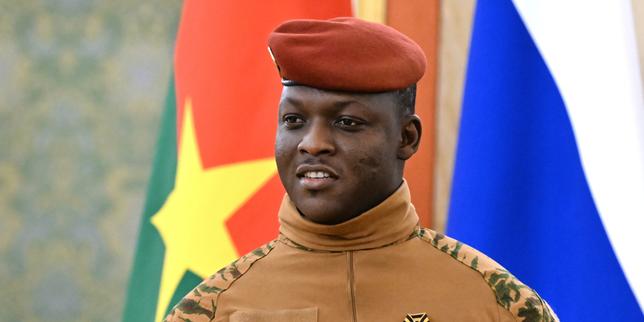
If you've been tracking the Sahel lately, you know things are bad. But this specific exit marks a dangerous point of no return. The military junta, led by Captain Ibrahim Traoré, didn't just ask the UN to leave. They effectively starved the office of communication until the UN had no choice but to fold its tents. It's a calculated strategy to eliminate witnesses. Meanwhile, you can read related events here: Why The Reinstated Us Maritime Blockade Of Iranian Ports Will Shake Global Trade.
When independent monitors leave, the silence that follows isn't peaceful. It's terrifying.
The Friction That Broke the Relationship
The relationship didn't sour overnight. The breaking point arrived earlier in 2026 when Volker Türk publicly called out the military government. He urged the junta to protect what was left of the country's civic space. He also warned them against their transparent plans to outlaw opposition political parties. To understand the complete picture, we recommend the recent article by TIME.
The junta reacted swiftly. In February 2026, they slammed the brakes on the UN Human Rights Office, suspending all local operations indefinitely. The government claimed the UN was overstepping its bounds and acting like a super cop instead of a partner.
For months, UN officials tried to talk. They sent letters. They requested meetings. They looked for clarification on when the suspension might end. The response from Ouagadougou was absolute, deafening silence.
By late June, the writing was on the wall. Foreign Minister Karamoko Jean-Marie Traoré met with UN Resident Coordinator Maurice Azonnankpo to drive the point home. The minister explicitly stated that the suspension was meant to send a clear signal. Any international partner trying to look too closely at the country's internal affairs would be cut off. With no ability to monitor, investigate, or even talk to victims, Türk had to make the hard call to shut down the country office entirely.
What the UN Actually Did in Burkina Faso
It's easy to dismiss international agencies as groups of bureaucrats who just write reports and host workshops. In Burkina Faso, that wasn't the case. The UN Human Rights Office established a formal presence back in 2019 and scaled up to a full country mandate in October 2021.
Over those five years, the office built infrastructure aimed at stopping the cycle of violence. They didn't just wag their fingers at the military. They put in real work.
- Training Security Forces: The office trained nearly 4,000 members of the Burkinabè defense and security forces. They taught them international human rights law and human humanitarian law during active combat.
- Victim Support Networks: They created direct, safe channels for victims of abuses to report incidents without fearing immediate retaliation from the state or armed groups.
- Civic Space Mediation: They acted as a neutral buffer between a suspicious military government and local civil society organizations.
When those offices close for good in November, that entire apparatus vanishes. The defense forces lose their primary internal training partner for legal warfare. More importantly, the victims lose a powerful advocate that had the ear of the international community.
A Coordinated Escape From Global Oversight
To truly understand why this closure is so alarming, you have to look at the broader timeline of the past few weeks. This isn't an isolated incident. The junta is systematically dismantling every single mechanism that could hold them legally accountable for their actions on the battlefield.
Just days before the UN announcement, on June 24, 2026, Burkina Faso joined its neighbors Mali and Niger in notifying the UN that they are officially withdrawing from the Rome Statute of the International Criminal Court. Think about that timing. Within a span of eight days, the regime pulled out of the world's court for war crimes and forced the closure of the primary UN human rights monitoring body inside their borders.
The regime claims this is all about national sovereignty. They say they're tired of selective western political tools targeting African nations. That argument plays well with a frustrated public tired of decades of foreign interference. But the reality on the ground points to a much simpler motive. The military is fighting a brutal, desperate counter-insurgency against jihadist groups. They don't want anyone keeping score of the civilian collateral damage.
The Reality of Life Under the Junta
Life in Burkina Faso right now is defined by fear from multiple angles. On one side, Al-Qaeda and Islamic State affiliates control vast swaths of territory, cutting off towns, killing villagers, and causing a massive humanitarian crisis. Over two million people are internally displaced.
On the other side, the state has turned inward, treating any form of internal criticism as treason. The junta has crushed independent institutions with alarming speed.
They dissolved 118 non-governmental organizations and local associations through heavy-handed decrees. They routinely suspend independent media outlets, radio shows, and news broadcasts that question military strategy. They use forced conscription as a weapon, dragging prominent civil society leaders, journalists, and political critics straight to the front lines of the war.
If you speak up about a human rights abuse committed during a military operation, you don't just get a warning. You get handed an assault rifle and sent to the desert. In an environment that extreme, the UN office was the last remaining entity capable of documenting events objectively.
The Long Term Costs of Total Impunity
When independent eyes leave a conflict zone, the violence doesn't stop. It intensifies. Human Rights Watch has pointed out that Burkina Faso is fast becoming a country where grave atrocities can happen with zero witnesses. This lack of visibility creates a dangerous feedback loop.
Without reliable, verified reporting, rumors take over. The military can claim every operation is a flawless success against terrorists. The insurgents can use unverified accounts of military atrocities to recruit angry, grieving young men in rural areas. The cycle of vengeance gets faster and meaner.
International aid also dries up when there's no oversight. Donor countries and major global funds are hesitant to pour millions into a country where they can't track if their money is inadvertently funding entities tied to war crimes. By forcing the UN out, the junta might have secured short-term political comfort, but they're starving their own people of long-term stability and economic support.
Practical Steps for Observers and Human Rights Defenders
The UN office is closing, but the need to know what's happening inside Burkina Faso remains critical. If you are an analyst, an aid worker, or someone tracking West African security, you have to shift your strategy immediately.
Rely on Decentralized Underground Documentation
Local activists are still there, even if they've been forced underground. Shift your focus toward supporting encrypted, decentralized reporting networks. Standard open channels are compromised. Use secure messaging protocols and decentralized data storage to help local journalists safely preserve digital evidence of abuses.
Maximize Satellite and Remote Sensing Analytics
Since physical access to the northern and eastern regions is nearly impossible, open-source intelligence must pick up the slack. Increased funding and attention should go toward satellite imagery analysis to track village burnings, mass population movements, and new military installations. Remote sensing won't replace a human investigator on the ground, but it provides undeniable physical proof that denies the regime total control over the narrative.
Target Regional Advocacy Networks
With the national office gone, the fight shifts to regional African bodies. Focus documentation efforts toward the African Commission on Human People's Rights. While the junta can ignore New York and Geneva with a nationalist flair, it's much harder to completely ignore peer institutions within the African Union that still hold diplomatic weight in the region.
The closure of the Ouagadougou office by November 30 is a massive setback for global accountability. It proves that the junta values secrecy over international partnership. The world cannot afford to simply look away because the monitoring got harder.