The war is no longer something Muscovites only watch on state television. Overnight, Russia experienced one of the most intense aerial barrages since the full-scale invasion began, with the Russian defense ministry claiming to have shot down 419 Ukrainian fixed-wing drones across the country. More than 60 of those targeted the capital region alone. The political shockwave is reverberating through the Kremlin, forcing a stark admission from officials that the conflict has landed squarely on their doorstep.
For years, the Russian public lived under a carefully constructed bubble of normalcy. That bubble exploded when drone debris struck a private home in Yegoryevsk, a town southwest of Moscow. The resulting fire trapped a family under the rubble. Emergency responders managed to pull out two adults and two children, but a six-month-old baby died on the way to the hospital. Another strike in the nearby Tver region claimed the life of a 61-year-old woman.
Kremlin spokesman Dmitry Peskov immediately seized on the tragedy, stating that "civilians are suffering, children are dying," and calling on the international community to condemn the actions of the Kyiv regime. It is a massive rhetorical shift for a government that spent years downplaying Ukrainian capabilities.
The Real Targets Behind the Moscow Barrage
While Russia highlights the tragic civilian toll of falling debris, the strategic objectives of Kyiv tell a completely different story. This wasn't a random terror bombing. Ukrainian President Volodymyr Zelensky confirmed that the primary target was the Dubna space communications centre in the Moscow region. This marks the second time in a week that Ukrainian drones have targeted this specific facility.
Dubna isn't just any government building. It is a highly specialized satellite communications facility used extensively for military intelligence, reconnaissance, and coordinating Russian troop movements inside Ukraine. By taking out or degrading these nodes, Ukraine directly disrupts front-line operations hundreds of miles away.
Kyiv refers to these operations as "long-range sanctions." If Western allies restrict the use of long-range missiles against Russian territory, Ukraine will simply build its own fleet of long-range attack drones. The strategy aims to achieve several critical goals:
- Crippling Military Infrastructure: Striking satellite hubs, command centers, and ammunition depots.
- Choking Fuel Supplies: Targeting critical economic infrastructure, like the recent drone strike that ignited a massive fire at the Kapotnya oil refinery in southeast Moscow.
- Forcing Air Defense Redistribution: Compelling Russia to pull valuable air defense systems away from the front lines to protect Moscow, St. Petersburg, and critical industrial hubs.
The Reality of Air Defense Interceptions
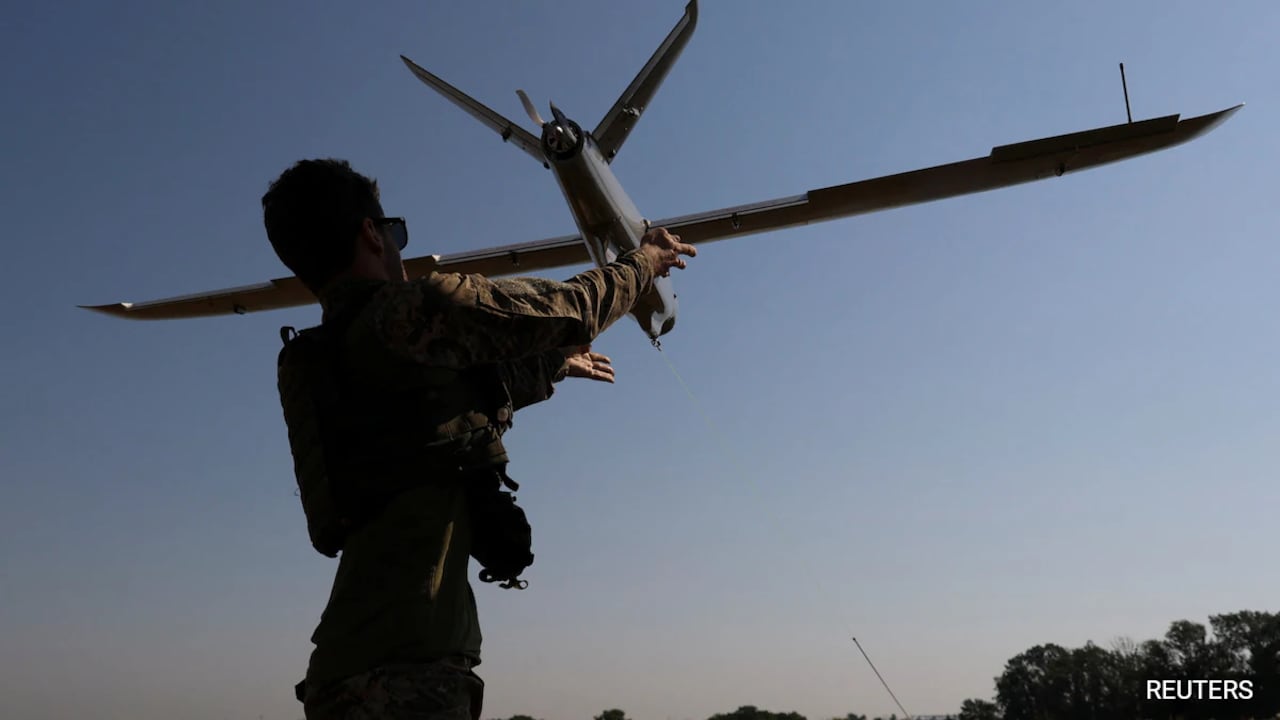
When the Russian defense ministry claims it shot down 419 out of 419 drones, a basic understanding of military hardware reveals the gap between propaganda and reality. Total interception is a myth.
Electronic warfare and anti-aircraft systems like the Pantsir-S1 are heavily deployed around Moscow. When these systems successfully disable a drone via GPS jamming or kinetic interception, the drone doesn't just vanish into thin air. A 50-pound drone packed with explosives and fuel becomes an unguided flying bomb. It falls precisely where it was disabled—often hitting high-rise apartment complexes, suburban neighborhoods, or private homes.
The tragic reality of modern drone warfare is that interception over densely populated urban sprawl guarantees civilian casualties. Kyiv accepts this risk to hit high-value targets, while Moscow's defensive framework guarantees that its own suburbs bear the brunt of the kinetic fallout.
How Ukraine Escalated Its Long Range Capabilities
In the early days of the war, a Ukrainian drone reaching Moscow felt like a freak occurrence or a lucky lone-wolf operation. Today, it is an industrialized, regular occurrence. Ukraine has successfully scaled up domestic production of mid-range and long-range strike drones, pushing missions as far east as the Ural Mountains.
Just days before this latest 419-drone wave, Russian radar networks detected and engaged a massive swarm of 660 Ukrainian drones over a 48-hour period. This represents a level of manufacturing and operational coordination that few military analysts predicted back in 2022. Ukraine has transformed cheap, commercial-grade components into precision-guided, low-altitude weapons capable of bypassing sophisticated radar networks by flying below their detection floors.
This puts the Kremlin in a severe logistical bind. Firing a million-dollar air defense missile to down a drone that costs $15,000 to assemble is a losing mathematical equation.
What Happens Next
Expect Ukraine to accelerate these long-range operations. As the grinding war of attrition continues in the Donbas, Kyiv knows it cannot win by playing defense alone. Bringing the war to Moscow chips away at the Russian public's passivity and forces the Kremlin to burn through its domestic resources at an unsustainable rate.
For people living in the Russian capital, the sound of air defense sirens and low-buzzing drone motors is the new normal. The war isn't far away anymore—it's right outside the window.
To protect yourself or understand the strategic implications of these escalating aerial campaigns, watch independent intelligence reports and track verified satellite imagery of the target zones rather than relying purely on state-sanctioned press releases from either side.