The illusion of a static front line in Ukraine is officially dead. While western observers keep staring at maps of the Donbas waiting for a massive breakthrough that never comes, the real nature of this war has completely shifted. It's now a brutal battle of industrial endurance, long-range attrition, and immediate energy panic.
If you want proof, just look at what happened over the last forty-eight hours.
Ukraine just launched one of its biggest drone barrages of the entire war. More than 400 drones swarmed Russian airspace, forcing air defense systems to scramble from annexed Crimea all the way up to the edges of Moscow. They didn't just target military bases. They went straight for the economic jugular. Refineries in Slavyansk and Yaroslavl went up in flames. For the first time, Vladimir Putin publicly admitted that Russia is facing a "certain deficit" of fuel due to these constant strikes.
Think about that for a second. One of the largest oil exporters on earth is suddenly struggling to keep gas in its own pumps because of cheap, plastic Ukrainian drones.
The Sky Over Moscow and the Burning Refineries
For months, the Kremlin insisted that everything was going according to plan. That talking point doesn't work when smoke is billowing from an oil terminal 700 kilometers deep inside your own borders. The Ukrainian strategy isn't hidden anymore. They want to choke the Russian war machine by cutting off the fuel that funds it and runs it.
The numbers from the latest overnight raids are staggering. Russia's Defense Ministry claimed it intercepted 419 Ukrainian drones in a single night. Even if they shot down most of them, the ones that got through did massive damage. In Yegoryevsk, just south of Moscow, falling debris ignited fires and collapsed homes. An infant tragically died on the way to the hospital, proving that the chaos of this war is no longer contained within Ukrainian territory. Further west in the Tver region, an elderly woman lost her life when an intercepted drone struck her house.
The economic fallout inside Russia is getting harder to hide. In cities like Ulan-Ude and Irkutsk, local governors have gone on high alert over supply problems. Gasoline scalpers are operating in broad daylight. Sberbank's CEO is publicly begging for interest rate cuts to keep the economy from overheating under the weight of massive military spending and sanctions. The Kremlin is even in quiet talks to import gasoline from neighboring allies. It's a total reversal of roles.
Meanwhile, Russian retaliation remains as random as it is lethal. Just hours ago, a Russian strike ripped through gas stations in Ukraine's Dnipropetrovsk region. It killed a woman and left three others wounded. These aren't tactical military strikes. It's an ongoing campaign of terror aimed at breaking civilian morale, but it's having the exact opposite effect.
The Grim Math on the Ground
Away from the spectacular drone footage, the trenches tell a much slower story. The Institute for the Study of War tracked Russian advances through June. The numbers are incredibly telling. Russian forces managed to crawl forward at an average rate of just 3.79 square kilometers per day.
Compare that to last August, when they were swallowing nearly 17 square kilometers daily. The Russian advance has slowed to an absolute crawl.
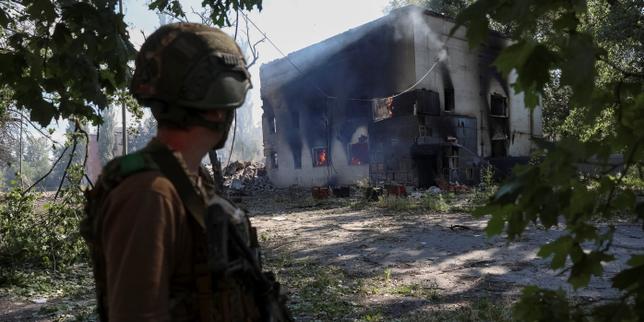
Why is Russia struggling to move? Drones. The moment a Russian armored column leaves its tree line, it gets spotted by Ukrainian reconnaissance teams and swarmed by first-person view drones. The head of a Ukrainian unmanned systems unit recently reported that Russian commanders have almost entirely stopped using heavy armored vehicles in the Pokrovsk direction. They simply can't afford to lose them.
Instead, the Russian military is relying on what soldiers call "meat assaults." They send small, isolated groups of infantry to try and infiltrate Ukrainian positions on foot. They sneak through gullies and high grass, trying to get close enough to raise a flag over a ruined building so their commanders can send a nice report up the chain of command. It's a horrific waste of human life that yields almost no operational value.
The front line looks like a jagged, bloody puzzle.
- In the North, Russian forces are trying to carve out a buffer zone in Sumy Oblast, pushing into tiny border villages like Marine.
- In the East, fighting rages around Kupyansk, though Russian milbloggers openly complain that public claims of encircling Ukrainian troops are pure fiction.
- In the South, Ukrainian units actually recaptured territory near Hulyaipole and Ivanivka, using precise artillery and drone coordination to push Russian forces back.
Russia still needs to seize over 5,000 square kilometers of land just to claim total control over the Donetsk region. At their current rate of advance, it would take them years of continuous, high-casualty fighting to achieve that goal. The Kremlin's unrealistic deadlines are destroying its own army's operational capability.
Putin Rejects the Backchannel Deals
With the frontline bogged down and domestic fuel supplies dwindling, backchannel diplomacy has started heating up. Kyiv recently floated a proposal for a mutual halt to long-range strikes on energy infrastructure. It made practical sense for both sides. Ukraine would protect its fragile power grid before winter, and Russia would secure its refineries.
Putin completely shot it down.
In a recent state television interview, the Russian president dismissed the proposal out of hand. He bragged that Russian retaliatory strikes deep inside Ukraine are far more destructive and have worse consequences for the Kyiv regime. He looks at his massive stockpiles of ballistic missiles and figures he can outlast Ukraine's production lines.
Kyiv also suggested limiting active combat to the four partially occupied regions—Kherson, Zaporizhzhia, Donetsk, and Luhansk. Putin rejected that too. The Kremlin sees any restriction on its military options as a sign of weakness. They're betting everything on a long war of attrition, gambling that Western political will fractured by internal elections will dissolve before the Russian economy collapses.
It's a dangerous bet. The Russian public is getting weary. Search queries inside Russia about when the war will end have spiked dramatically over the last two weeks. Putin's approval rating even dropped five percentage points in mid-June according to the Kremlin-linked Public Opinion Forum. People are feeling the inflation, the shortages, and the anxiety of drones exploding in their neighborhoods.
Money and Western Staying Power
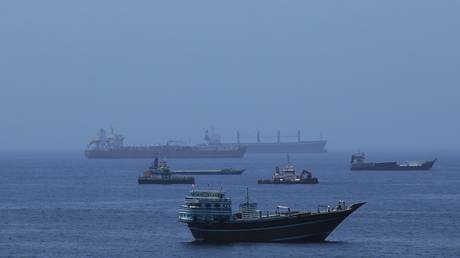
If Putin is waiting for the West to walk away, the latest financial moves out of Brussels should worry him. The European Council just extended its massive web of economic sanctions against the Russian Federation for another full year, stretching until July 31, 2027. These aren't just symbolic gestures. They target finance, dual-use technology, and the shadow fleets Russia uses to smuggle its seaborne crude oil.
On top of that, the money is finally flowing directly into Ukraine's war chest. Ukrainian Prime Minister Yulia Svyrydenko announced the arrival of the first $3.4 billion chunk of a massive $101 billion loan package funded by the European Union. This money isn't just for keeping the lights on. It's earmarked for long-term economic stability and rebuilding critical infrastructure that Russian missiles destroyed over the spring.
The Western strategy is shifting away from short-term panic fixes toward a sustainable, multi-year pipeline of support. It sends a clear message to Moscow. The West isn't going anywhere, and Ukraine has the financial runway to keep fighting deep into the decade.
The Next Step for the Frontline
The war isn't going to end tomorrow, and a sudden diplomatic breakthrough isn't on the horizon. If you're tracking this conflict, stop looking for massive armored breakthroughs on the map. Pay attention to the economic and logistical choke points instead.
To understand where this conflict goes next, watch these specific factors.
Keep a close eye on the Russian domestic fuel crisis. If Ukraine maintains its current pace of drone strikes on western Russian refineries, the internal price of gasoline in Moscow and St. Petersburg will skyrocket. That forces Putin into a terrible choice. He will either have to divert fuel from the military front lines to appease angry domestic consumers or watch domestic unrest grow.
Watch the air defense shell game. Ukraine's recent successful strikes against sophisticated S-400 and Pantsir-S1 anti-aircraft systems near Kerch in occupied Crimea show that Russia can't protect everything. Every time Russia moves an air defense battery to protect a refinery near Moscow, it leaves a frontline military base or a critical bridge in Crimea completely exposed to Ukrainian missiles.
Don't buy into the narrative of a frozen conflict. The battlefield is moving faster than ever. It's just happening in the airspace above the refineries and inside the supply chains rather than the muddy trenches of the Donbas.