You don't need a degree in military logistics to see what's happening. Kyiv is systematically blinding the Kremlin. Overnight, a massive swarm of long-range Ukrainian drones surged deep into the Moscow region, slamming into the Dubna Space Communications Center.
If this sounds familiar, that's because it is. This is the second time in just eight days that Ukrainian forces have successfully targeted this exact facility. Located more than 500 kilometers from the Ukrainian border, Dubna isn't some minor radar outpost. It's Russia's largest ground-based satellite communications hub, and one of the largest in Europe. By repeatedly hitting it, Ukraine is proving that its homegrown long-range drones can bypass Moscow's heavily defended airspace at will. Recently making waves recently: Why The White House Move On New York Times Reporters Is Flashpoint For Press Freedom.
The strategic math here is pretty straightforward. You can't run a coordinated invasion if your frontline commanders can't securely talk to the Kremlin.
The Nerve Center of Russian Military Command
To understand why the Dubna strike matters, you have to look at what the facility actually does. Built originally back in 1980 to broadcast the Moscow Olympics, the site evolved into a vital nexus connecting terrestrial communication networks with Russia's satellite constellations in orbit. Further insights regarding the matter are explored by TIME.
Today, it serves a much darker purpose. President Volodymyr Zelenskyy confirmed that Dubna is a "special satellite communications facility" heavily utilized for military reconnaissance. It acts as the operational nervous system used to coordinate the activities of Russia's occupation troops inside Ukraine.
During the first strike on June 22, Ukraine's General Staff reported severe damage to a massive 32-meter MARK-IV satellite communications antenna and the facility's main control building. Going back for a second helping just days later shows that Kyiv didn't just want to disrupt operations—they want to completely take the facility offline.
When you knock out a hub like Dubna, you force Russian military communications onto less secure, slower, or backup analog channels. In modern warfare, a delay of even a few minutes in relaying satellite intelligence can mean the difference between a successful strike and a missed target.
Kyiv 40-Day Air Campaign and the Drone Swarm Strategy
This second raid on Dubna wasn't an isolated incident. It's part of a highly coordinated, 40-day campaign approved by Zelenskyy to apply maximum internal pressure on Russia. The strategy relies on overwhelming numbers to break through dense layers of air defense.
According to Russia's Defense Ministry, they shot down 419 drones across the country during the overnight wave, with Moscow Mayor Sergei Sobyanin claiming 61 were intercepted heading toward the capital alone. While Russia claims high interception rates, the sheer volume of the swarm ensures that some drones always get through. Tragically, the fallout of this massive air battle spilled into civilian areas, with local Russian officials reporting that a house caught fire in Yegoryevsk, southwest of Moscow, resulting in the death of a six-month-old baby.
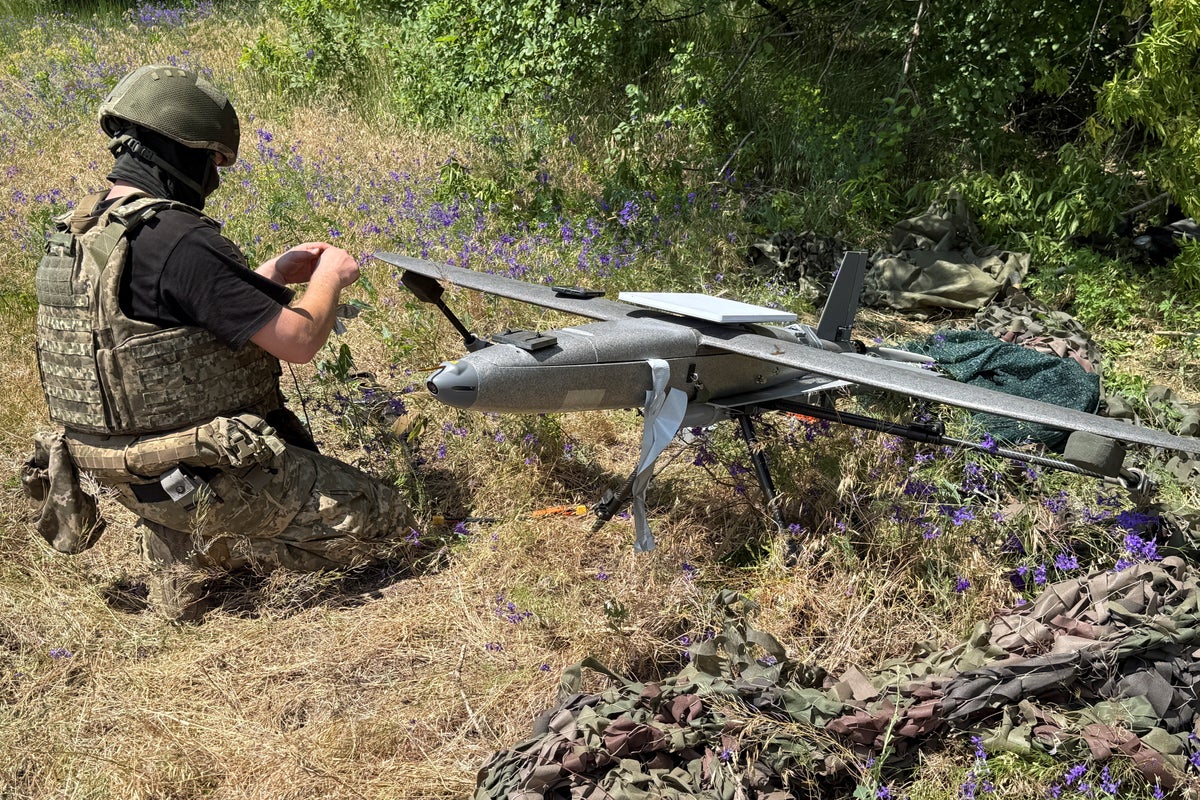
The scope of Ukraine's long-range strikes has expanded aggressively, targeting four major communications centers across both the Moscow and Vladimir regions. At the same time, mid-range drones are hammering tactical targets like the Kasta-2E2 radar system, a crucial part of Russia's frontline air surveillance network.
The Economic and Infrastructure Toll Inside Russia
For the longest time, the average resident in Moscow could pretend the war was happening somewhere else. That illusion is completely shattered. Ukraine's long-range drone strategy has targeted not just military command centers, but also the economic engine funding the invasion.
Recent strikes have battered major natural gas processing facilities, like the Orenburg plant, and key oil refineries right on Moscow's doorstep. The real-world consequences are stacking up fast for the Kremlin.
- Fuel Shortages: Long queues are forming at petrol stations in various Russian regions.
- Rationing: Local authorities have quietly implemented fuel rationing in parts of Siberia and occupied Crimea.
- Refinery Shutdowns: The recent attack on Moscow's main oil refinery sent massive plumes of smoke over the capital, halting production that analysts estimate might not resume until next year.
Even Vladimir Putin had to make a rare public admission that these attacks on critical infrastructure are creating obvious "problems" for Russia. Behind closed doors, the panic is even more pronounced. Reports indicate that Igor Sechin, the head of Russia's state oil giant Rosneft, sent a letter to Putin calling the scale of damage to the country's refineries "unprecedented."
Why Air Defense Systems Aren't Saving the Kremlin
You might wonder how a country with a supposedly world-class air defense network keeps letting cheap, slow-moving drones fly 500 kilometers into its heartland. The answer is simple geography and math.
Russia is simply too big. They don't have enough missile defense systems to protect every piece of critical infrastructure, every refinery, and every space communications hub simultaneously. If they pull Pantsir or S-400 systems away from the front lines to protect Moscow, the front lines become vulnerable. If they keep them at the front, facilities like Dubna get blown up.
Compounding the issue is a toxic bureaucratic culture. European intelligence officials note a deep reluctance among senior Russian officials to share bad news with Putin. Warning signs about the growing drone threat were ignored or buried on the way up the chain of command, leaving infrastructure entirely unprepared for a protracted aerial war.
What Happens Next
Kyiv isn't slowing down. Backed by a fresh 3.9 billion euro disbursement from the European Union specifically earmarked for domestic drone procurement, Ukraine is scaling up its production capacity to unprecedented levels.
If you want to keep track of how this campaign develops, keep your eyes on the following indicators:
- Watch the skies over Vladimir and neighboring oblasts: Ukraine has identified at least four space communications centers in these zones. If Dubna is offline, these sister facilities are next on the target list.
- Monitor Russian fuel pricing and export bans: If the Kremlin extends its domestic gasoline export bans or increases rationing, it's a sign that the refinery strikes are successfully throttling their economy.
- Look for Russian electronic warfare shifts: Expect Russia to heavily deploy GPS-jamming and spoofing tech around Moscow, which will likely disrupt civilian aviation and navigation in the capital.
Ukraine's strategy relies on making the war too expensive, too disruptive, and too chaotic for the Russian elite to sustain. By blinding the military's space communications and choking out its fuel supplies, Kyiv is changing the parameters of what Russia can actually achieve on the ground.
To get a clearer picture of how these long-range operations look on the ground and see the scale of the drone warfare shifting deep into Russian territory, check out this detailed broadcast analysis of the strikes. It breaks down how the dual hits on Russia's space infrastructure and radar systems are impacting their broader logistics network.