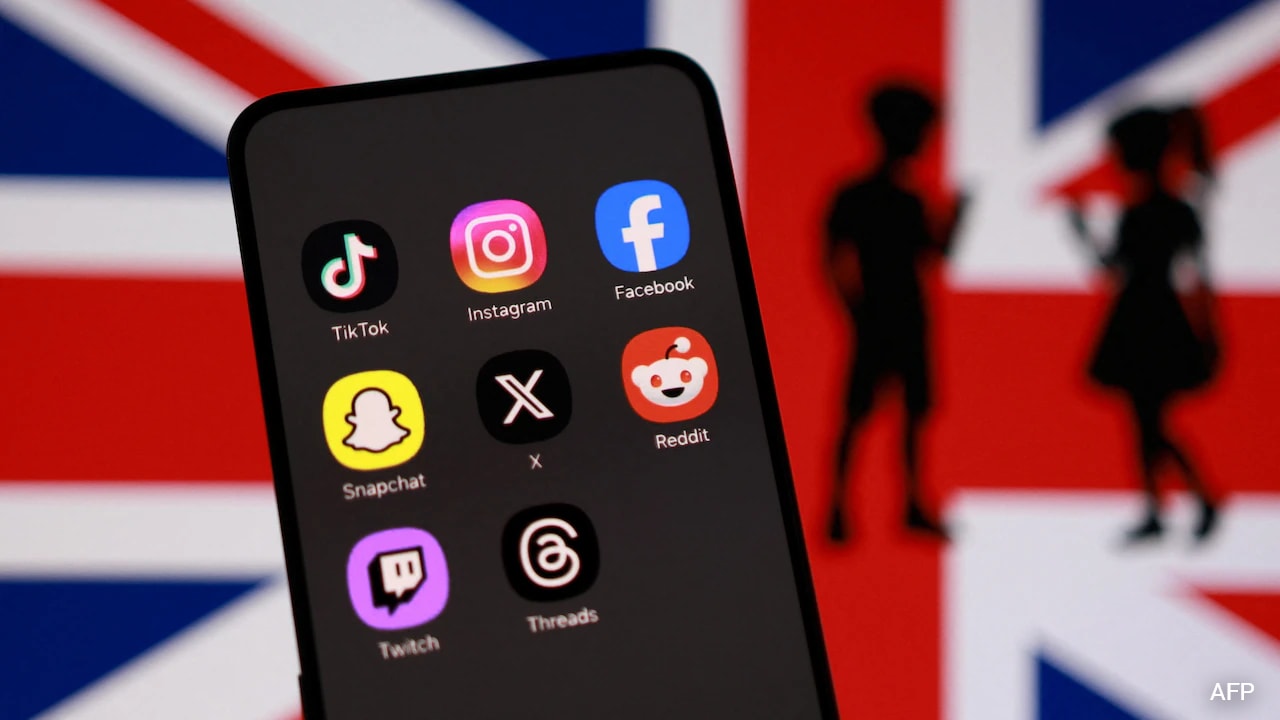
Imagine trying to lock a door while handing the key directly to the person you are trying to keep out. That is essentially what the UK government is doing with its latest online safety push.
Technology Secretary Liz Kendall has announced a default overnight social media curfew for 16- and 17-year-olds. From next spring, some of the most popular apps will automatically block access between midnight and 6:00 AM. Features designed to keep teens hooked, like infinite scrolling and video auto-play, will also be turned off by default. Also making news recently: Why The New Midnight Social Media Curfew For Uk Teenagers Is Destined To Fail.
The catch? It is entirely voluntary. Teenagers can simply go into their settings and flip a switch to turn the curfew off.
This feels less like a protective shield and more like a polite suggestion. Let's look at why this policy is fundamentally flawed and what it actually means for the future of online safety. Additional insights on this are explored by The Next Web.
The Cliff Edge Problem
The new policy is designed to address what the government calls a "cliff edge". Recently, the UK announced a social media ban for children under 16, which is expected to take effect in early 2027.
Ministers worried that a teenager who had been completely blocked from apps like Instagram, TikTok, and Snapchat would suddenly turn 16 and get hit with a tidal wave of highly addictive, unregulated features. The overnight curfew is meant to ease older teens into digital independence.
Under the new plans, 16- and 17-year-olds will have default restrictions, including:
- An automatic app block from midnight to 6:00 AM.
- The removal of endless feeds and auto-playing videos.
- Mandatory screen breaks when using AI chatbots.
The government points to a trial of 300 families showing that teenagers who spent less time on these apps slept better and had lower stress levels. That makes sense. Sleep is vital for developing brains. But there is a massive gap between a controlled pilot study and real-world implementation.
Why a Voluntary Switch is Useless
If you give a sleep-deprived 17-year-old the power to bypass their own bedtime with a single tap, they are going to do it.
Teens are incredibly tech-literate. If they want to bypass an age restriction, they don't even need a Virtual Private Network (VPN)—though the government's own research notes that only a tiny fraction of teens actually use VPNs for this purpose. They just need to press "disable" in their account settings.
Government Plan:
[Midnight Hits] ──> [Default Block App] ──> [Teens Click "Opt-Out"] ──> [Back to Scrolling]
This raises the question of who this policy is actually for. It seems designed to give parents a talking point and politicians a headline, rather than offering a real tool for digital safety. Campaign groups like the Molly Rose Foundation have already criticized the move, calling it a "piecemeal" announcement rather than a comprehensive, serious plan.
The Enforcement Nightmare
How will social media platforms actually know who is 16 or 17?
Age verification is a notorious hurdle. Tech companies have struggled for years to implement accurate, privacy-respecting age checks. Standard methods like uploading a driver's license or using third-party facial analysis tools often spark heavy backlash over data privacy.
If the government cannot force platforms to accurately verify age, these default settings will never reach the kids they are meant to protect. Tech giants will likely comply by putting the bare minimum effort into compliance, shielding themselves from regulatory fines while leaving the actual enforcement entirely to parents.
Practical Next Steps for Parents
Instead of waiting for a government-mandated default switch that your teen will probably bypass in five seconds, you can take control of your home's digital environment. Here is how to actually protect your teenager's sleep.
Use Router-Level Controls
Do not rely on app-specific settings. You can log into your home Wi-Fi router's admin panel and schedule an automatic internet blackout for specific devices starting at midnight. This is much harder for a teenager to bypass than a simple app setting.
Set Up Built-In Operating System Limits
Apple's Screen Time and Google's Family Link are built directly into phone operating systems. Unlike a voluntary app curfew, these tools allow parents to lock down specific apps during sleeping hours using a passcode that only the parent knows.
Establish a Charging Station Outside the Bedroom
The easiest way to stop late-night scrolling is to remove the temptation entirely. Make it a family rule that all phones, tablets, and smartwatches are plugged into a central charging station in the kitchen or living room by 10:00 PM.