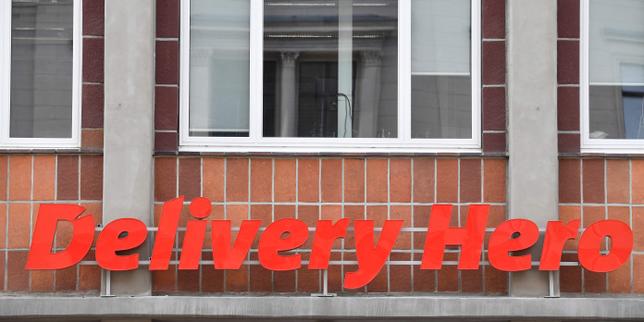
Uber just made its biggest move in years. The ride-hailing giant has agreed to buy Berlin-based Delivery Hero in a massive €12.7 billion deal. For months, the market watched Uber quietly buy up shares in its German competitor. Now, the trap has snapped shut.
If you think this is just about getting your burgers delivered slightly faster, you're missing the entire point. This acquisition is a massive bet on a winner-take-all global market. It’s also a desperate attempt to outrun DoorDash and lock you into a single app for the rest of your life. You might also find this connected story interesting: Stop Overthinking How To Start A Business In The Usa.
But there’s a catch. Merging two global delivery networks is a regulatory nightmare. To get this past antitrust watchdogs, Uber is pulling off a clever corporate magic trick.
The price of global dominance
Let’s talk numbers. Uber is offering €41.50 per share in cash to Delivery Hero's shareholders. That’s a hefty 34% premium over the stock's three-month average. It values the whole company at roughly $14.8 billion. As discussed in latest coverage by Harvard Business Review, the results are significant.
Because Uber was already holding a massive stake in the company, the actual cash it needs to find is closer to $13.7 billion. Uber spent the first half of 2026 aggressively buying up shares. By May, it controlled nearly 37% of the economic interest. It was a slow-motion takeover that everyone saw coming, but nobody could stop.
The crown jewels of this deal aren't in Europe. Delivery Hero’s home turf is actually its weakest link. The real value lies in emerging markets. By absorbing Delivery Hero, Uber gets its hands on:
- Talabat: The undisputed king of food and grocery delivery in the Middle East.
- Foodpanda: A dominant player across East Asia.
- HungerStation: The top delivery app in Saudi Arabia.
- PedidosYa: A household name across Latin America.
Together, Uber and Delivery Hero processed a mind-boggling $236 billion in gross bookings in 2025.
The clever carve out trick to dodge regulators
You can't just buy your biggest competitor and expect governments to smile and sign off. Regulators in Europe are notoriously tough on tech monopolies. Uber and Delivery Hero compete directly in dozens of countries. If they merged completely, they’d control nearly the entire market in places like Spain, Portugal, and Sweden.
To bypass this hurdle, Uber engineered a side deal.
They are carving out Delivery Hero's operations in 14 overlapping markets. These businesses, which include Glovo in Spain and Portugal, foodora in Norway and Sweden, and Yemeksepeti in Turkey, are being sold off. The buyer is SSW Partners, a New York-based private equity firm, which is paying $1.6 billion for them.
It’s an expensive escape hatch. Uber is essentially sacrificing these European operations to secure the antitrust green light for the rest of the world. Will it work? Probably. By offloading the direct overlaps immediately, Uber gives regulators very little room to complain about local monopolies. But it also shows how desperate Uber is to win the global race.
Why Uber wants your subscription money
Uber's strategy is no longer just about getting you from point A to point B. It’s about keeping you inside their ecosystem.
Uber has a proven formula. If they can get you to use both their ride-hailing services and their food delivery app, you become far more valuable to them. In fact, Uber’s own data shows that cross-platform users generate about three times the gross bookings and profit compared to people who only use one service.
The weapon of choice here is Uber One.
By buying Delivery Hero, Uber can suddenly offer its Uber One subscription in dozens of new countries. They are doubling the number of markets where they offer both rides and delivery, jumping from 34 to 58 countries. Once you pay that monthly subscription fee for free delivery, you're highly unlikely to ever open a competitor’s app. It’s brilliant lock-in.
The long decline of Delivery Hero
To understand why Delivery Hero accepted this deal, we have to look at the wreckage of the post-pandemic food delivery market.
During the lockdowns, delivery apps were the darlings of the stock market. Money was free, and valuations soared. But when life returned to normal, the bubble burst. Delivery Hero struggled to turn a consistent profit while carrying billions in debt.
The pressure from activist investors was relentless. Shareholders like Aspex Management spent months demanding drastic changes. They pushed for asset sales and criticized the company's leadership. Eventually, the internal friction took its toll. Selling to Uber for a massive cash premium was the easiest way out for a board that had run out of options.
For Delivery Hero’s founders, this is a bitter-sweet end. They built a global empire from Berlin, but they couldn't survive the brutal economics of the post-pandemic market on their own.
How this shifts the scales against DoorDash
The food delivery sector is consolidating rapidly. We've seen DoorDash buy Deliveroo, and Prosus grab Just Eat Takeaway.
With this acquisition, Uber has effectively blocked its rivals from expanding. DoorDash had reportedly been eyeing Delivery Hero’s valuable Middle Eastern assets, particularly Talabat. By building up its blocking stake earlier this year, Uber shut the door on DoorDash.
Now, Uber has an iron grip on the Middle East and Latin America. DoorDash is left dominant in the US, but with far fewer avenues for easy international growth.
What this actually means for you
If you’re a consumer, expect things to change.
In the short term, you might see some great promotional offers as Uber tries to transition Delivery Hero users over to its own platform and push Uber One memberships.
In the long term, less competition usually means higher prices. With Uber swallowing its largest global rival, your delivery fees and service charges are likely to creep upward over the next few years. Restaurants will also have less bargaining power. When there’s only one major delivery network in town, merchants have to accept whatever commission rates the giant dictates.
What happens next
If you hold shares in Delivery Hero, your next step is straightforward. The board has unanimously recommended that shareholders accept Uber’s offer of €41.50 per share. Given that Prosus, which holds a 17% stake, has already agreed to sell, the deal is highly likely to go through.
For everyone else, keep a close eye on the regulators. The carve-out to SSW Partners is designed to appease the European Commission, but watchdogs in other regions may still raise objections.
The era of cheap, venture-capital-subsidized food delivery is officially over. The giants have consolidated, and now they are going to make sure they get paid.